Occasional invaders
Thrips: identification & thrips control
Thrips move from landscaping and crops into homes and can give an irritating nip. We treat landscape hot spots and screen entry points to reduce indoor pressure.
How to identify thrips
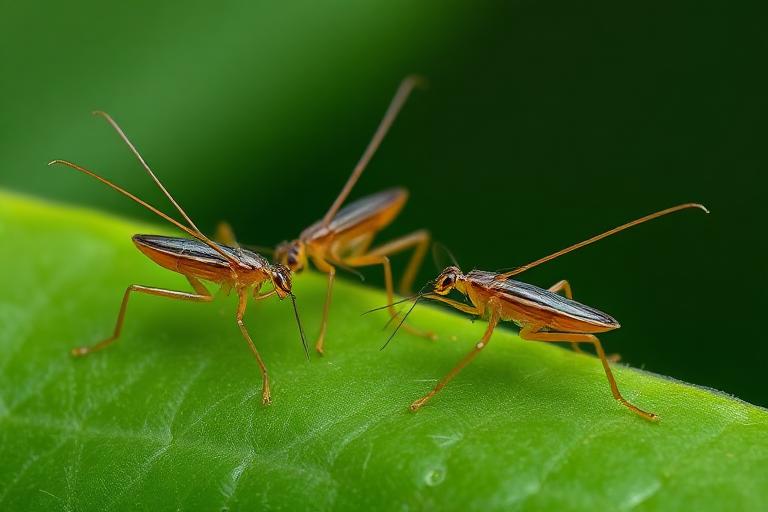
- What it looks like
- Extremely slender yellow, brown or black insects with fringed wings.
- Size
- 1/25 inch
- Where you'll find it
- Flowers, ornamental shrubs, lawns, screens and window frames.
Signs of thrips in your home
- Silvery streaks on plant leaves
- Tiny slivers crawling on skin or screens
- Prickly bites outdoors in summer
Regional differences across the U.S.
Several thrips species are encountered in US homes, often as incidental invaders. Western flower thrips (Frankliniella occidentalis) are common across the contiguous US, particularly in regions with significant agricultural or horticultural activity like California, Florida, and the Pacific Northwest. Onion thrips (Thrips tabaci) are widespread, particularly in northern states like Michigan and New York, often associated with agricultural areas. Cuban laurel thrips (Gynaikothrips ficorum) are more prevalent in warmer, southern states such as Florida and Texas, primarily attacking Ficus species. Risk factors vary; homes near fields or gardens are more susceptible to general thrips species, while homes with Ficus trees nearby are at higher risk for Cuban laurel thrips. Screens and window frames are common entry points in all regions, especially during dry or windy conditions that dislodge thrips from host plants.
Life cycle and timing that changes treatment
Thrips undergo incomplete metamorphosis with egg, two larval instars, prepupal, pupal, and adult stages. The egg-to-adult development can be as short as 10-14 days under optimal conditions (around 75°F), leading to multiple, often 8-12, generations per year. Many species overwinter as adults or pupae in protected locations like soil, leaf litter, or crevices, emerging in spring to feed and lay eggs on new plant growth.
How to inspect for thrips, step by step
- 1
Carefully examine window sills, curtains, and light fixtures, especially on sunny sides of the house, for tiny black or yellow specs that may be thrips. Use a magnifying glass for confirmation.
- 2
Inspect screens and window frames for minute insects caught in the mesh or resting on the frame. A flashlight held at a low angle can highlight their presence.
- 3
Check any potted plants indoors or near entry points. Shake leaves gently over a white piece of paper to dislodge thrips and make them visible.
- 4
Look for discolored or stippled leaves on indoor plants or outdoor ornamentals immediately surrounding the home, as these are signs of thrips feeding damage.
Treatment decision tree
| If you find this | Do this next |
|---|---|
| You observe a few individual thrips indoors, primarily near windows or on light-colored surfaces. | This often indicates incidental entry from outdoor plants. Vacuum them up and increase vigilance for more activity. |
| You find thrips regularly on multiple indoor plants, and some plants show signs of feeding damage like stippling or distorted growth. | Initiate non-chemical control on plants, such as washing leaves with soapy water or applying horticultural oil/insecticidal soap. Continue monitoring. |
| Numerous thrips are present on screens, window frames, or other entry points, but not extensively indoors. | Focus on exclusion methods like ensuring screens are intact and sealing small gaps around windows and doors to prevent further entry. |
| You consistently find thrips in multiple rooms, even after initial cleaning and exclusion efforts. | This suggests a persistent outdoor source or potential indoor breeding. Identify and address the external source, or re-evaluate indoor plant infestation. |
| Thrips are found in large numbers across several rooms, causing significant nuisance or damage to indoor plants, despite prior control attempts. | Consider professional pest control. This level of infestation likely requires targeted treatment beyond homeowner capabilities. |
Where DIY runs out of road
- • Over-the-counter pyrethroid-based sprays provide limited residual control for thrips, as they quickly break down and may repel rather than eliminate, leading to re-infestation from outside.
- • Homemade remedies like diluted dish soap can damage sensitive plants if not mixed correctly or applied excessively, often failing to reach thrips hidden in buds or leaf axils.
- • Attempting to treat extensive outdoor host plants around the home without proper identification and application knowledge can harm beneficial insects and lead to resistance in thrips populations.
When to call a professional
- • When a persistent thrips infestation cannot be controlled with diligent homeowner efforts after several weeks.
- • If thrips are consistently entering the home in large numbers from an unidentified or unmanageable outdoor source.
- • When valuable or extensive indoor plant collections are severely infested and at risk of significant damage.
Safety and legal limits
Always read and strictly follow all product label instructions. The label is a legal document and misuse can result in fines or harm. Avoid using restricted-use pesticides, as these require professional licensing. When applying any product, ensure adequate ventilation and wear appropriate personal protective equipment, such as gloves and eye protection. Keep children and pets away from treated areas until dry, or as specified by the product label, to prevent exposure. Be mindful of drift when applying outdoors, to protect non-target plants, aquatic environments, and beneficial insects like pollinators. Never apply pesticides to protected species or near sensitive habitats without consulting relevant authorities.
Thrips questions homeowners ask
Can thrips bite humans?
Yes, they can deliver a brief prickly nip, but they cannot live on people or in homes.
Thrips control by city
Local technicians handle thrips in every market below — pick your city for neighborhood coverage, seasonal notes and a free quote.
Related occasional invaders pests
Sources and further reading
Guidance on this page is compiled from EPA, CDC and land-grant university extension IPM publications, which are linked in the sources section. It is general information, not a diagnosis or a treatment recommendation for your property.
- Pest Notes: home and landscape pests — University of California Statewide IPM Program
- Pest control and pesticide fact sheets — National Pesticide Information Center (Oregon State University / EPA)
- Integrated Pest Management (IPM) principles — U.S. Environmental Protection Agency
- Safe pest control in and around the home — U.S. Environmental Protection Agency