
Occasional invaders
Asian lady beetles: identification & asian lady beetle control
Also known as: ladybugs, harlequin beetles
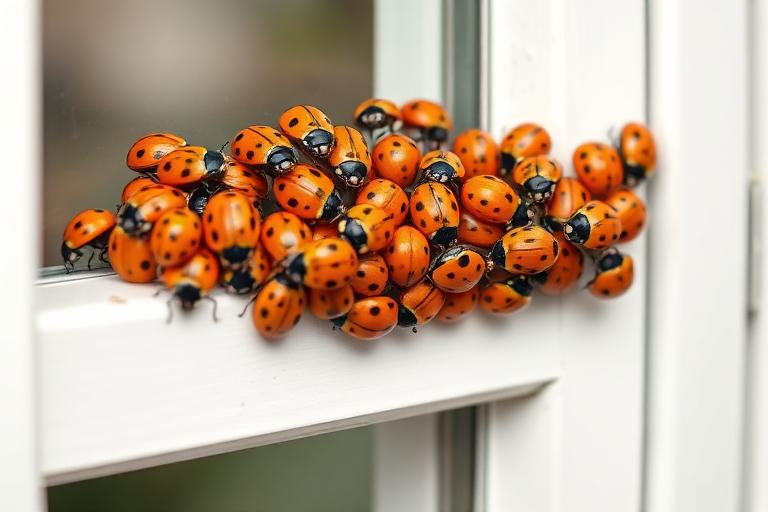
Asian lady beetles overwinter by the thousands in attics and wall voids, staining surfaces and biting occasionally. We treat exterior surfaces before the fall flight and seal the gaps they use.
How to identify asian lady beetles
- What it looks like
- Orange to red domed beetles with variable spots and a black M-shaped mark behind the head.
- Size
- 1/4 inch
- Where you'll find it
- Attics, window frames, wall voids and sunny south-facing siding.
- Commonly confused with
- Native ladybugs lack the M-shaped marking and rarely invade in numbers.
Signs of asian lady beetles in your home
- Clusters at windows in fall and spring
- Yellow staining fluid on walls
- Occasional nipping bites
Is it really asian lady beetles? Side-by-side comparisons
Asian lady beetles consistently have a distinct black 'M' or 'W' shaped marking directly behind their head (on the pronotum), which is absent in most native North American ladybug species.
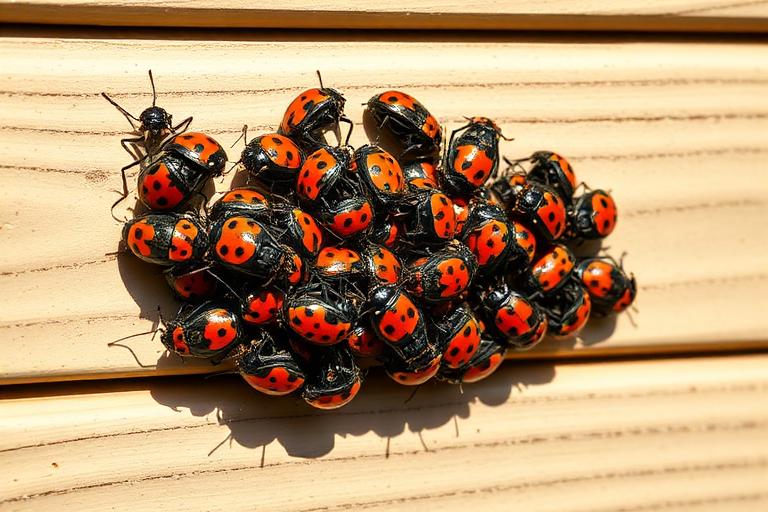
Asian lady beetles are broadly oval and domed, often orange, while boxelder bugs are flatter, narrower, and black with prominent red-orange outlines on their wings.
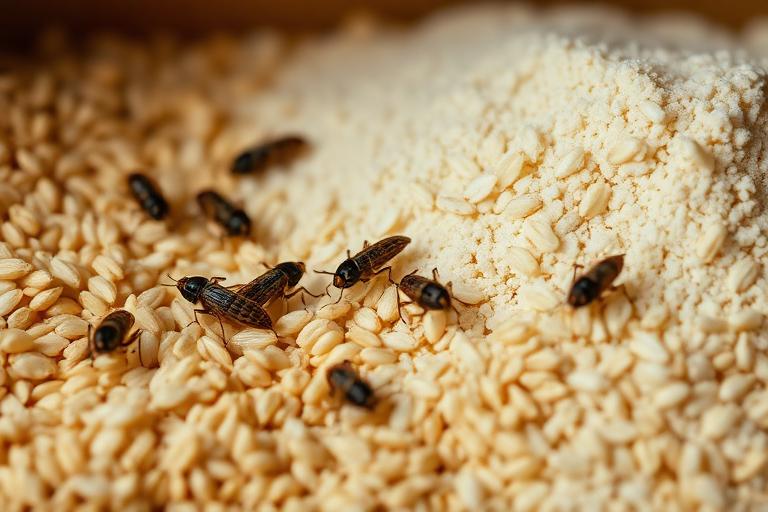
Asian lady beetles are much larger (1/4 inch vs. 1/8 inch), domed, and often brightly colored, whereas confused flour beetles are reddish-brown, flattened, and pantry pests.
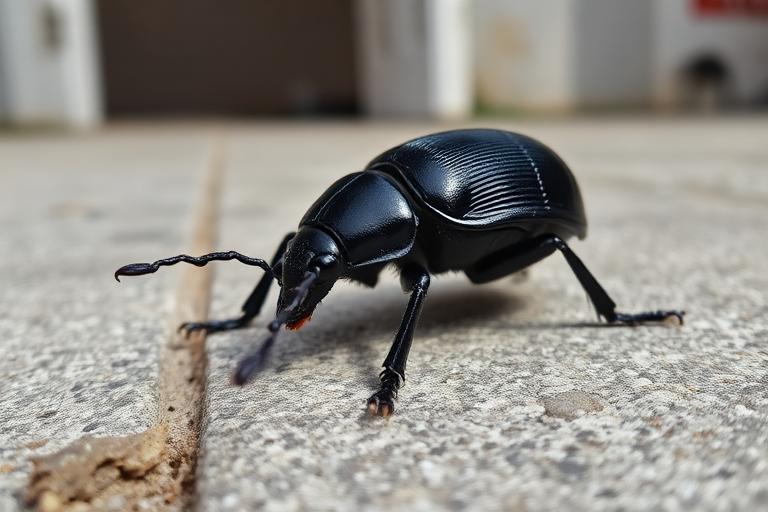
Asian lady beetles are domed and typically orange to red with spots. Cucumber beetles are more slender, elongated, and typically yellow-green with spots or stripes, feeding on plants.
Regional differences across the U.S.
Asian lady beetles (Harmonia axyridis) are present throughout the contiguous United States, but their overwintering aggregations are particularly problematic in states with distinct cold seasons, such as the Northeast (e.g., New York, Pennsylvania), Midwest (e.g., Ohio, Michigan), and Pacific Northwest (e.g., Oregon, Washington). In these regions, fall infestations are more pronounced as beetles seek harborage from declining temperatures, with peak entry typically from late September through November. States in the southern U.S. like Florida or Texas experience less severe overwintering issues, though localized populations exist. Construction types, particularly those with light-colored siding and abundant sun exposure, are at higher risk in all regions.
Life cycle and timing that changes treatment
Asian lady beetles undergo complete metamorphosis with egg, larval, pupal, and adult stages. The full egg-to-adult development can take as little as two to four weeks depending on temperature and food availability. There are typically three to five generations per year in temperate climates. Adults are the overwintering stage, entering diapause within structures from late fall until early spring, emerging when temperatures rise.
How to inspect for asian lady beetles, step by step
- 1
Check south-facing exterior walls and around window/door frames in late summer/early fall for active aggregation and entry points, using a flashlight to highlight cracks.
- 2
Inspect attics and wall voids, especially near eaves and soffits, for clusters of beetles in cooler, undisturbed areas, using a headlamp for visibility.
- 3
Examine light fixtures, curtains, and upper corners of rooms during late fall and winter for beetles emerging from hidden harborage within the structure.
- 4
Use glue monitors placed on interior window sills and near suspected entry points to confirm activity and pinpoint areas of ingress.
Treatment decision tree
| If you find this | Do this next |
|---|---|
| You observe a few Asian lady beetles indoors in late fall/winter. | This indicates minor overwintering activity. Use a vacuum cleaner to remove beetles; do not crush them to avoid staining and odor. |
| You notice small clusters (dozens) of beetles gathering on sunny exterior walls in early fall. | This suggests initial harborage seeking. Seal obvious cracks and openings around windows, doors, and utility penetrations with caulk. |
| You find hundreds of beetles emerging into living spaces from wall voids or attics. | This signifies significant overwintering inside. Increase sealing efforts and consider professional pest control for residual exterior treatments prior to fall. |
| You encounter large, ongoing infestations despite extensive sealing and vacuuming efforts. | This indicates deep harborage within inaccessible voids. Professional intervention with specialized equipment (e.g., dusters into voids) is warranted. |
| The sheer number of beetles inside your home is causing allergic reactions or severe nuisance, impacting daily life. | This is a severe infestation requiring immediate professional treatment, often involving a combination of exterior barrier applications and interior void treatments. |
Where DIY runs out of road
- • Over-the-counter perimeter sprays rarely offer long-term residual control for these persistent invaders, often washing away or degrading quickly.
- • Crushing beetles releases a foul-smelling, yellow fluid that can stain surfaces and attract more beetles, making the problem worse.
- • DIY sealing of all potential entry points is often incomplete, as beetles can exploit incredibly small gaps, leading to continued indoor emergence.
When to call a professional
- • When beetles are consistently emerging from inaccessible wall voids or attics.
- • If you wish to implement preventive exterior barrier treatments before fall aggregation begins.
- • When large numbers of beetles indoors are causing significant distress or allergic reactions.
Safety and legal limits
Always read and strictly follow the pesticide label; it is a legal document. Misuse can harm humans, pets, and the environment. Many effective products for Asian lady beetle prevention are restricted-use pesticides, requiring application by a certified applicator. When applying any product, ensure adequate ventilation and wear appropriate personal protective equipment (PPE) such as gloves and eye protection. Keep children and pets away from treated areas until dry. Avoid spraying blooming plants directly to protect pollinators. Interior treatment for overwintering beetles typically involves vacuuming; avoid widespread indoor insecticide use without professional guidance due to potential respiratory exposure risks.
Asian lady beetles questions homeowners ask
Are the orange ladybugs in my house harmful?
They do not damage the structure, but they stain surfaces with a yellow fluid and can trigger allergies.
Asian lady beetle control by city
Local technicians handle asian lady beetles in every market below — pick your city for neighborhood coverage, seasonal notes and a free quote.
Related occasional invaders pests
Sources and further reading
Guidance on this page is compiled from EPA, CDC and land-grant university extension IPM publications, which are linked in the sources section. It is general information, not a diagnosis or a treatment recommendation for your property.
- Pest Notes: home and landscape pests — University of California Statewide IPM Program
- Pest control and pesticide fact sheets — National Pesticide Information Center (Oregon State University / EPA)
- Integrated Pest Management (IPM) principles — U.S. Environmental Protection Agency
- Safe pest control in and around the home — U.S. Environmental Protection Agency