
Occasional invaders
House centipedes: identification & house centipede control
House centipedes indicate excess moisture and a food supply of other insects. Control means drying crawl spaces and bathrooms, sealing entry points and treating the prey insects.
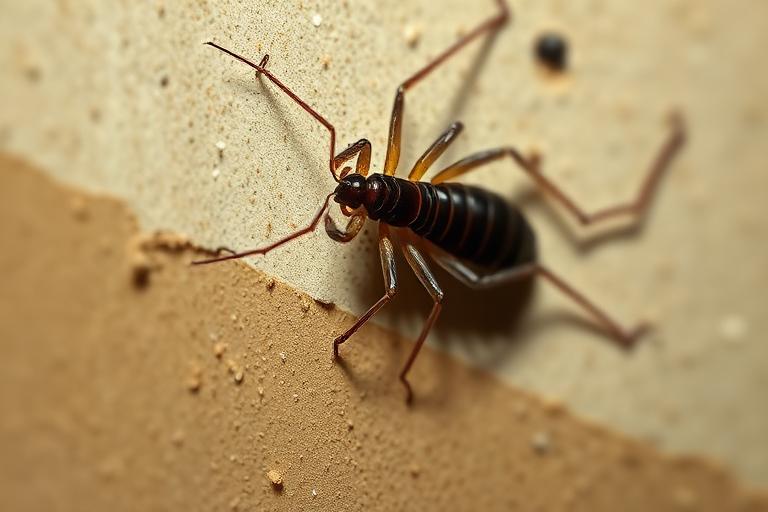
How to identify house centipedes
- What it looks like
- Yellow-gray body with dark stripes and 15 pairs of very long legs plus long antennae.
- Size
- 1 to 1.5 inches plus legs
- Where you'll find it
- Bathrooms, basements, crawl spaces, floor drains and damp storage areas.
- Commonly confused with
- Millipedes are round, slow and curl into a coil.
Signs of house centipedes in your home
- Fast leggy insects darting across floors at night
- Sightings in tubs and sinks
- Other insect activity in damp areas
Is it really house centipedes? Side-by-side comparisons
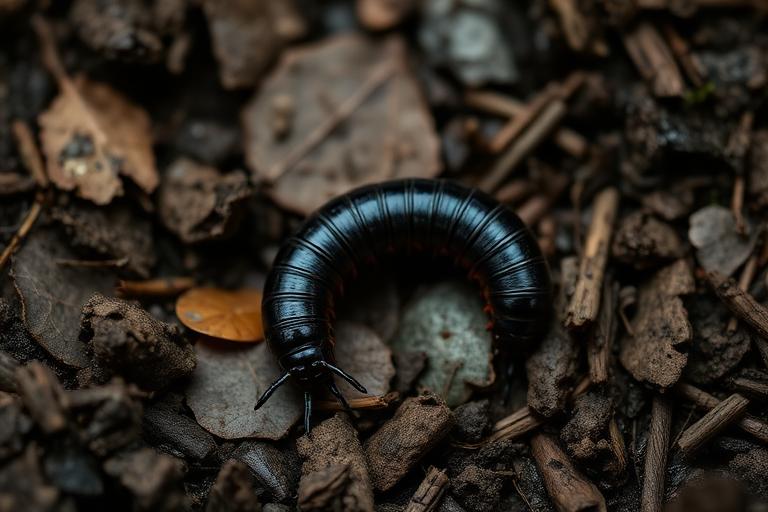
House centipedes have very long, prominent legs splayed out from their body, and move quickly. Millipedes have many short legs held close to their body, and move slowly.
House centipedes are uniquely yellow-gray with three dark dorsal stripes and exceptionally long, segmented antennae and legs. Most other centipedes are uniformly brown or reddish, shorter-legged.
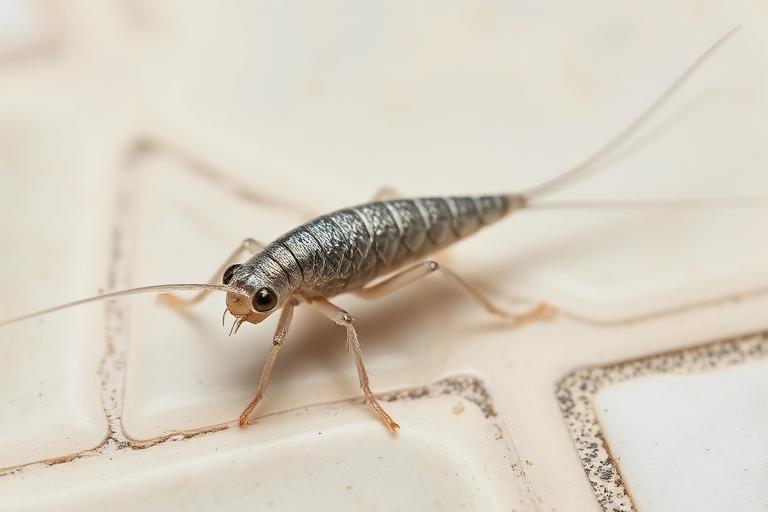
House centipedes are multi-legged predators with fast, erratic movement. Silverfish are wingless insects with three tail-like appendages, move with a wiggling motion, and have no legs splayed.
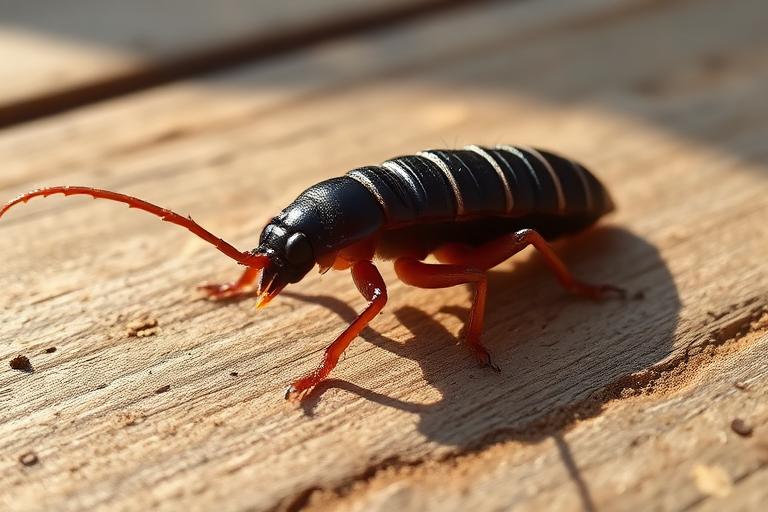
House centipedes possess numerous long legs and antennae. Earwigs are wingless insects with a pair of prominent pincer-like cerci at their rear, fewer legs, and lack long antennae.
Regional differences across the U.S.
House centipedes (Scutigera coleoptrata) are common throughout the contiguous United States, particularly in the humid Southeast (Florida, Georgia, Louisiana) and the damp Pacific Northwest (Washington, Oregon). In arid regions like the Southwest (Arizona, Nevada), they are primarily confined to irrigated landscapes and structures providing consistent moisture. Construction differences impact risk; homes with unfinished basements or crawl spaces, prevalent in the Midwest and South, offer more harborage than slab-on-grade construction common in the Southwest. Seasonal timing for increased indoor activity is consistent nationwide, occurring during cooler fall and winter months as they seek warmth and during very hot, dry summer periods when outdoor habitats become unfavorable.
Life cycle and timing that changes treatment
House centipedes undergo gradual metamorphosis. Females lay eggs singly or in small clutches, often in damp soil. Eggs hatch into larvae, which molt through several stages, gaining additional pairs of legs with each molt until reaching the adult stage with 15 pairs. The full egg-to-adult development can take one year. Adults can live for several years. They typically produce one generation per year. Overwintering occurs within protected indoor harborages, prolonging their life cycle and allowing for year-round indoor presence.
How to inspect for house centipedes, step by step
- 1
Use a flashlight to scan floor drains in bathrooms, utility rooms, and basements; centipedes often hide within the moist sediment and pipes.
- 2
Inspect behind and under appliances like washing machines, refrigerators, and dishwashers, especially in areas with persistent moisture issues.
- 3
Examine cardboard boxes and stored items in basements and crawl spaces, using a flashlight at a low angle to spot fast-moving centipedes.
- 4
Use a moisture meter to check for elevated humidity in wall voids or under subflooring near suspected activity, as dampness attracts them.
Treatment decision tree
| If you find this | Do this next |
|---|---|
| You see one house centipede occasionally (e.g., once a month) in a bathroom or basement. | This indicates a minor moisture source. Eliminate excess humidity and seal obvious cracks; no chemical treatment is typically necessary. |
| You observe 2-3 house centipedes weekly, primarily in damp areas like unfinished basements or crawl spaces. | This suggests a consistent moisture problem and potential harborage. Implement dehumidification and physical exclusion, then reassess activity. |
| You find dead house centipedes or occasional live ones in areas without obvious moisture, such as bedrooms. | This indicates they are seeking prey (other insects) in those areas. Focus on reducing other household insect populations first. |
| You consistently see multiple house centipedes (e.g., daily) across different rooms, including living spaces. | This signifies a significant infestation and widespread moisture or harborage. Professional inspection and targeted treatment are recommended. |
| You notice house centipedes in areas with standing water, mold growth, or structural damage due to moisture. | This points to a serious underlying moisture issue. Address the water intrusion first; centipede control will be ineffective until then. |
Where DIY runs out of road
- • Over-the-counter pyrethroid-based sprays provide limited residual control against mobile house centipedes and often just scatter them, not eliminating the source.
- • Foggers and 'bug bombs' are generally ineffective; house centipedes hide in protected crevices, which foggers cannot penetrate, leading to poor contact and wasted product.
- • Applying dusts or granular baits without addressing moisture and harborage will not solve the problem and may lead to non-target exposure with little pest impact.
When to call a professional
- • When house centipede activity persists despite diligent moisture control and exclusion efforts.
- • If house centipedes are consistently present in living areas, indicating a widespread infestation.
- • For infestations in inaccessible areas like wall voids or extensive crawl spaces requiring specialized equipment.
Safety and legal limits
Always read and follow the pesticide label precisely; it is a legal document. Applying more than directed or to non-target areas is illegal and hazardous. Never use restricted-use pesticides, which require a license for purchase and application, as misuse poses significant environmental and health risks. Ensure adequate ventilation when using any pest control product to prevent respiratory exposure. Keep all pesticides out of reach of children and pets. When treating indoor spaces, ensure pets and children are removed from the area during application and until dry according to label instructions. House centipedes are not a protected species, nor are they rabies vectors; control measures focus solely on nuisance abatement.
House centipedes questions homeowners ask
Do house centipedes bite?
They can pinch rarely, but they are largely harmless and eat roaches, spiders and silverfish.
House centipede control by city
Local technicians handle house centipedes in every market below — pick your city for neighborhood coverage, seasonal notes and a free quote.
Related occasional invaders pests
Sources and further reading
Guidance on this page is compiled from EPA, CDC and land-grant university extension IPM publications, which are linked in the sources section. It is general information, not a diagnosis or a treatment recommendation for your property.
- Pest Notes: home and landscape pests — University of California Statewide IPM Program
- Pest control and pesticide fact sheets — National Pesticide Information Center (Oregon State University / EPA)
- Integrated Pest Management (IPM) principles — U.S. Environmental Protection Agency
- Safe pest control in and around the home — U.S. Environmental Protection Agency