
Occasional invaders
Earwigs: identification & earwig control
Also known as: pincher bugs
Earwigs hide in damp mulch and enter through ground-level gaps. Control combines perimeter treatment, mulch management and moisture correction around the foundation.
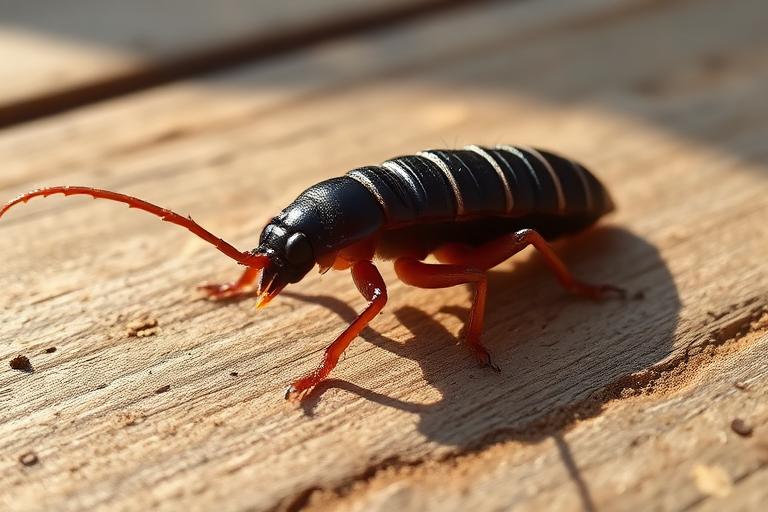
How to identify earwigs
- What it looks like
- Flattened reddish-brown insects with prominent forceps-like pincers at the rear.
- Size
- 1/4 to 1 inch
- Where you'll find it
- Mulch, under pots and stones, bathrooms, basements and door thresholds.
Signs of earwigs in your home
- Pincer bugs in tubs and sinks
- Notched holes in plant leaves
- Clusters under flower pots
Regional differences across the U.S.
Earwigs, primarily the European earwig (Forficula auricularia), are prevalent across the contiguous United States, particularly in the Pacific Northwest (Oregon, Washington) and Northeast due to cooler, moister climates. In the drier Southwest (Arizona, Nevada), ring-legged earwigs (Euborellia annulipes) are more common, preferring irrigated landscapes. Coastal regions, like California and Florida, experience year-round activity due to consistent humidity. Midwestern states see peak activity in late summer. Homes with poor drainage, excessive mulch, or foundation cracks are at higher risk regardless of region, as these provide harborage and moisture. Drought conditions can drive earwigs indoors seeking moisture.
Life cycle and timing that changes treatment
Earwigs undergo incomplete metamorphosis. Females lay clutches of 20-80 eggs in soil, hatching in about 7-10 days. Nymphs mature through 4-5 instars over 40-60 days. There is typically one generation per year in temperate climates, though two can occur in warmer regions. Overwintering occurs as adults or eggs in sheltered soil or leaf litter. Control efforts are most effective in late spring and early summer when populations are emerging and most active.
How to inspect for earwigs, step by step
- 1
Use a flashlight to inspect along door and window frames at night, as earwigs are nocturnal and will be actively foraging for food.
- 2
Place moistened rolled-up newspapers or short sections of hose in garden beds overnight; check them in the morning for trapped earwigs.
- 3
Examine areas under potted plants, landscape timbers, and decorative stones in shaded, moist areas around the foundation of the home.
- 4
Check basements, crawl spaces, and bathrooms for live earwigs, especially near drains, leaky pipes, or condensation-prone appliances like water heaters.
Treatment decision tree
| If you find this | Do this next |
|---|---|
| You find 1-2 earwigs indoors infrequently, mostly after rain. | This indicates incidental entry from outdoor populations. Focus on sealing exterior cracks and reducing perimeter moisture; no chemical treatment needed yet. |
| You see several earwigs indoors daily, especially in specific rooms. | Investigate potential entry points in those rooms and moisture sources. Consider perimeter baiting or targeted crack-and-crevice treatment with a desiccant dust. |
| You observe dozens of earwigs congregating on exterior walls or porch at night. | This suggests a large outdoor population. Implement a perimeter granular bait application and inspect for harborage sites like heavy mulch or debris close to the foundation. |
| You find earwigs in food preparation areas or pantry items repeatedly. | Immediate sanitation is crucial. Remove and inspect all stored food, use sticky traps, and seal all food containers to prevent contamination. Seek professional assistance. |
| Infestation is widespread throughout the house, with earwigs in beds and clothing. | This indicates a severe indoor harborage. A professional pest control service is necessary to identify hidden breeding sites and apply comprehensive treatments. |
Where DIY runs out of road
- • Over-the-counter pyrethroid sprays offer limited residual control against earwigs, which quickly repopulate from outdoor harborage, making reapplication frequent.
- • DIY perimeter sprays rarely penetrate deep enough into soil or dense mulch to effectively reduce large outdoor populations, only affecting surface-active individuals.
- • Applying insecticide directly indoors without addressing moisture or entry points often leads to earwigs dispersing into new areas, worsening the perceived problem.
When to call a professional
- • Persistent indoor earwig presence after thorough sanitation and sealing efforts.
- • Large populations outdoors that frequently breach the home's perimeter.
- • Concern about pesticide application around children, pets, or sensitive environments.
Safety and legal limits
Always read and strictly follow the pesticide label; it is a legal document. Misuse of any pesticide is illegal and can be dangerous to humans, pets, and the environment. Never apply restricted-use products unless certified. When using over-the-counter products, ensure adequate ventilation and wear appropriate personal protective equipment, such as gloves and eye protection. Keep children and pets away from treated areas until dry, as specified on the label. Avoid applying insecticides near aquatic environments to protect non-target organisms. Never apply products at rates higher than recommended.
Earwigs questions homeowners ask
Do earwigs crawl into your ears?
No — that is a myth. They are harmless to people, though the pincers can pinch.
Earwig control by city
Local technicians handle earwigs in every market below — pick your city for neighborhood coverage, seasonal notes and a free quote.
Related occasional invaders pests
Sources and further reading
Guidance on this page is compiled from EPA, CDC and land-grant university extension IPM publications, which are linked in the sources section. It is general information, not a diagnosis or a treatment recommendation for your property.
- Pest Notes: home and landscape pests — University of California Statewide IPM Program
- Pest control and pesticide fact sheets — National Pesticide Information Center (Oregon State University / EPA)
- Integrated Pest Management (IPM) principles — U.S. Environmental Protection Agency
- Safe pest control in and around the home — U.S. Environmental Protection Agency