
Occasional invaders
Stink bugs: identification & stink bug control
Also known as: shield bugs, brown marmorated stink bugs
Brown marmorated stink bugs enter through attic vents, siding gaps and window frames in fall. We apply a timed exterior barrier and seal entry points before the fall migration.
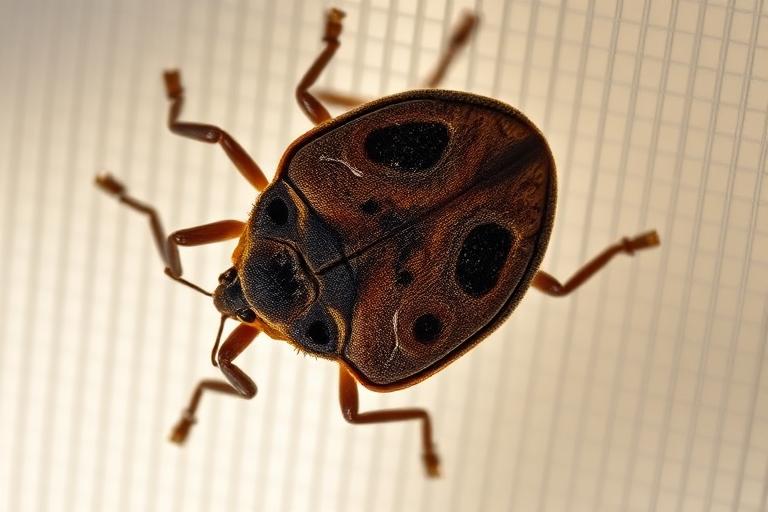
How to identify stink bugs
- What it looks like
- Shield-shaped mottled brown bugs with alternating light bands on the antennae and abdomen edge.
- Size
- 5/8 inch
- Where you'll find it
- Attics, wall voids, window frames, curtains and sunny siding.
- Commonly confused with
- Western conifer seed bugs are longer with flared hind legs.
Signs of stink bugs in your home
- Slow-flying shield-shaped bugs indoors
- Cilantro-like odor when crushed
- Clusters on siding in October
Is it really stink bugs? Side-by-side comparisons
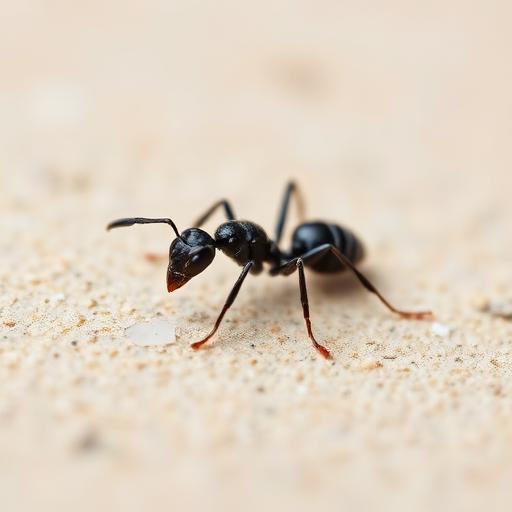
Stink bugs possess a broader, shield-like body. Western conifer seed bugs (Leptoglossus occidentalis) are more elongated with distinct, flattened, leaf-like expansions on their hind tibiae.
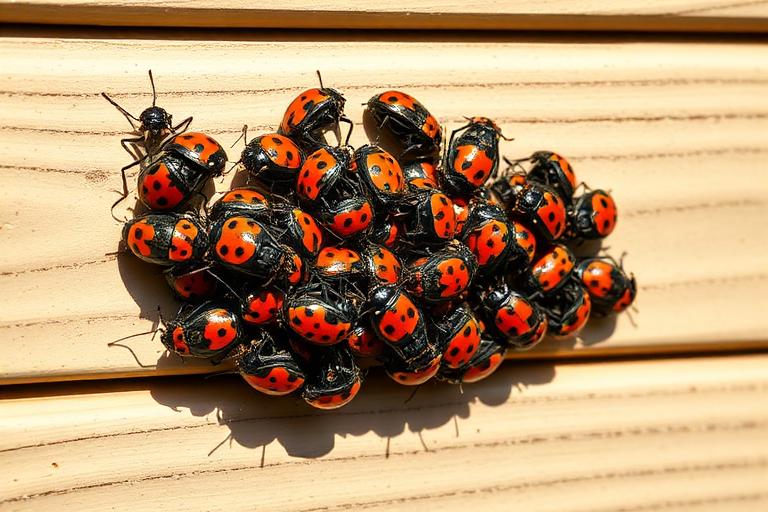
Boxelder bugs (Boisea trivittata) are narrower and black with distinctive red markings along their wing edges and on the pronotum, lacking the mottled brown and shield shape of stink bugs.
Squash bugs (Anasa tristis) are typically darker, more uniformly grey-brown, and have a flatter, more elongated body than the broader, shield-shaped stink bug, often with spiny legs.
Assassin bugs (Reduviidae family) often have a more robust, elongated head with a noticeable 'neck' and a distinctively curved, stout proboscis, unlike the straight, slender proboscis of a stink bug.
Regional differences across the U.S.
The brown marmorated stink bug (Halyomorpha halys) is the predominant nuisance species across the Mid-Atlantic states, extending into the Northeast and Pacific Northwest. In the South and Southwest, other native stink bug species like the green stink bug (Chinavia halaris) are more common, though H. halys is expanding its range. Seasonal timing for indoor aggregation typically begins in late August in northern states and can extend through October in warmer southern climates. Homes with light-colored siding or those exposed to direct afternoon sun are at higher risk for overwintering infestations, particularly in states like Pennsylvania, New Jersey, and Oregon where populations are well-established. Well-sealed, modern construction is less prone to invasion.
Life cycle and timing that changes treatment
Brown marmorated stink bugs complete 1-2 generations per year, with eggs laid from May to August. Nymphs mature through five instars in approximately 35-45 days. The critical stage for homeowner concern is adult aggregation, typically beginning in late summer/early fall when cooler temperatures prompt them to seek overwintering sites. They do not reproduce indoors but emerge from diapause in spring.
How to inspect for stink bugs, step by step
- 1
Use a flashlight to check around window and door frames, especially on upper stories and the sunny side of the house. Look for aggregations of live or dead insects.
- 2
Examine curtains, drapes, and fabric blinds for resting bugs, as they are attracted to vertical surfaces and warmth. Gently pull fabric away from the wall.
- 3
Inspect attic spaces, particularly around soffit vents and gable ends, for overwintering clusters. A headlamp can illuminate dark corners effectively.
- 4
Visually scan exterior siding, especially light-colored or south-facing walls, during late afternoon in late summer/early fall for active aggregation prior to indoor entry.
Treatment decision tree
| If you find this | Do this next |
|---|---|
| You observe 1-2 stink bugs indoors in late fall or winter, sluggish and near windows. | This indicates minor infiltration. Simply vacuum them up and seal obvious entry points like gaps around window screens. |
| You find 10-20 stink bugs indoors over a week, concentrated in a specific room or area. | A localized breach exists. Conduct a thorough inspection of that area's exterior perimeter for unsealed cracks or gaps and caulk them. |
| You consistently find 50+ stink bugs indoors during fall, emerging from various wall voids or attic access points. | This suggests a significant overwintering population. Focus on exterior exclusion, sealing all potential entry points greater than 1/8 inch. |
| You notice a strong, unpleasant odor, particularly when disturbing areas where stink bugs are present. | The odor is a defensive compound. Avoid crushing bugs; use a vacuum with a hose attachment or a hand-held vacuum dedicated for pest removal. |
| You observe hundreds of stink bugs swarming exterior walls in late summer, attempting to enter the structure. | This is a pre-infestation warning. Implement exterior exclusion measures immediately and consider a professional perimeter insecticide application. |
Where DIY runs out of road
- • Pyrethroid-based foggers or 'bug bombs' are ineffective for stink bugs as they do not penetrate wall voids where bugs hide, often driving them deeper.
- • Crushing stink bugs releases their defensive odor, attracting more bugs and staining surfaces, making indoor cleanup and deterrence more challenging.
- • Indiscriminate spraying of interior surfaces with DIY insecticides will not prevent new invasions from unseen entry points and risks unnecessary chemical exposure.
When to call a professional
- • Persistent indoor presence of numerous stink bugs despite extensive DIY sealing efforts.
- • Inability to access or safely treat high exterior entry points like soffit vents or rooflines.
- • Identification of large, established overwintering populations within wall voids or attic spaces.
Safety and legal limits
Always read and strictly follow pesticide product labels; it is a federal law. Misuse can lead to ineffective control, environmental contamination, and health risks. Never apply outdoor-use pesticides indoors. Restrict children and pets from treated areas until dry. When using aerosol or dust products, ensure adequate ventilation and wear appropriate personal protective equipment, such as gloves and a respirator, to avoid inhalation or skin contact. Store all pesticides in their original containers, out of reach of children and pets. Consider integrated pest management (IPM) strategies to minimize reliance on chemical treatments.
Stink bugs questions homeowners ask
Why do I have stink bugs in winter?
They overwinter in wall voids and attics and wander into living space when heating warms the structure.
Stink bug control by city
Local technicians handle stink bugs in every market below — pick your city for neighborhood coverage, seasonal notes and a free quote.
Related occasional invaders pests
Sources and further reading
Guidance on this page is compiled from EPA, CDC and land-grant university extension IPM publications, which are linked in the sources section. It is general information, not a diagnosis or a treatment recommendation for your property.
- Pest Notes: home and landscape pests — University of California Statewide IPM Program
- Pest control and pesticide fact sheets — National Pesticide Information Center (Oregon State University / EPA)
- Integrated Pest Management (IPM) principles — U.S. Environmental Protection Agency
- Safe pest control in and around the home — U.S. Environmental Protection Agency