
Occasional invaders
Millipedes: identification & millipede control
Millipedes migrate indoors when soil gets saturated or dries suddenly. We treat the perimeter band, pull mulch back from the foundation and seal door sweeps and thresholds.
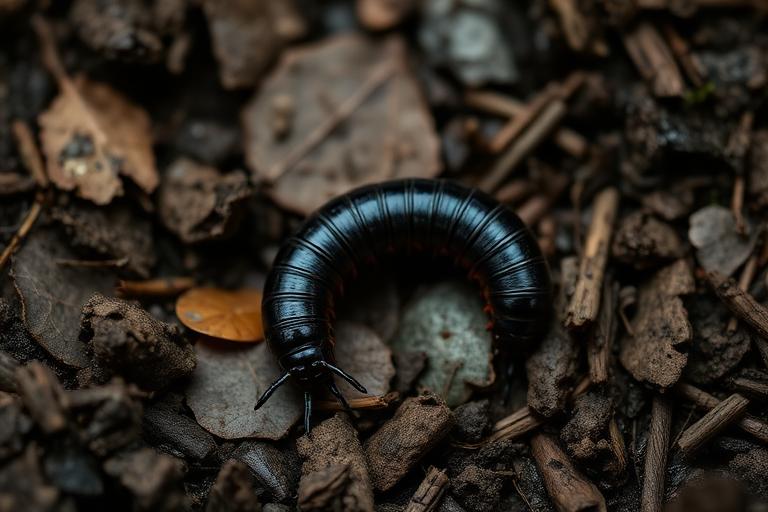
How to identify millipedes
- What it looks like
- Cylindrical brown to black segmented bodies with two pairs of legs per segment.
- Size
- 1/2 to 1.5 inches
- Where you'll find it
- Mulch, leaf litter, under stones and logs, garages and basements after rain.
- Commonly confused with
- Centipedes are flattened, faster and have one pair of legs per segment.
Signs of millipedes in your home
- Dead coiled millipedes on garage floors
- Mass invasions after heavy rain
- Activity along the foundation line
Is it really millipedes? Side-by-side comparisons
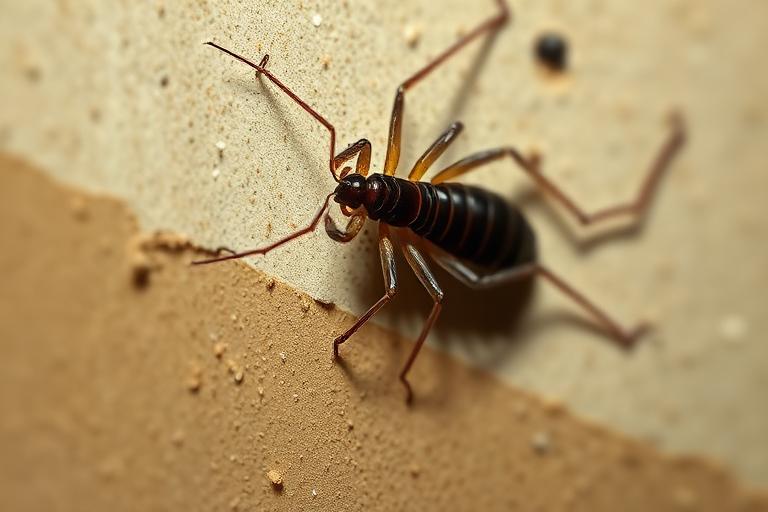
Millipedes have a cylindrical body and two pairs of legs per body segment, moving slowly; centipedes are flattened, fast, and have one pair of legs per segment.
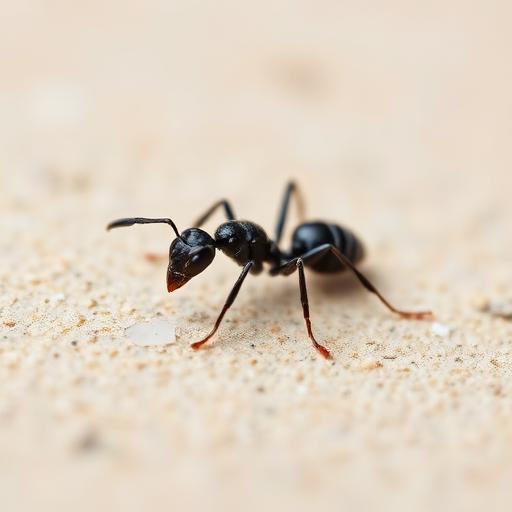
Wireworms are hard, slender larvae with only three pairs of legs near the head; millipedes have numerous leg pairs along their segmented body.
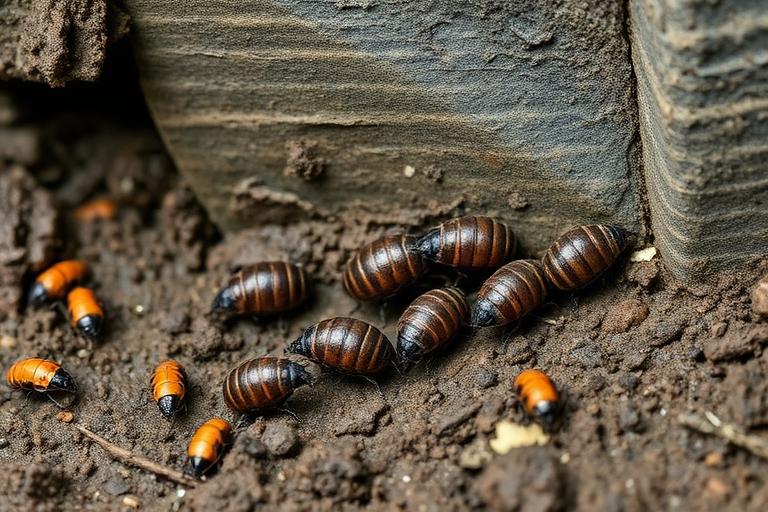
Sowbugs and pillbugs are crustaceans with seven pairs of legs and a flattened, oval body; millipedes are arthropods with many legs along a cylindrical body.
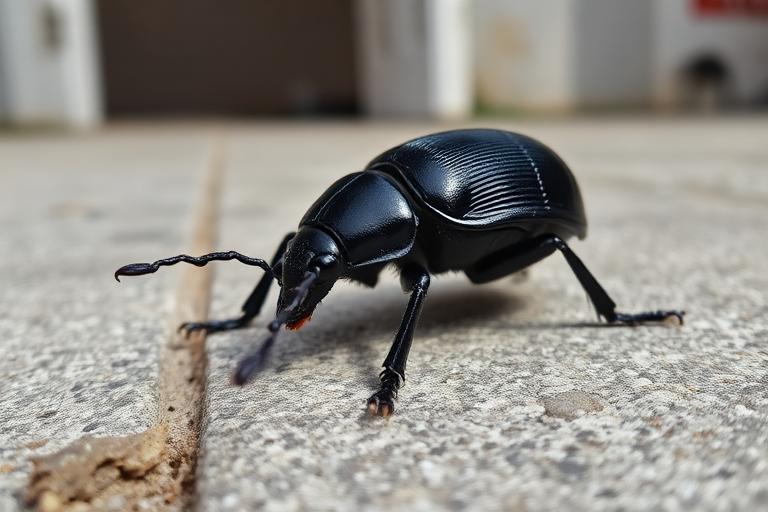
Beetle larvae vary but typically have a distinct head capsule and fewer leg pairs; millipedes have a distinct head and many, evenly spaced leg pairs along the body.
Regional differences across the U.S.
Millipede species vary by region. In the humid Southeast, species like the American giant millipede (Narceus americanus) are common, thriving in abundant leaf litter and high moisture, especially after summer rains. Western states like California and Arizona may encounter the desert millipede (Orthoporus ornatus), which is more active during monsoon seasons. In the Midwest and Northeast, garden millipedes (Paradoxosoma spp.) are prevalent, often entering homes during prolonged wet periods or droughts when their outdoor habitats become unsuitable. Construction types, such as homes with basements or crawl spaces common in many regions, increase entry points for millipedes seeking shelter.
Life cycle and timing that changes treatment
Millipedes undergo gradual metamorphosis. Eggs hatch into larvae, molting several times to reach adulthood, a process taking 1-2 years. Most species produce one generation per year. Adults typically overwinter in protected outdoor sites like under rocks or in soil, emerging in spring. Peak activity and potential indoor invasions usually occur in late summer and fall, especially after heavy rains or during dry spells.
How to inspect for millipedes, step by step
- 1
Use a flashlight to scan along exterior foundation walls, particularly near landscaping beds, checking for millipedes active at night or sheltering under debris.
- 2
Examine damp areas in basements, crawl spaces, and garages, especially under boxes, rugs, and near drains, using a moisture meter to identify high-humidity spots.
- 3
Inspect the perimeter of door frames and window sills for cracks or gaps, using a thin probe or credit card to check for openings where millipedes can enter.
- 4
Look under leaf litter, mulch, and potted plants around the home's foundation during daylight hours to locate common millipede harborage sites.
Treatment decision tree
| If you find this | Do this next |
|---|---|
| You see 1-2 millipedes indoors periodically, usually after rain | This indicates casual entry from outdoor populations. Focus on sealing exterior cracks and reducing perimeter moisture; no chemical treatment is likely needed. |
| You find 5-10 millipedes indoors over a week, often in damp areas like the basement | A localized outdoor population is likely migrating indoors. Implement barrier treatments with diatomaceous earth and improve outdoor drainage. |
| Dozens of millipedes appear indoors, particularly after prolonged wet periods or landscape disturbances | This suggests significant outdoor harborage and active entry points. Apply granular or liquid perimeter treatments containing pyrethroids or carbamates and seal all entry points. |
| Millipedes are consistently found in living spaces upstairs, not just basements | Widespread entry points or an overlooked indoor moisture source is present. Conduct a thorough structural inspection for hidden leaks and consider professional help. |
| Hundreds of millipedes are invading the home, forming trails or piles, especially in autumn | This is a mass migration event requiring aggressive exterior treatment with a non-repellent fipronil-based termiticide to create a lasting barrier, combined with extensive moisture control and sealing. |
Where DIY runs out of road
- • Over-the-counter repellent sprays often only temporarily deter millipedes, causing them to move to untreated areas or find new entry points rather than eliminating the source population.
- • Applying insecticide dusts or granules without addressing underlying moisture issues will not solve a millipede problem, as they will continue to seek damp environments indoors.
- • Improper identification can lead to ineffective treatments; for example, mistaking millipedes for centipedes (which require different control strategies) wastes time and product.
When to call a professional
- • Persistent indoor millipede presence despite sealing and moisture control efforts.
- • Mass invasions involving hundreds of millipedes entering the home.
- • When millipedes are found consistently in sensitive areas like kitchens or bedrooms.
Safety and legal limits
Always read and strictly follow the pesticide label instructions. The label is a legal document, and misuse is a violation of federal law. Avoid using restricted-use products unless you are a licensed applicator. When applying any pesticide, ensure proper ventilation and keep children and pets away from treated areas until dry. Wear appropriate personal protective equipment, such as gloves and eye protection. Do not apply products to surfaces that will be in direct contact with food or to areas accessible to infants. Millipedes are not protected species, nor do they vector diseases, but general safety precautions apply to all pesticide applications.
Millipedes questions homeowners ask
Why are millipedes coming in my house?
Heavy rain or drought pushes them out of mulch and soil; they die quickly indoors because it is too dry.
Millipede control by city
Local technicians handle millipedes in every market below — pick your city for neighborhood coverage, seasonal notes and a free quote.
Related occasional invaders pests
Sources and further reading
Guidance on this page is compiled from EPA, CDC and land-grant university extension IPM publications, which are linked in the sources section. It is general information, not a diagnosis or a treatment recommendation for your property.
- Pest Notes: home and landscape pests — University of California Statewide IPM Program
- Pest control and pesticide fact sheets — National Pesticide Information Center (Oregon State University / EPA)
- Integrated Pest Management (IPM) principles — U.S. Environmental Protection Agency
- Safe pest control in and around the home — U.S. Environmental Protection Agency