
Occasional invaders
Boxelder bugs: identification & boxelder bug control
Boxelder bugs gather on warm walls in fall and overwinter in wall voids. Control is a timed exterior treatment before they enter, plus sealing of siding and window gaps.
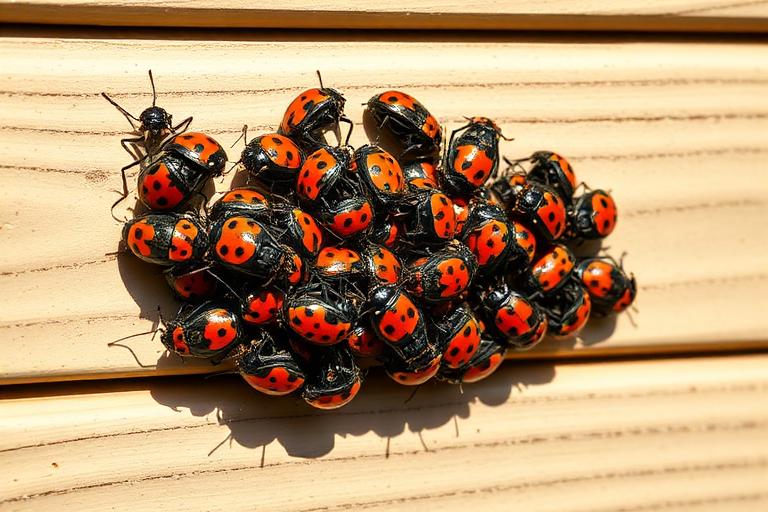
How to identify boxelder bugs
- What it looks like
- Flat black bugs with three bright red-orange lines on the thorax and red wing edges.
- Size
- 1/2 inch
- Where you'll find it
- Sunny south and west walls, boxelder and maple trees, wall voids and attics.
- Commonly confused with
- Milkweed bugs are similar but have an X pattern and stay on milkweed.
Signs of boxelder bugs in your home
- Masses of bugs on siding in autumn
- Bugs at windows on warm winter days
- Reddish stain marks on curtains
Is it really boxelder bugs? Side-by-side comparisons
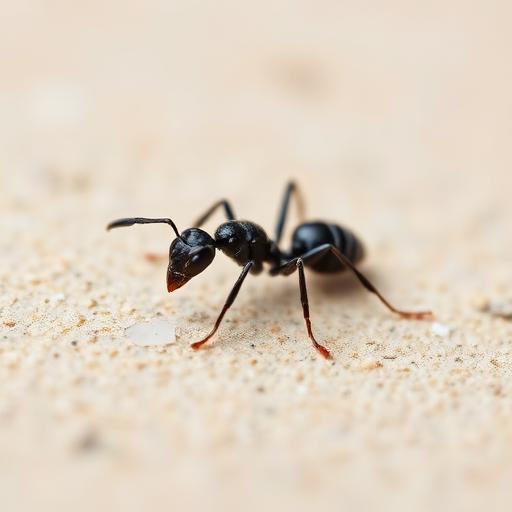
Boxelder bugs have three distinct red-orange lines on the thorax; milkweed bugs (Oncopeltus fasciatus) display a prominent X-shaped orange pattern on their wings and are found exclusively on milkweed plants.
Western conifer seed bugs (Leptoglossus occidentalis) are larger, browner, have flattened leaf-like hind legs, and emit a strong odor when disturbed, unlike the generally odorless boxelder bug.
Red-shouldered bugs (Jadera haematoloma) are similar in size but possess a more uniformly reddish-orange pronotal collar behind the head, without the distinct thoracic stripes of a boxelder bug.
Squash bugs (Anasa tristis) are typically grayish-brown, often larger, lack the bright red markings, and have a more shield-like body shape, primarily infesting cucurbit plants.
Regional differences across the U.S.
The boxelder bug, Boisea trivittata, is common throughout the eastern and central US, extending into California, thriving where boxelder (Acer negundo), maple, and ash trees are present. In the Pacific Northwest, particularly Oregon and Washington, a distinct subspecies, Boisea rubrolineata, is prevalent, often associated with maple species. Midwestern and Northeastern states (e.g., Ohio, New York) experience peak nuisance migrations into homes in late September and October as temperatures drop. In warmer Southern states (e.g., Georgia, Alabama), boxelder bugs may remain active later into fall and emerge earlier in spring. Homes with light-colored siding or those on south- or west-facing slopes are at higher risk due to solar warming creating attractive overwintering sites, especially in regions with cold winters.
Life cycle and timing that changes treatment
Boxelder bugs undergo simple metamorphosis: egg, nymph (five instars), and adult. The entire cycle takes 4-6 weeks. There are typically two generations per year in most regions, but up to three in warmer climates. Adults overwinter in protected areas, emerging in spring to lay eggs on host trees. Nymphs develop throughout summer, with the second generation maturing in late summer/early fall. This final generation is responsible for seeking overwintering sites in structures.
How to inspect for boxelder bugs, step by step
- 1
Examine south and west-facing exterior walls of the structure, especially near foundation and roofline, looking for clusters of adult bugs sunning themselves or congregating near entry points.
- 2
Inspect window and door frames, utility penetrations (pipes, wires), and fascia boards for gaps or cracks as small as 1/8 inch, using a bright flashlight held at a low angle to highlight shadows.
- 3
Check attic spaces and wall voids, particularly those on sunny exposures, for overwintering adults. Use a moisture meter to detect potential moisture issues that could attract other pests, or a borescope to look into voids.
- 4
Examine host trees (boxelder, maple, ash) on the property for nymphs and adults during summer months, especially around the base and on leaves, to gauge local population pressure.
Treatment decision tree
| If you find this | Do this next |
|---|---|
| You see 1-2 boxelder bugs indoors during late fall/winter. | These are likely overwintering individuals. Simply vacuum them up and seal any visible entry points with caulk or screen. |
| You observe dozens of boxelder bugs congregating on exterior walls in late summer/early fall. | This indicates active aggregation prior to overwintering. Consider exterior perimeter treatment with an approved contact insecticide like permethrin or bifenthrin, focusing on sunny walls and entry points, and seal exterior gaps. |
| You find hundreds of live or dead boxelder bugs in attics or wall voids during winter/spring. | This signifies a significant overwintering infestation. Professional treatment may be required for void areas. Consider applying diatomaceous earth to voids if accessible, and seal all exterior entry points for future prevention. |
| You see active boxelder bug feeding on boxelder or maple trees during summer, with damaged foliage. | While generally not harmful to trees, high populations indicate future home invasion risk. Consider targeted trunk or soil applications of systemic insecticides like imidacloprid to host trees, following label instructions, to reduce populations. |
| You experience recurring, large-scale indoor infestations despite diligent sealing and exterior treatments. | This suggests a persistent nearby harborage or unsealed entry points. A professional pest control operator can conduct a more thorough inspection and apply targeted treatments, potentially including void treatments or residual exterior applications. |
Where DIY runs out of road
- • Over-the-counter contact sprays offer temporary knockdown but do not provide residual control in wall voids or effectively prevent re-entry from exterior harborage areas.
- • Indiscriminate application of repellents can scatter pests into new areas of the home, making future control more difficult as they seek alternative, often hidden, overwintering sites.
- • Attempting to treat large, tall trees with consumer-grade products is often ineffective and can lead to improper application, wasting product and potentially harming non-target organisms.
When to call a professional
- • Persistent indoor infestations after sealing all accessible entry points and applying exterior perimeter treatments.
- • Infestations involving high numbers of bugs inside wall voids, attics, or other inaccessible areas.
- • Desire for preventative treatment on large host trees that are too tall for homeowner application.
Safety and legal limits
Always read and follow the pesticide label precisely. The label is a legal document, and deviation is a violation of federal law. Use only products registered for residential use against boxelder bugs. Ensure adequate ventilation if applying indoors. Keep children and pets away from treated areas until dry. Avoid applying insecticides when rain is expected or wind speeds are high to prevent runoff and drift. Store pesticides in their original containers, locked, and out of reach of children and pets. Consider wearing appropriate personal protective equipment (PPE), such as gloves and eye protection, even for general use products. Never apply insecticides directly to water bodies or in a manner that could contaminate them.
Boxelder bugs questions homeowners ask
Do boxelder bugs bite or damage the house?
No, they are nuisance pests, but their fecal spots stain fabric and siding.
Boxelder bug control by city
Local technicians handle boxelder bugs in every market below — pick your city for neighborhood coverage, seasonal notes and a free quote.
Related occasional invaders pests
Sources and further reading
Guidance on this page is compiled from EPA, CDC and land-grant university extension IPM publications, which are linked in the sources section. It is general information, not a diagnosis or a treatment recommendation for your property.
- Pest Notes: home and landscape pests — University of California Statewide IPM Program
- Pest control and pesticide fact sheets — National Pesticide Information Center (Oregon State University / EPA)
- Integrated Pest Management (IPM) principles — U.S. Environmental Protection Agency
- Safe pest control in and around the home — U.S. Environmental Protection Agency