
Ants
Pharaoh ants: identification & pharaoh ant control
Pharaoh ants are a serious indoor pest in kitchens, hospitals and apartments because spraying causes colonies to bud into dozens of new nests. Control is a structured baiting program with monitoring until trails disappear.
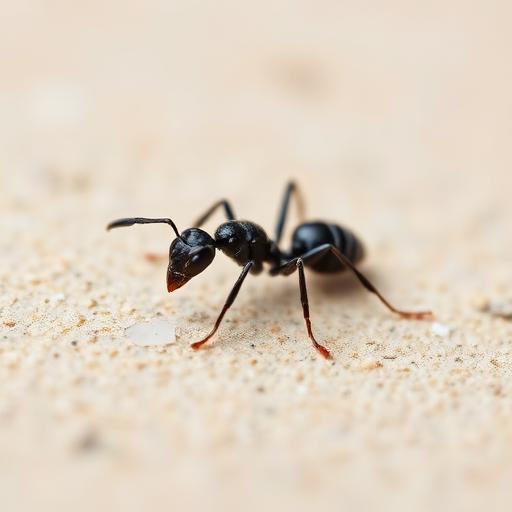
How to identify pharaoh ants
- What it looks like
- Very small pale yellow to light amber ants with a darker abdomen tip.
- Size
- 1/16 inch
- Where you'll find it
- Wall voids, behind outlets, near warm plumbing, in appliances and hospitals.
- Commonly confused with
- Thief ants are similar but slightly smaller with a two-segmented club antenna.
Signs of pharaoh ants in your home
- Faint trails to sinks and drains
- Ants in bathrooms and around medical supplies
- Ants appearing in multiple rooms at once
Is it really pharaoh ants? Side-by-side comparisons
Pharaoh ants possess a 3-segmented antennal club, while thief ants have a distinctive 2-segmented club, visible under magnification.
Pharaoh ants are uniformly pale yellow to amber; pavement ants are much darker brown to black with parallel ridges on their head and thorax.
Pharaoh ants are significantly smaller (1/16") and pale; Argentine ants are larger (1/8") and dark brown, often emitting a greasy odor when crushed.
Pharaoh ants are pale yellow and lack the distinctive 'rotten coconut' odor released by odorous house ants when crushed.
Regional differences across the U.S.
Pharaoh ants (Monomorium pharaonis) are prevalent throughout the entire United States, thriving particularly in warmer, humid climates found in states like Florida, Texas, and Louisiana. However, their reliance on indoor harborage for warmth and moisture allows them to infest structures year-round even in colder northern states, such as Minnesota or Massachusetts, where they are almost exclusively indoor pests. Construction factors like slab-on-grade foundations or extensive plumbing networks in commercial buildings increase their risk by providing abundant protected foraging and nesting sites. Climate-controlled environments, regardless of outdoor temperatures, favor their continuous activity. There are no distinct regional subspecies; M. pharaonis is globally invasive.
Life cycle and timing that changes treatment
Pharaoh ants exhibit continuous breeding with no true overwintering stage when indoors. The full life cycle from egg to adult worker averages 38-45 days at typical indoor temperatures (70-86°F). Colonies can produce multiple broods annually, leading to rapid population growth. New colonies are often formed through 'budding,' where a queen and a subset of workers leave the main nest to establish a new one, a critical factor for control strategies.
How to inspect for pharaoh ants, step by step
- 1
Use a flashlight at a low angle to inspect along baseboards and under appliances, particularly in kitchens and bathrooms, for foraging trails.
- 2
Carefully check behind electrical outlets and switch plates, as pharaoh ants often nest in wall voids, using a screwdriver to remove covers.
- 3
Examine areas around warm plumbing fixtures, hot water heaters, and leaky pipes; use a moisture meter to identify potential high-humidity nesting sites.
- 4
Place glue monitors discreetly in suspected high-traffic areas near food sources or water, such as under sinks or pantry shelves, to confirm activity.
Treatment decision tree
| If you find this | Do this next |
|---|---|
| You observe a single pharaoh ant foraging on a countertop. | This indicates initial activity. Avoid spraying; monitor for more activity and consider placing a small, attractive protein-based bait station. |
| You see several pharaoh ants foraging in a trail towards a food source. | This signifies an active foraging trail. Do not disturb the trail; strategically place multiple, varied bait stations (sugar and protein) directly along the trail. |
| You find pharaoh ants repeatedly in multiple rooms, including bathrooms and bedrooms. | This suggests multiple satellite colonies or a large, established infestation. Implement a whole-house baiting strategy with different bait types. |
| You observe pharaoh ants emerging from electrical outlets or wall voids. | This indicates nests within inaccessible areas. Utilize a gel or granular bait specifically designed for crack and crevice application into these harborages. |
| You consistently find hundreds of pharaoh ants despite extensive baiting efforts over several weeks. | This suggests a very large, pervasive infestation or resistant population. Professional pest control intervention is warranted for effective management. |
Where DIY runs out of road
- • Over-the-counter repellent sprays or residual insecticides typically exacerbate pharaoh ant infestations by causing colonies to 'bud' and disperse.
- • Applying non-specific baits without understanding pharaoh ant foraging preferences (sweet vs. protein) often leads to bait avoidance and ineffective control.
- • Attempting to seal entry points without eliminating the interior colonies can trap ants inside walls, forcing them to find new exit points throughout the structure.
When to call a professional
- • Infestations persist or worsen after 2-3 weeks of diligent DIY baiting.
- • Ants are found in sensitive areas like hospitals, food preparation facilities, or healthcare settings.
- • You identify ants emerging from inaccessible areas such as behind walls, under floors, or extensive ceiling voids.
Safety and legal limits
Always read and strictly follow the pesticide product label, as it is a legal document. Misuse of any pesticide can be harmful to humans, pets, and the environment. Never apply restricted-use products unless you are a certified applicator; these are not available for consumer purchase. When using over-the-counter baits or non-repellent sprays, ensure adequate ventilation. Keep all pesticides, especially bait stations, out of reach of children and pets to prevent accidental ingestion or contact. Monitor children and pets to ensure they do not disturb bait placements. Choose baits with active ingredients that are less toxic to mammals, such as hydramethylnon or s-methoprene, when possible.
Pharaoh ants questions homeowners ask
What are the tiny yellow ants in my bathroom?
Usually pharaoh ants, which are drawn to moisture and grease and nest inside wall voids.
Why should I never spray pharaoh ants?
Insecticide sprays trigger budding — the colony splits and spreads through the building.
Pharaoh ant control by city
Local technicians handle pharaoh ants in every market below — pick your city for neighborhood coverage, seasonal notes and a free quote.
Related ants pests
Sources and further reading
Guidance on this page is compiled from EPA, CDC and land-grant university extension IPM publications, which are linked in the sources section. It is general information, not a diagnosis or a treatment recommendation for your property.
- Pest Notes: home and landscape pests — University of California Statewide IPM Program
- Pest control and pesticide fact sheets — National Pesticide Information Center (Oregon State University / EPA)
- Integrated Pest Management (IPM) principles — U.S. Environmental Protection Agency
- Safe pest control in and around the home — U.S. Environmental Protection Agency