
Ants
Odorous house ants: identification & odorous house ant control
Also known as: sugar ants, stink ants, coconut ants
Odorous house ants form huge multi-queen colonies that split when sprayed. We bait trails, treat harborage under slabs and mulch, and remove the moisture and sugar sources that keep them coming back to kitchens and bathrooms.
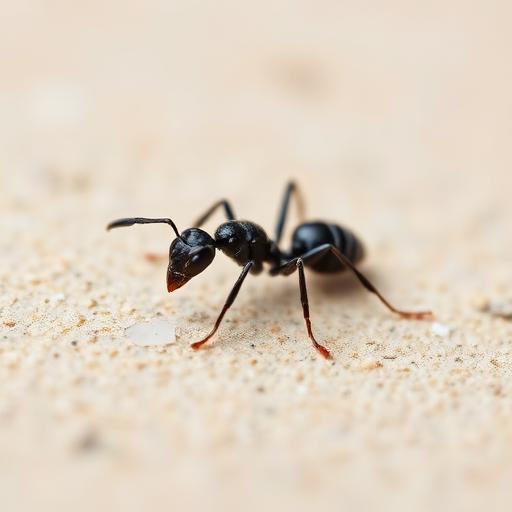
How to identify odorous house ants
- What it looks like
- Small dark brown to black ants with an uneven thorax and a hidden waist node.
- Size
- 1/16 to 1/8 inch
- Where you'll find it
- Under sinks, in wall voids, beneath mulch, stones and potted plants.
- Commonly confused with
- Pavement ants have parallel head grooves and prefer sidewalk cracks.
Signs of odorous house ants in your home
- Fast-moving trails on counters
- Rotten-coconut smell when crushed
- Ants around honey, syrup and pet food
Is it really odorous house ants? Side-by-side comparisons
Odorous house ants lack the parallel grooves on the head characteristic of pavement ants; examine the head closely with magnification.
Crush an odorous house ant; it produces a distinct rotten coconut-like odor, which Argentine ants do not.
Odorous house ants have an unevenly rounded thoracic profile when viewed from the side, unlike the more distinctly notched thorax of carpenter ants.
Odorous house ants are uniformly dark brown to black and larger than the yellowish-brown pharaoh ants, which have two nodes in their waist.
Regional differences across the U.S.
Odorous house ants (Tapinoma sessile) are ubiquitous across the continental US, but regional environmental factors influence colony behavior. In the Pacific Northwest and Northeast, increased rainfall often drives colonies indoors for shelter, particularly in fall and winter. In arid Southwest regions like Arizona and Southern California, access to consistent moisture, such as from irrigation or leaking pipes, is a primary driver for indoor foraging. In the Southeast, including Florida and Georgia, higher humidity and warmer temperatures year-round allow for more consistent outdoor foraging and larger, more diffuse colony structures, increasing the likelihood of satellite colonies forming within structures. Construction types also play a role; homes with crawl spaces or slab foundations in humid climates are particularly vulnerable to hidden infestations.
Life cycle and timing that changes treatment
Odorous house ants exhibit complete metamorphosis: egg, larva, pupa, and adult. The egg-to-adult development typically takes 3-4 weeks under optimal conditions. Colonies produce multiple generations per year, often continuously in warmer climates, leading to rapid population growth. Queens can live for several years, laying hundreds of eggs. Overwintering occurs as adult ants and queens within protected nests, both indoors and outdoors, allowing colonies to resume activity quickly in spring.
How to inspect for odorous house ants, step by step
- 1
Use a flashlight at a low angle to inspect along baseboards, under sinks, and around window frames for foraging trails, which often indicate hidden entry points.
- 2
Place glue monitors in discreet areas like behind appliances, inside pantry cabinets, and near potted plants to capture ants and confirm travel paths.
- 3
Employ a moisture meter around plumbing penetrations, under leaky sinks, and near shower stalls to identify moisture sources attracting ant colonies.
- 4
Examine outdoor areas near the foundation, focusing on mulch beds, stepping stones, and wood piles, lifting items to locate shallow nests or foraging tunnels.
Treatment decision tree
| If you find this | Do this next |
|---|---|
| You see occasional individual ants foraging indoors, especially in the kitchen or bathroom. | This indicates a foraging scout; clean up food debris and wipe down surfaces to eliminate attractants. Monitor for increased activity. |
| You observe small trails of 5-10 ants repeatedly following a path on a counter or floor. | This signifies a persistent foraging trail; use non-repellent liquid ant bait stations placed directly along the trail to encourage feeding and colony transfer. |
| You find ants in multiple indoor locations, including wall voids, under appliances, or around windows. | This suggests an established indoor satellite colony or foraging from an outdoor nest; deploy multiple bait stations and seal visible entry points. |
| You discover a large number of ants, potentially hundreds, emerging from a specific crack or void. | This indicates a significant nesting site within the structure; target the nest directly with non-repellent dust or foam insecticides if accessible, alongside outdoor perimeter baiting. |
| You've applied multiple DIY treatments without success, and ant activity is widespread and persistent for several weeks. | This implies a large, possibly multi-nest colony; professional intervention is required for comprehensive identification and treatment using advanced methods like non-repellent perimeter barrier sprays and targeted interior treatments. |
Where DIY runs out of road
- • Over-the-counter repellent sprays often scatter colonies, causing them to split into multiple satellite nests (budding), making the infestation larger and more challenging to control.
- • Applying granular baits without first identifying the ant species can lead to rejection if the ants prefer liquids or gels, wasting product and allowing the colony to grow.
- • Attempting to seal entry points before eliminating the colony can trap ants indoors, forcing them to find new exit points within living spaces, increasing indoor activity.
When to call a professional
- • Persistent indoor ant activity despite consistent DIY baiting and sanitation for over two weeks.
- • Discovery of multiple ant trails or nests in different areas of the home, indicating a large, complex colony structure.
- • Ants found nesting within electrical outlets, behind baseboards, or in other inaccessible structural voids.
Safety and legal limits
Always read and strictly follow all product label instructions; the label is a legal document. Never apply more product than specified. Store all pesticides in their original containers, out of reach of children and pets, in a locked cabinet. Avoid using aerosols or repellent sprays indoors near food preparation surfaces, as these can contaminate food and scatter colonies. For indoor baiting, place stations in areas inaccessible to curious pets or small children. If using dusts or liquid non-repellents in cracks and crevices, ensure adequate ventilation. Odorous house ants are not a protected species, nor do they transmit diseases, but professional pesticide application is regulated by state and federal law, and licensed professionals are trained to minimize exposure risks.
Odorous house ants questions homeowners ask
What are the tiny black ants in my kitchen?
Most often odorous house ants — crush one and check for a coconut or blue-cheese odor to confirm.
Why did spraying make more ants appear?
Repellent sprays cause budding, where the colony splits into new nests. Baiting is the correct approach.
Odorous house ant control by city
Local technicians handle odorous house ants in every market below — pick your city for neighborhood coverage, seasonal notes and a free quote.
Related ants pests
Sources and further reading
Guidance on this page is compiled from EPA, CDC and land-grant university extension IPM publications, which are linked in the sources section. It is general information, not a diagnosis or a treatment recommendation for your property.
- Pest Notes: home and landscape pests — University of California Statewide IPM Program
- Pest control and pesticide fact sheets — National Pesticide Information Center (Oregon State University / EPA)
- Integrated Pest Management (IPM) principles — U.S. Environmental Protection Agency
- Safe pest control in and around the home — U.S. Environmental Protection Agency