
Ants
Thief ants: identification & thief ant control
Also known as: grease ants, sugar ants
Thief ants are among the smallest household ants and prefer grease and protein over sugar, which is why sugar baits fail. We use protein-based baiting and treat the tight cracks where they nest.
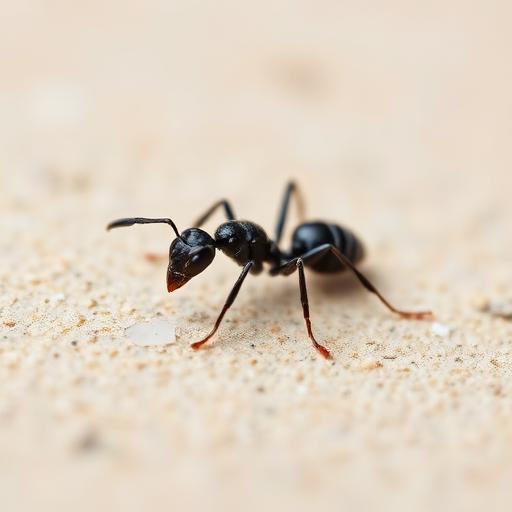
How to identify thief ants
- What it looks like
- Extremely small pale yellow to light brown ants with a two-segmented antennal club.
- Size
- 1/32 to 1/16 inch
- Where you'll find it
- Cabinet cracks, wall voids, under counters and inside other ants' nests.
- Commonly confused with
- Pharaoh ants are slightly larger with a three-segmented club.
Signs of thief ants in your home
- Barely visible ants on greasy surfaces
- Trails to meat, cheese and pet food
- Ants ignoring sweet baits
Is it really thief ants? Side-by-side comparisons
Examine antennae: Thief ants have a two-segmented club; Pharaoh ants have a three-segmented club, a key differentiator.
Crush an ant: Thief ants lack the characteristic greasy, rotten coconut-like odor emitted by Argentine ants when disturbed.
Size is crucial: Thief ants are significantly smaller (1/32-1/16 inch) than odorous house ants (1/10-1/8 inch).
Habitat and color: Thief ants are pale yellow to light brown and prefer indoor voids; pavement ants are dark brown/black and nest outdoors under pavers.
Regional differences across the U.S.
Thief ants (Solenopsis molesta) are widespread across the entire contiguous United States, adapting to diverse climates. In arid Southwestern states like Arizona and New Mexico, they commonly nest deep underground to avoid desiccation, often entering structures during extended dry spells in search of water. In the humid Southeast (e.g., Florida, Georgia), populations can be higher due to favorable moisture conditions, with more frequent foraging indoors during heavy rains. Northern states (e.g., Minnesota, Maine) see a strong seasonal component, with indoor activity peaking in late summer and fall as colonies seek overwintering sites or food stores. Construction types like slab-on-grade foundations common in the South can offer easier entry points into wall voids than basements typical in the North.
Life cycle and timing that changes treatment
Thief ants undergo complete metamorphosis: egg, larva, pupa, and adult. The egg-to-adult development typically takes 21-30 days, allowing multiple generations per year. Colonies can produce new queens and males (alates) from spring through fall, though swarming is often inconspicuous due to their small size. They overwinter as adults within the nest, becoming active again as temperatures rise in spring.
How to inspect for thief ants, step by step
- 1
Use a flashlight at a low angle to inspect along baseboards, behind appliances, and under sinks for trails of extremely small ants.
- 2
Place clear sticky traps or glue monitors inside lower kitchen cabinets, pantries, and near suspected entry points to capture foraging ants and confirm species.
- 3
Carefully inspect electrical outlets and switch plates using a non-contact voltage tester; thief ants frequently nest within these warm, protected wall voids.
- 4
Check food packages, especially greasy or protein-rich items like pet food, nuts, and cheeses, for tiny ants entering or exiting.
Treatment decision tree
| If you find this | Do this next |
|---|---|
| You observe 1-2 individual thief ants foraging on a countertop once a week. | This indicates minor exploratory activity. Increase sanitation and seal visible entry points. Monitor with glue traps for escalation. |
| You consistently see small trails of thief ants foraging in a specific kitchen cabinet. | Sanitize thoroughly and remove food sources. Place targeted, protein-based liquid ant baits near trails, away from children and pets. |
| You find thief ants repeatedly in multiple rooms, including non-food areas like bathrooms or bedrooms. | This suggests a larger, established colony or multiple colonies. Expand baiting efforts to all affected areas and consider perimeter treatment outdoors. |
| You discover a large number of ants, including winged reproductives, emerging from a wall void or electrical outlet. | This is likely a mature colony nesting indoors. Immediate professional intervention is recommended for effective treatment and nest location. |
| Ants are contaminating food, infesting sensitive areas, or DIY treatments have failed to reduce activity after two weeks. | A professional pest control technician is necessary. They can accurately identify the species and apply targeted, restricted-use insecticides if needed. |
Where DIY runs out of road
- • Over-the-counter repellent sprays often scatter thief ant colonies, causing them to bud into multiple new colonies and worsen the infestation.
- • Applying granular baits meant for larger ants is ineffective; thief ants require specific liquid or gel baits designed for their tiny mouths and food preferences.
- • Failure to locate and treat the actual nest, often hidden deep within wall voids or under foundations, means DIY efforts provide only temporary relief.
When to call a professional
- • If ants are consistently found in multiple, non-food-related areas, indicating a pervasive infestation.
- • When ants are emerging from electrical outlets, wall voids, or other inaccessible structural areas.
- • After two weeks of diligent DIY baiting and sanitation efforts yield no significant reduction in ant activity.
Safety and legal limits
Always read and strictly follow all product labels. Misapplication of pesticides is a violation of federal law. Never use outdoor-only products indoors, and ensure proper ventilation if using aerosols. Store all pesticides out of reach of children and pets in a secure, labeled container. Avoid applying liquid pesticides near food preparation surfaces or where they may contaminate food or water. If using baits, place them in child and pet-resistant stations. Some active ingredients, like fipronil, are restricted-use products that can only be applied by licensed professionals. If a spill occurs, consult the product's safety data sheet (SDS) for appropriate cleanup and disposal instructions.
Thief ants questions homeowners ask
Why won't my ant bait work?
Thief ants prefer grease and protein — sweet gel baits are ignored, so a protein bait is required.
Thief ant control by city
Local technicians handle thief ants in every market below — pick your city for neighborhood coverage, seasonal notes and a free quote.
Related ants pests
Sources and further reading
Guidance on this page is compiled from EPA, CDC and land-grant university extension IPM publications, which are linked in the sources section. It is general information, not a diagnosis or a treatment recommendation for your property.
- Pest Notes: home and landscape pests — University of California Statewide IPM Program
- Pest control and pesticide fact sheets — National Pesticide Information Center (Oregon State University / EPA)
- Integrated Pest Management (IPM) principles — U.S. Environmental Protection Agency
- Safe pest control in and around the home — U.S. Environmental Protection Agency