
Ants
Crazy ants: identification & crazy ant control
Also known as: tawny crazy ants, raspberry crazy ants
Tawny and longhorn crazy ants form enormous supercolonies and short out electrical equipment. Control requires a non-repellent perimeter program and repeat service as satellite colonies push back in.
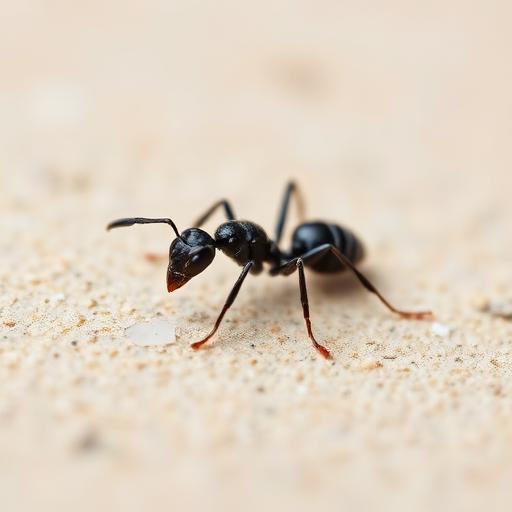
How to identify crazy ants
- What it looks like
- Small reddish-brown ants with very long legs and antennae that move in erratic zig-zags.
- Size
- 1/8 inch
- Where you'll find it
- Under mulch, potted plants, electrical boxes, AC units, outlets and wall voids.
- Commonly confused with
- Argentine ants move in orderly trails rather than erratically.
Signs of crazy ants in your home
- Enormous numbers of fast erratic ants
- Ants inside electrical equipment
- Piles of dead ants near devices
Is it really crazy ants? Side-by-side comparisons
Crazy ants move erratically and non-directionally; Argentine ants follow distinct, orderly trails.
Crushed crazy ants do not emit a distinct 'rotten coconut' odor, unlike odorous house ants.
Crazy ants are larger (1/8 inch) and reddish-brown; Pharaoh ants are smaller (1/16 inch) and yellowish-brown.
Crazy ants have noticeably longer legs and antennae relative to body size, and move much faster than pavement ants.
Regional differences across the U.S.
The 'crazy ant' moniker refers to several species. In the Southeast (Florida, Gulf Coast states), the Tawny crazy ant (Nylanderia fulva) and Caribbean crazy ant (Nylanderia pubens) are problematic, especially from Texas to Florida, favoring warm, humid conditions and often infesting electrical equipment. In the Southwest (Arizona, California), Western crazy ants (Paratrechina longicornis) are common, thriving in irrigated landscapes and urban environments. Northeastern states may encounter smaller populations of the Longhorn crazy ant (Paratrechina longicornis), typically indoors in heated structures during winter, or in greenhouses. Construction type influences risk; slab foundations with inadequate drainage are vulnerable in the South, while older homes in the Northeast with multiple entry points are at higher risk of indoor invasion.
Life cycle and timing that changes treatment
Crazy ants undergo complete metamorphosis: egg, larva, pupa, and adult. The egg-to-adult development typically takes 30-70 days, influenced by temperature and food availability. Colonies can produce multiple generations annually in warm climates, with continuous brood production. Queens can live for several years. Overwintering occurs as adults in sheltered locations, allowing colonies to rebound quickly in spring.
How to inspect for crazy ants, step by step
- 1
Use a flashlight at a low angle to observe ant movement patterns around foundations, particularly near potential entry points like utility lines or cracks.
- 2
Inspect under mulch, leaf litter, and potted plants near the home's perimeter for active trails or nesting sites, especially in shaded, moist areas.
- 3
Examine electrical boxes, utility conduits, and air conditioning units for ant activity, as these ants are notoriously drawn to electrical components.
- 4
Place glue monitors in suspected indoor harborage areas like wall voids, under sinks, or near windows to confirm presence and activity levels.
Treatment decision tree
| If you find this | Do this next |
|---|---|
| You observe a few individual crazy ants foraging indoors during the day. | This indicates minor indoor foraging. Clean up any food debris and place ant baits (e.g., indoxacarb or hydramethylnon gel baits) near activity. |
| You see consistent trails of crazy ants entering the home from a specific outdoor location. | This suggests an outdoor nest impacting the interior. Apply a non-repellent liquid perimeter treatment (e.g., fipronil or chlorfenapyr) directly to entry points and trails. |
| There are large numbers of crazy ants active around outdoor electrical boxes or AC units. | This poses a risk to electrical systems. Apply granular baits or non-repellent dusts (e.g., diatomaceous earth) carefully around these sensitive areas. |
| You find multiple active crazy ant nests under mulch or potted plants close to the foundation. | This indicates an established population near your home. Use insecticidal dusts (e.g., deltamethrin dust) directly into nest openings or apply a perimeter liquid insecticide with a pyrethroid. |
| Numerous crazy ants are consistently found throughout multiple indoor rooms, or swarms are present. | This signifies a significant infestation requiring extensive treatment. This situation often warrants professional pest control intervention due to colony size and potential satellite nests. |
Where DIY runs out of road
- • Over-the-counter repellent sprays often scatter crazy ant colonies, leading to budding (colony fragmentation) and exacerbating the infestation over a wider area.
- • Generic 'ant traps' frequently lack the specific bait matrix or active ingredient potency (e.g., slow-acting insect growth regulators like (S)-methoprene) necessary to effectively control crazy ant populations.
- • DIY attempts using broadcast sprays can fail to reach hidden satellite nests in wall voids or underground, providing only temporary relief without addressing the source.
When to call a professional
- • If ants are infesting sensitive electrical components, risking damage or fire.
- • When multiple indoor areas are experiencing consistent crazy ant activity, indicating large or satellite colonies.
- • If DIY treatments have been attempted and failed, or the infestation worsens.
Safety and legal limits
Always read and strictly follow all pesticide label instructions, as the label is a legal document. Use of restricted-use products is prohibited for unlicensed individuals. Ensure proper ventilation when applying products indoors and wear appropriate personal protective equipment, such as gloves and a respirator, to minimize exposure. Keep children and pets away from treated areas until products have dried or settled, according to label instructions. Avoid applying pesticides directly to blooming plants to protect pollinators. Do not apply more product than specified, as this does not increase efficacy and can increase environmental and health risks. Improper application can contaminate water sources or harm non-target organisms.
Crazy ants questions homeowners ask
Why are ants in my electrical outlets?
Crazy ants are drawn to electrical fields and warmth and can short out equipment when they die in numbers.
Crazy ant control by city
Local technicians handle crazy ants in every market below — pick your city for neighborhood coverage, seasonal notes and a free quote.
Related ants pests
Sources and further reading
Guidance on this page is compiled from EPA, CDC and land-grant university extension IPM publications, which are linked in the sources section. It is general information, not a diagnosis or a treatment recommendation for your property.
- Pest Notes: home and landscape pests — University of California Statewide IPM Program
- Pest control and pesticide fact sheets — National Pesticide Information Center (Oregon State University / EPA)
- Integrated Pest Management (IPM) principles — U.S. Environmental Protection Agency
- Safe pest control in and around the home — U.S. Environmental Protection Agency