
Ants
Fire ants: identification & fire ant control
Fire ants swarm and sting when their mound is disturbed. Control combines broadcast bait to reach queens across the yard with direct mound treatment for immediate relief, then follow-up service before colonies rebuild.
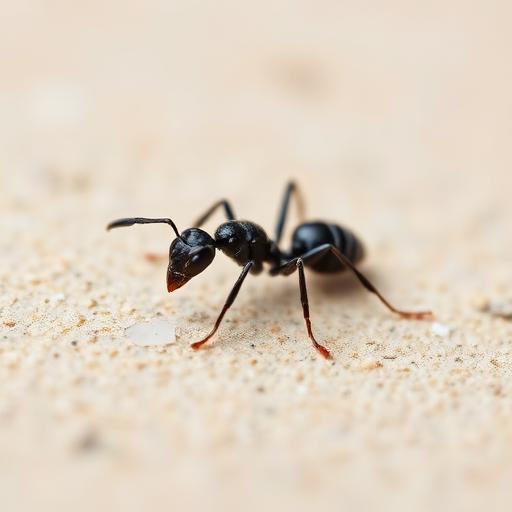
How to identify fire ants
- What it looks like
- Reddish-brown to copper ants of varying sizes within the same colony.
- Size
- 1/8 to 1/4 inch
- Where you'll find it
- Sunny lawns, pasture edges, sidewalk margins and utility boxes.
- Commonly confused with
- Harvester ants are larger and less aggressive with a cleared mound area.
Signs of fire ants in your home
- Fluffy dome-shaped mounds with no visible entry hole
- Ants boiling out when the mound is disturbed
- Burning stings that form white pustules
Is it really fire ants? Side-by-side comparisons
Harvester ants are larger, often reddish-orange, and their mounds typically have a cleared, circular area devoid of vegetation; fire ant mounds are irregular and dome-shaped.
Native fire ants are typically smaller and build less conspicuous mounds; imported fire ants (*S. invicta*) exhibit polymorphism with workers of various sizes within the same colony.
Pavement ants are dark brown to black, smaller, and build nests under rocks or pavement with excavated soil forming small craters; fire ants are reddish-brown and construct prominent soil mounds.
Big-headed ants have distinct major workers with disproportionately large heads, a feature absent in polymorphic fire ant workers; fire ants also possess a painful sting.
Regional differences across the U.S.
The imported fire ant species, primarily *Solenopsis invicta*, dominates the southeastern United States, extending from Florida to eastern Texas and northward into parts of Arkansas and North Carolina. Its northern expansion is limited by cold winters, but milder winters due to climate change could allow further spread. *Solenopsis richteri*, the black imported fire ant, is established in parts of northern Mississippi and Alabama, sometimes hybridizing with *S. invicta*. In warmer, more humid regions like the Gulf Coast, colonies can be more numerous and larger due to extended foraging seasons and optimal soil moisture for mound construction. Conversely, in drier regions of Oklahoma and Texas, fire ants might aggregate near irrigated lawns or water sources. Seasonal activity peaks in spring and fall, with reduced foraging during extreme summer heat or winter cold.
Life cycle and timing that changes treatment
Fire ant colonies contain a queen, workers, and brood (eggs, larvae, pupae). Eggs hatch in 6-10 days, developing into adults in 20-45 days, depending on temperature and food availability. Multiple generations occur annually, with queens continuously laying eggs. Mature colonies can produce winged reproductive alates that swarm, typically after rain during warm seasons, to establish new colonies. Colonies overwinter as active adults within the mound, surviving freezing temperatures by tunneling deeper into the soil.
How to inspect for fire ants, step by step
- 1
Carefully observe areas of direct sunlight, such as lawns, pastures, and highway margins, for dome-shaped soil mounds, particularly after rainfall. Use a stick to gently prod a suspected mound; fire ants will rapidly emerge.
- 2
Inspect utility boxes, electrical equipment, and irrigation control boxes. Fire ants are drawn to electrical currents and can nest inside, causing damage and creating a sting hazard. Use a flashlight for internal inspection.
- 3
Check along sidewalk and driveway edges, as well as under landscaping timbers or stones, for signs of cryptic mound formation or foraging trails. Fire ants often construct tunnels along these structures.
- 4
In cooler weather or during the hottest parts of summer, inspect areas of partially shaded ground adjacent to sunny spots, as fire ants may shift foraging or nesting locations to moderate temperature extremes.
Treatment decision tree
| If you find this | Do this next |
|---|---|
| You observe a single, small fire ant mound (under 6 inches diameter) in an isolated area. | This indicates a young colony or a satellite nest. Spot treatment with an insecticidal dust containing permethrin or a granular bait containing hydramethylnon is often effective. |
| Multiple fire ant mounds are present across your property, but activity is not yet severe. | Consider a broadcast application of a granular bait containing an insect growth regulator (IGR) like pyriproxyfen or fenoxycarb to disrupt colony growth over several weeks. |
| Fire ants are actively foraging indoors or around entry points of your home. | Apply a non-repellent perimeter treatment (e.g., fipronil or chlorfenapyr) directly to the foundation and entry points, combined with outdoor mound treatments. |
| You encounter large, mature fire ant mounds (over 1 foot diameter) with aggressive worker behavior. | This indicates a well-established colony. A two-step approach involving broadcast bait followed by individual mound drenching with a liquid insecticide (e.g., bifenthrin) is recommended. |
| Numerous fire ant mounds are present, including in sensitive areas like playgrounds, or if electrical equipment is infested. | This warrants professional pest control. Improper treatment of electrical boxes is dangerous, and large-scale infestations in high-traffic areas require expert handling for safety and efficacy. |
Where DIY runs out of road
- • Over-the-counter granular baits often lack the potency or specific active ingredients (e.g., IGRs) to effectively control large, multi-queen fire ant colonies, leading to short-term suppression rather than eradication.
- • Attempting to destroy fire ant mounds with methods like boiling water or gasoline is ineffective, dangerous, and can cause the colony to fragment into multiple smaller, harder-to-control mounds, worsening the problem.
- • Generic contact insecticides sprayed directly on mounds kill only surface workers, prompting the queen to increase egg-laying and causing the colony to disperse and establish new mounds nearby, expanding the infestation.
When to call a professional
- • Infestation of electrical boxes or utility equipment, posing fire hazards and risk of serious stings.
- • Extensive, multiple-mound infestations across large properties that overwhelm DIY product capacity.
- • Presence of fire ants in sensitive areas like schools, hospitals, or playgrounds, requiring precise application.
Safety and legal limits
Always read and strictly follow all pesticide product labels. The label is a legal document, and using a product in a manner inconsistent with its labeling is illegal and can be dangerous. Only use products labeled specifically for fire ant control. When applying insecticides, wear appropriate personal protective equipment (PPE) as specified on the label, which may include gloves, long-sleeved shirts, pants, and closed-toe shoes. Avoid applying granular or liquid insecticides when rain is expected within 24 hours to prevent runoff into storm drains or water bodies, protecting aquatic ecosystems. Keep children and pets away from treated areas until the product has dried or settled, as indicated on the label, to prevent exposure. Do not apply fire ant control products near food preparation surfaces or animal feeding areas. Some highly toxic products are restricted-use pesticides and can only be applied by licensed professionals.
Fire ants questions homeowners ask
What does a fire ant sting look like?
A burning red bump that turns into a small white blister within 24 hours, often in clusters.
Do fire ant mounds have holes?
No — unlike other ant mounds, fire ant mounds have no central opening; ants exit through underground tunnels.
Fire ant control by city
Local technicians handle fire ants in every market below — pick your city for neighborhood coverage, seasonal notes and a free quote.
Related ants pests
Sources and further reading
Guidance on this page is compiled from EPA, CDC and land-grant university extension IPM publications, which are linked in the sources section. It is general information, not a diagnosis or a treatment recommendation for your property.
- Pest Notes: home and landscape pests — University of California Statewide IPM Program
- Pest control and pesticide fact sheets — National Pesticide Information Center (Oregon State University / EPA)
- Integrated Pest Management (IPM) principles — U.S. Environmental Protection Agency
- Safe pest control in and around the home — U.S. Environmental Protection Agency