
Ants
Argentine ants: identification & argentine ant control
Argentine ants form multi-queen supercolonies that span whole neighborhoods. We use non-repellent perimeter treatment and liquid baiting to reduce pressure, with routine service to hold the line.
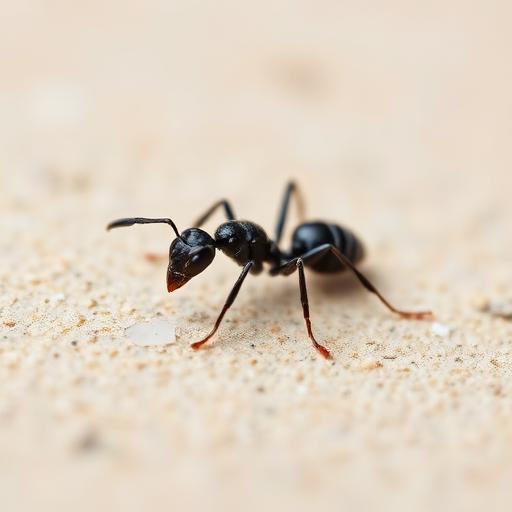
How to identify argentine ants
- What it looks like
- Uniform light to dark brown ants with a single waist node and no sting; they emit a musty odor when crushed.
- Size
- 1/8 inch
- Where you'll find it
- Under mulch, irrigation lines, slab edges, tree bases and wall voids.
- Commonly confused with
- Odorous house ants smell like coconut; Argentine ants smell musty.
Signs of argentine ants in your home
- Wide, heavily traveled trails
- Ants tending aphids on shrubs
- Indoor foraging after rain or heat
Is it really argentine ants? Side-by-side comparisons
Crushed Argentine ants emit a distinct musty odor, unlike the rotten coconut smell of odorous house ants.
Argentine ants are uniformly light to dark brown and lack the distinct grooves and two-node waist of pavement ants.
Argentine ants are darker brown and 1/8 inch long, while Pharaoh ants are yellowish-brown, smaller, and have a two-segmented waist.
Argentine ants are 1/8 inch and darker; thieves ants are minute (1/16 inch), yellowish, and forage in thin trails.
Regional differences across the U.S.
Argentine ants (Linepithema humile) are prevalent in temperate and subtropical regions of the United States, particularly along the West Coast from California north to Washington, and in Gulf Coast states like Florida, Louisiana, and Texas. In California, their activity peaks during the warmer months, often leading to large foraging trails into homes during summer heat or after winter rains. In the humid Gulf Coast, populations can remain active year-round, with increased indoor incursions during heavy rain events or drought conditions. Urbanization and irrigated landscapes provide ideal conditions across these regions, supporting supercolonies that can span multiple properties. Slab-on-grade construction in southern states offers numerous hidden entry points, while older homes with basements or crawl spaces in more temperate zones provide sheltered overwintering sites.
Life cycle and timing that changes treatment
Argentine ants undergo complete metamorphosis: egg, larva, pupa, and adult. The egg-to-adult development takes approximately 30-75 days, influenced by temperature and food availability. Colonies can produce multiple generations per year, especially in warmer climates. Queens can live for several years, laying hundreds of eggs daily. While they do not truly overwinter by hibernating, colony activity slows in cooler temperatures, often aggregating in sheltered, warmer locations, resuming rapid expansion when conditions improve.
How to inspect for argentine ants, step by step
- 1
Use a flashlight at a low angle to trace ant trails from indoors to potential entry points, focusing on foundation cracks, utility penetrations, and door/window frames.
- 2
Inspect moist areas like under sinks, around leaky pipes, and near irrigation lines with a moisture meter to detect hidden nests or high-traffic foraging routes.
- 3
Place glue monitors along suspected foraging paths near slab edges, under appliances, and in pantry corners to confirm ant presence and activity levels over 24-48 hours.
- 4
Examine landscape elements such as mulch beds, tree bases, and potted plants for foraging trails, paying close attention to areas adjacent to the foundation and shaded zones.
Treatment decision tree
| If you find this | Do this next |
|---|---|
| You observe occasional foraging ants indoors (1-5 individuals per day) during mild weather. | This indicates minor scouting activity. Improve sanitation, remove food sources, and seal visible entry points around windows and doors. Monitor for increased activity. |
| You find moderate ant trails (5-20 individuals) entering a specific room or area, especially after rain. | Identify the entry point and food source. Apply bait strategically near the trail but not directly on it. Seal cracks and caulk gaps around the entry point. |
| You notice persistent, heavy ant trails (dozens of ants) along exterior walls or foundation perimeters. | This suggests a developing outdoor colony. Trim vegetation away from the structure and ensure proper drainage to reduce harborage. Implement a perimeter baiting strategy. |
| You discover multiple ant trails inside, particularly in kitchens, bathrooms, or near plumbing fixtures, indicating an indoor nest. | Locate the primary nesting area, which may be in a wall void or under flooring. Apply bait close to the nest and trails. Consider using a non-repellent liquid insecticide if baits fail to gain control. |
| You encounter hundreds to thousands of ants forming supercolonies, with trails spanning across your property and multiple entry points into the structure. | This signifies a significant infestation requiring extensive professional intervention. DIY methods are unlikely to achieve control due to the colony's size and complexity. |
Where DIY runs out of road
- • Over-the-counter repellent sprays often scatter colonies, causing them to bud and establish new nests in multiple locations, exacerbating the infestation rather than eliminating it.
- • DIY baiting with insufficient or incorrect bait types for Argentine ants will fail to attract or adequately transfer the active ingredient throughout the supercolony, leading to ineffective control.
- • Homeowner-applied perimeter treatments often miss hidden entry points or fail to penetrate deep enough to affect subterranean or wall void nests, providing only temporary relief at best.
When to call a professional
- • When large, persistent trails of ants re-emerge despite consistent DIY efforts over several weeks.
- • If ants are nesting within wall voids, under slabs, or in other inaccessible structural areas.
- • When dealing with supercolony infestations that span across multiple properties or large outdoor areas.
Safety and legal limits
Always read and strictly follow the pesticide product label. The label is a legal document outlining proper application rates, methods, and personal protective equipment. Misuse can be ineffective and harmful. Avoid using restricted-use pesticides; these require specific licenses. When applying any product, ensure adequate ventilation. Keep children and pets away from treated areas until dry, or according to label instructions, to prevent accidental exposure. Use baits in tamper-resistant stations where possible. Store all pesticides in their original containers, out of reach of children and pets, in a cool, dry place. Consider the impact on non-target organisms, especially pollinators, when treating outdoors. Never apply insecticides to blooming plants.
Argentine ants questions homeowners ask
Why do I have so many ants after it rains?
Argentine ant colonies flood out of shallow soil nests and move indoors for shelter and moisture.
Argentine ant control by city
Local technicians handle argentine ants in every market below — pick your city for neighborhood coverage, seasonal notes and a free quote.
Related ants pests
Sources and further reading
Guidance on this page is compiled from EPA, CDC and land-grant university extension IPM publications, which are linked in the sources section. It is general information, not a diagnosis or a treatment recommendation for your property.
- Pest Notes: home and landscape pests — University of California Statewide IPM Program
- Pest control and pesticide fact sheets — National Pesticide Information Center (Oregon State University / EPA)
- Integrated Pest Management (IPM) principles — U.S. Environmental Protection Agency
- Safe pest control in and around the home — U.S. Environmental Protection Agency