
Ants
Acrobat ants: identification & acrobat ant control
Acrobat ants nest in moisture-damaged wood and foam insulation and often follow utility lines indoors. We treat the nest void directly and correct the moisture that created the harborage.
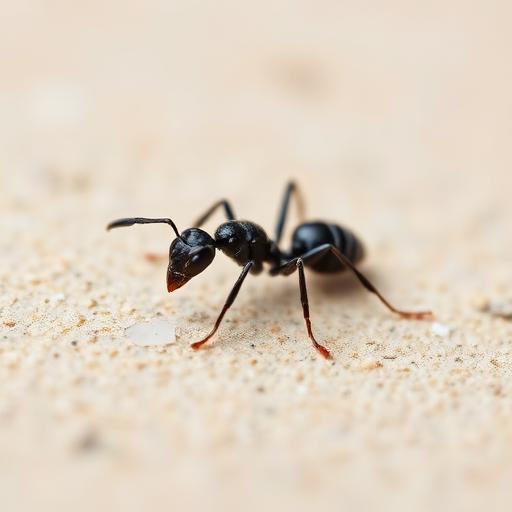
How to identify acrobat ants
- What it looks like
- Light brown to black ants that raise a heart-shaped abdomen over the body when disturbed.
- Size
- 1/8 inch
- Where you'll find it
- Damp framing, foam insulation, tree cavities, wall voids and around utility penetrations.
- Commonly confused with
- Carpenter ants are much larger with a rounded thorax.
Signs of acrobat ants in your home
- Ants raising their abdomen when disturbed
- Debris pushed out of siding gaps
- Trails along wires and pipes
Is it really acrobat ants? Side-by-side comparisons
Carpenter ants are significantly larger (1/4 to 1/2 inch) with a smooth, evenly rounded thoracic profile, unlike the acrobat ant's smaller size and uneven thorax.
Odorous house ants do not raise their abdomen over their head when disturbed and emit a distinct 'rotten coconut' odor when crushed, which acrobat ants do not.
Pavement ants are typically darker, have two nodes on their pedicel, and often have grooves on their head and thorax, which acrobat ants lack.
Pharaoh ants are much smaller (1/16 inch), pale yellow to red, and have three-segmented antennal clubs, differing from acrobat ants' darker coloration and two-segmented club.
Regional differences across the U.S.
Acrobat ants (Crematogaster spp.) are found throughout the United States, but regional species prevalence and impact vary. In the Southeast, C. lineolata is common, often nesting in water-damaged wood within structures, especially after heavy rains or flooding. In the Southwest, species like C. mormonum are adapted to drier conditions, frequently nesting in dead cacti or yucca, and entering homes via utility penetrations during monsoon seasons. The Pacific Northwest sees C. hespera, which favors moist, decaying wood, making homes with compromised roofs or plumbing highly susceptible. In the Northeast, C. cerasi is prevalent, often exploiting structural vulnerabilities like compromised window frames or soffits, with increased activity noted from late spring through early fall.
Life cycle and timing that changes treatment
Acrobat ant colonies have a single queen, producing eggs that develop through larval and pupal stages into adults. The egg-to-adult development time is typically 6-10 weeks, depending on temperature and food availability. Colonies produce only one generation per year, with new queens and males (swarmers) emerging in late summer to early fall for mating flights. Workers and queens overwinter within the nest, becoming active again as temperatures rise in spring.
How to inspect for acrobat ants, step by step
- 1
Use a flashlight at a low angle to inspect along baseboards, window sills, and utility penetrations (e.g., electrical conduits, plumbing pipes) for foraging trails or entry points.
- 2
Probe suspicious areas of wood (e.g., around window frames, under sinks) with a screwdriver to check for softness or hollow sounds indicating moisture damage and potential nesting sites.
- 3
Employ a moisture meter on walls, ceilings, and subflooring, particularly near known water sources or leaks, to identify damp areas conducive to nesting.
- 4
Place glue monitors in wall voids, attics, and basements, especially near electrical outlets or plumbing fixtures, to capture foraging ants and determine activity pathways.
Treatment decision tree
| If you find this | Do this next |
|---|---|
| You observe occasional individual acrobat ants foraging indoors, especially in kitchens or bathrooms. | This indicates minor indoor foraging. Focus on sanitation, eliminating food debris, and sealing small cracks and crevices in visible entry points with silicone caulk. |
| You consistently see multiple acrobat ants in specific areas, but no obvious nest is found. | This suggests a localized foraging pattern. Place non-repellent, protein-based ant baits (e.g., containing hydramethylnon or indoxacarb) near activity to allow workers to transport it back to the nest. |
| You observe a distinct trail of acrobat ants moving to and from a specific entry point on an exterior wall. | This indicates an active outdoor nest or foraging trail. Apply a non-repellent perimeter treatment (e.g., fipronil or chlorfenapyr) directly to the trail and entry point, ensuring thorough coverage. |
| You find numerous winged swarmers indoors during late summer or fall, or see ants actively carrying larvae/pupae. | This signifies an established colony is likely nesting within the structure. A thorough interior and exterior inspection is critical to locate and treat the nest directly with a dust or foam insecticide. |
| You discover extensive damage to wood (e.g., hollowed-out framing) or insulation, accompanied by high ant activity. | This indicates a significant, long-standing structural infestation. Professional intervention is recommended for comprehensive nest location, treatment, and repair of water-damaged elements. |
Where DIY runs out of road
- • Over-the-counter repellent sprays only scatter ants, making it harder to locate the main colony and often driving them into new areas of the structure.
- • Consumer-grade baits may not be attractive to acrobat ants due to their varied diet, leading to ineffective control and prolonged infestation.
- • Without specialized equipment like boroscopes or moisture meters, homeowners often fail to locate hidden nests in wall voids or damp wood, resulting in only temporary surface control.
When to call a professional
- • When ants are actively nesting within structural components or foam insulation.
- • If extensive water damage is present or suspected in conjunction with ant activity.
- • When DIY methods have failed to control the infestation after several weeks of consistent effort.
Safety and legal limits
Always read and follow the pesticide product label completely; it is a legal document. Misuse is illegal and can be dangerous. Never apply restricted-use pesticides unless certified to do so. Ensure adequate ventilation when applying products indoors and avoid direct contact with skin and eyes. Keep children and pets away from treated areas until products have dried or settled. Store all pesticides in their original containers, out of reach of children and pets, in a cool, dry, locked location. Do not apply insecticides to areas accessible to protected species without consulting relevant wildlife authorities if applicable in your region.
Acrobat ants questions homeowners ask
How do I identify an acrobat ant?
Disturb the trail — acrobat ants lift a distinctly heart-shaped abdomen over their heads.
Acrobat ant control by city
Local technicians handle acrobat ants in every market below — pick your city for neighborhood coverage, seasonal notes and a free quote.
Related ants pests
Sources and further reading
Guidance on this page is compiled from EPA, CDC and land-grant university extension IPM publications, which are linked in the sources section. It is general information, not a diagnosis or a treatment recommendation for your property.
- Pest Notes: home and landscape pests — University of California Statewide IPM Program
- Pest control and pesticide fact sheets — National Pesticide Information Center (Oregon State University / EPA)
- Integrated Pest Management (IPM) principles — U.S. Environmental Protection Agency
- Safe pest control in and around the home — U.S. Environmental Protection Agency