
Occasional invaders
Booklice: identification & booklice control
Also known as: psocids, paper lice
Booklice (psocids) feed on mold in humid spaces and new construction. Control is entirely about humidity — dehumidification, ventilation and drying, with spot treatment where needed.
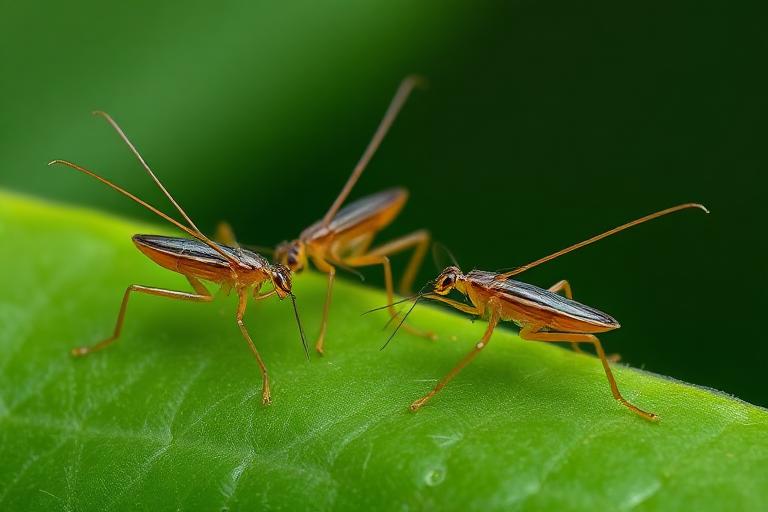
How to identify booklice
- What it looks like
- Tiny soft pale gray or tan wingless insects with bulging eyes.
- Size
- 1/16 inch
- Where you'll find it
- Damp books, cardboard, new drywall, window sills, pantries and bathrooms.
- Commonly confused with
- Head lice do not live on paper; springtails jump, booklice do not.
Signs of booklice in your home
- Tiny crawling specks on windowsills and paper
- Mold or musty smell in the same area
- Activity in new construction
Is it really booklice? Side-by-side comparisons
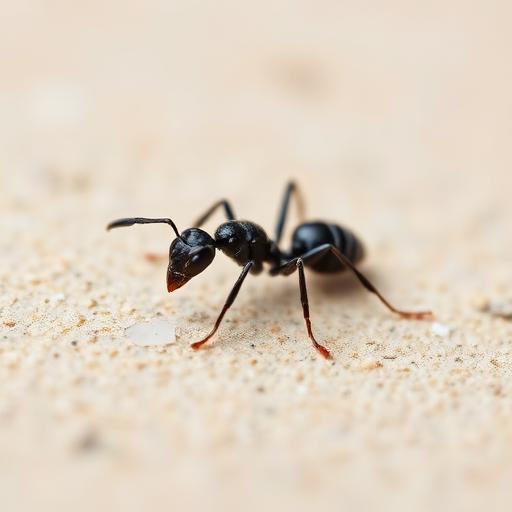
Booklice are found on inanimate objects like paper or walls; head lice are parasitic on human hair and skin and are not found off a host.
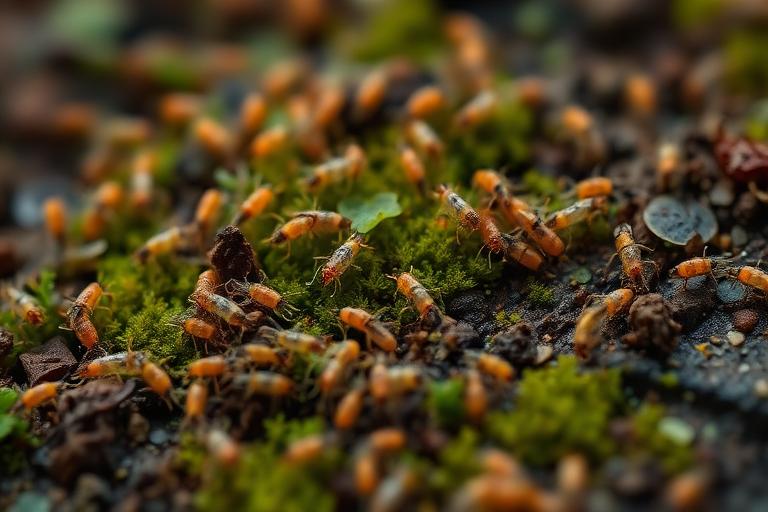
Springtails jump or 'spring' when disturbed using a furcula, while booklice walk steadily and do not jump.
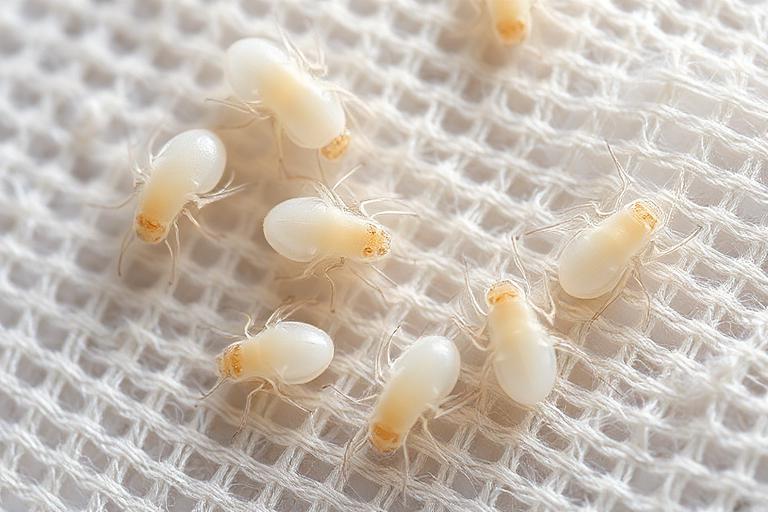
Booklice are visible to the naked eye (1-2mm) and move actively; dust mites are microscopic and generally only visible as accumulated dust.
Booklice lack cornicles (paired siphons on the abdomen) and piercing-sucking mouthparts characteristic of aphids found on plants.
Regional differences across the U.S.
Booklice, primarily members of the order Psocoptera, exhibit regional variations in common species and conditions favoring their proliferation. In the humid southeastern United States, such as Florida and Louisiana, species like 'Liposcelis bostrychophila' thrive due to consistently high ambient moisture. Coastal regions of California and the Pacific Northwest, with their often-damp climates, also see frequent booklice activity, particularly 'Psocathropos lachlani' in water-damaged structures. Arid states like Arizona and Nevada experience fewer widespread infestations, but localized issues can arise in homes with evaporative coolers or significant plumbing leaks. New construction, regardless of region, presents a temporary risk due to residual moisture in building materials like drywall and concrete, which typically dries out within the first year. Infestations are generally more prevalent in late spring through early fall when warmer temperatures combine with higher humidity across most of the US.
Life cycle and timing that changes treatment
Booklice undergo simple metamorphosis: egg, nymphal instars, and adult. The entire life cycle from egg to adult can be completed in approximately 20-30 days under optimal conditions (75-80°F, 75-90% relative humidity), allowing for multiple overlapping generations per year. Most species do not overwinter as adults but rather as eggs or nymphs in protected harborages, resuming activity when conditions become favorable. Rapid population growth is a hallmark of booklice infestations.
How to inspect for booklice, step by step
- 1
Use a bright LED flashlight held at a low angle to illuminate the surface of books, documents, and cardboard boxes to detect tiny moving insects.
- 2
Inspect new drywall and recently applied plaster in newly constructed or renovated homes, paying close attention to seams and behind electrical outlets, checking for moisture with a pinless moisture meter.
- 3
Examine food pantries, especially older packages of cereals, flours, and dried goods, and the undersides of shelves, for active booklice or their shed skins.
- 4
Check window sills, especially in bathrooms or near leaky windows, and under potted plants for tiny insects congregating in areas with condensation or dampness.
Treatment decision tree
| If you find this | Do this next |
|---|---|
| You observe 1-2 individual booklice in a bathroom or near a window on a humid day. | This suggests localized moisture. Improve ventilation (e.g., use exhaust fan) and wipe up standing water promptly. No pesticide is needed. |
| You find a few booklice consistently on books or documents in a specific area, but not widespread. | Indicates a localized moisture issue. Isolate affected items, reduce humidity to below 50% with a dehumidifier, and clean the area thoroughly. |
| Numerous booklice (dozens) are active across multiple rooms or on several food items in a pantry. | Suggests a larger, ongoing moisture problem or infested food source. Conduct a comprehensive moisture audit of the home and discard all infested food products. |
| Booklice are present in very high numbers (hundreds or more) throughout the home, including new construction materials. | This level of infestation points to significant environmental conducive conditions. Seek professional pest management to identify moisture sources and apply targeted treatments. |
| Despite addressing moisture issues and cleaning, booklice populations persist at high levels or quickly rebound. | Indicates a deeply embedded or inaccessible moisture source, or a persistent conducive condition. A licensed pest control professional is necessary for effective resolution. |
Where DIY runs out of road
- • Over-the-counter foggers or 'bug bombs' are ineffective against booklice as they do not penetrate harborage areas where eggs and nymphs reside, often dispersing them instead.
- • Applying residual insecticide sprays without addressing the underlying moisture problems provides only temporary relief and will not eliminate the source of the infestation.
- • Ignoring the root cause of moisture, such as leaky pipes or poor ventilation, will lead to repeated booklice infestations, rendering any DIY chemical efforts futile.
When to call a professional
- • Persistent infestations despite diligent moisture control and sanitation efforts.
- • Widespread booklice activity across multiple rooms or affecting structural components.
- • Inability to locate or rectify the primary moisture source causing the infestation.
Safety and legal limits
Always read and strictly follow the entire pesticide product label; it is a legal document. Never apply more than the specified dosage. Many over-the-counter insecticides are not appropriate for indoor use or are ineffective against booklice, and improper application can expose residents, including children and pets, to unnecessary chemical residues. Ensure proper ventilation when using any pesticide. If using aerosols or dusts, wear appropriate personal protective equipment, such as gloves and a respirator, to prevent inhalation and skin exposure. Keep all pesticides out of reach of children and pets. Do not apply pesticides directly to food preparation surfaces, utensils, or open food items. Store products in original containers to avoid misidentification.
Booklice questions homeowners ask
Do booklice bite people?
No — they feed on mold and mildew and are a humidity indicator, not a health threat.
Booklice control by city
Local technicians handle booklice in every market below — pick your city for neighborhood coverage, seasonal notes and a free quote.
Related occasional invaders pests
Sources and further reading
Guidance on this page is compiled from EPA, CDC and land-grant university extension IPM publications, which are linked in the sources section. It is general information, not a diagnosis or a treatment recommendation for your property.
- Pest Notes: home and landscape pests — University of California Statewide IPM Program
- Pest control and pesticide fact sheets — National Pesticide Information Center (Oregon State University / EPA)
- Integrated Pest Management (IPM) principles — U.S. Environmental Protection Agency
- Safe pest control in and around the home — U.S. Environmental Protection Agency