
Wildlife
Snakes: identification & snake removal
Snakes follow rodents and cover. We remove the snake, identify whether the species is venomous, and correct the harborage and rodent conditions that attracted it.
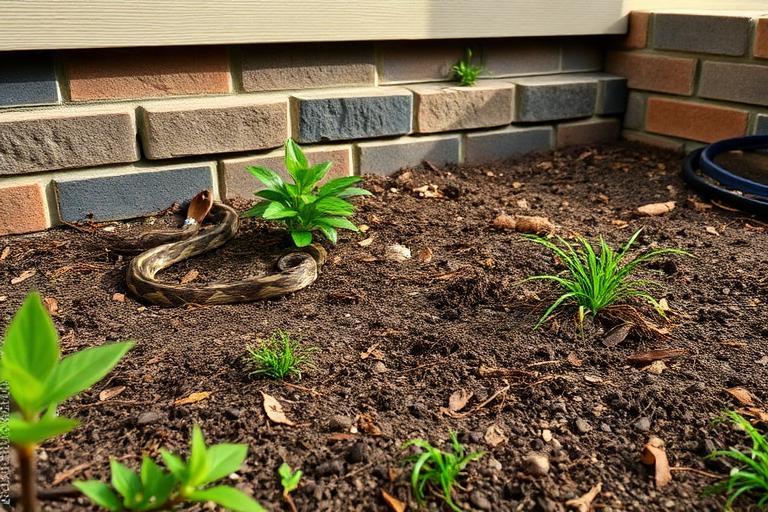
How to identify snakes
- What it looks like
- Legless reptiles; venomous pit vipers in the U.S. typically have triangular heads and elliptical pupils.
- Where you'll find it
- Woodpiles, tall grass, crawl spaces, garages, rock walls and under sheds.
- Commonly confused with
- Harmless rat snakes and king snakes are often mistaken for copperheads or rattlesnakes.
Signs of snakes in your home
- Shed skins
- Snake sightings near the foundation
- Rodent activity nearby
Is it really snakes? Side-by-side comparisons
Rat snakes typically have round pupils and lack the heat-sensing pits found between the eye and nostril of pit vipers.
King snakes usually have smooth, unkeeled scales and round pupils, differentiating them from the keeled scales and elliptical pupils of most venomous snakes.
Juvenile copperheads possess a bright yellow or greenish-tipped tail, a feature absent in most non-venomous snake juveniles.
When threatened, cottonmouths often display the white interior of their mouth, a distinct warning behavior not typically seen in harmless water snakes.
Regional differences across the U.S.
Eastern Diamondback Rattlesnakes (Crotalus adamanteus) are prevalent in the southeastern U.S., from eastern North Carolina to Florida and west to Louisiana, favoring pine forests and coastal plains. Western Diamondback Rattlesnakes (Crotalus atrox) dominate the southwestern U.S., including Texas, Arizona, and California, adapting to arid and semi-arid environments. Copperheads (Agkistrodon contortrix) are widespread across the eastern and central U.S., found in diverse habitats from woodlands to suburban areas. Timber Rattlesnakes (Crotalus horridus) inhabit much of the eastern U.S., preferring forests and rocky outcrops. These regional species exhibit peak activity in warmer months (April-October) and den in communal sites during winter. Homes built near undeveloped land or with accessible crawl spaces face higher risk.
Life cycle and timing that changes treatment
Most U.S. venomous snakes are viviparous, giving birth to live young (typically 5-20, depending on species) in late summer or early fall. There is one generation per year. Juveniles are immediately independent and possess full venom capabilities. Snakes overwinter in communal dens, emerging in spring to forage and mate. Their life cycle is heavily influenced by ambient temperature, with activity ceasing below 50°F (10°C).
How to inspect for snakes, step by step
- 1
Check foundations and crawl space vents for gaps or cracks larger than 1/4 inch, using a flashlight at a low angle to spot entry points.
- 2
Inspect woodpiles, rock walls, and dense shrubbery close to the home by carefully lifting or moving materials to look for coiled snakes or shed skins.
- 3
Examine unused sheds, garages, and outbuildings for potential harborage, paying attention to clutter and dark corners using a bright LED flashlight.
- 4
Walk property perimeter along fence lines and landscaping elements, looking for burrows, holes, or openings under structures where snakes might shelter.
Treatment decision tree
| If you find this | Do this next |
|---|---|
| You observe a snake in your yard but it's moving away from the house or is clearly non-venomous. | Maintain a safe distance (at least 6 feet). Monitor its direction. No intervention is usually necessary; it will likely move on. |
| You encounter a snake, possibly venomous, in an outdoor area posing no immediate threat. | Keep pets and children away. Take a clear photo from a safe distance for identification. Observe from afar until it leaves. |
| A non-venomous snake is found inside your home in an accessible, non-threatening location. | Isolate the snake in a room. Place a laundry basket over it, then slide a piece of cardboard underneath. Carefully release it outdoors away from the home. |
| A potentially venomous snake is found inside the home, or a snake is in a high-traffic indoor area. | Immediately evacuate people and pets from the area. Close off the room. Do not attempt to handle the snake yourself. Call a professional wildlife removal specialist. |
| Someone has been bitten by a snake, or a venomous snake is acting aggressively in close proximity to people or pets. | Assume it's venomous. Seek immediate medical attention. Do not attempt to capture or kill the snake. Take a photo if safe, but prioritize safety. |
Where DIY runs out of road
- • Over-the-counter snake repellents often use naphthalene or sulfur and have no proven efficacy for deterring snakes, leading to false security.
- • Attempting to capture or kill snakes, particularly venomous species, dramatically increases the risk of bites and personal injury.
- • DIY exclusion methods, if not properly executed, can trap snakes inside structures, creating a greater hazard and more complex removal.
When to call a professional
- • Confirmed presence of a venomous snake on your property, especially near structures or frequently used areas.
- • Repeated snake sightings, indicating a potential harborage or entry point that requires professional assessment and exclusion.
- • Any snake found inside your home, particularly if identification is uncertain or the snake is difficult to access.
Safety and legal limits
Always maintain a safe distance (minimum 6 feet) from any snake, regardless of perceived threat. Never attempt to handle a snake unless you are trained and equipped. Many states protect certain snake species; consult local wildlife regulations before any intervention. If bitten by a snake, assume it is venomous, seek immediate emergency medical care, and do not attempt 'first aid' like tourniquets or suction. Keep children and pets away from encountered snakes. Ensure any exclusion methods do not unintentionally trap snakes inside, as this creates a dangerous situation for both the snake and occupants. Snake control products are often ineffective and can be harmful if misused.
Snakes questions homeowners ask
How do I know if a snake is venomous?
Do not approach. Photograph from a distance — U.S. venomous species are mainly copperheads, cottonmouths, rattlesnakes and coral snakes.
Snake removal by city
Local technicians handle snakes in every market below — pick your city for neighborhood coverage, seasonal notes and a free quote.
Related wildlife pests
Sources and further reading
Guidance on this page is compiled from EPA, CDC and land-grant university extension IPM publications, which are linked in the sources section. It is general information, not a diagnosis or a treatment recommendation for your property.
- Rabies and wild animals — U.S. Centers for Disease Control and Prevention
- Migratory Bird Treaty Act protected species list — U.S. Fish and Wildlife Service
- Integrated Pest Management (IPM) principles — U.S. Environmental Protection Agency
- Safe pest control in and around the home — U.S. Environmental Protection Agency