
Wildlife
Raccoons: identification & raccoon removal
Raccoons tear open roof lines and chimneys to den, often with young in spring. Removal must account for kits, followed by heavy-gauge exclusion, latrine cleanup and disinfection.
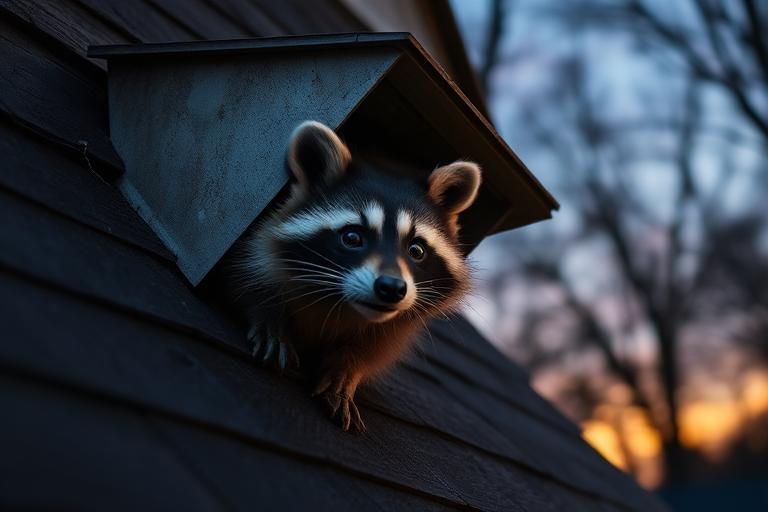
How to identify raccoons
- What it looks like
- Stocky gray-brown mammal with a black facial mask and a ringed tail.
- Size
- 20 to 35 pounds
- Where you'll find it
- Attics, chimneys, crawl spaces, decks, sheds and storm drains.
- Commonly confused with
- Opossums are lighter with a hairless tail and pointed white face.
Signs of raccoons in your home
- Heavy thumping overhead at night
- Torn soffits or ripped shingles
- Tipped trash cans
- Latrine piles of droppings in the attic
Is it really raccoons? Side-by-side comparisons

Raccoons have a distinct black 'mask' around their eyes and a bushy, ringed tail; opossums have a pointed white face and a long, hairless tail.
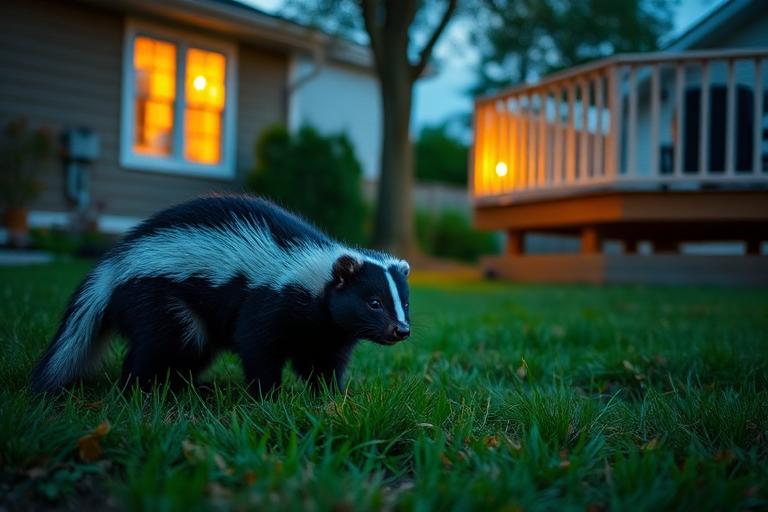
Raccoons are larger, gray-brown, and lack the prominent white stripes found on the black fur of skunks. Skunks also have a smaller, less bushy tail.
Raccoons are significantly stockier, have prominent black facial masks, and walk flat-footed, unlike the agile, digitigrade gait of a cat. Paw prints also differ.
Raccoons are primarily nocturnal, arboreal, and possess the distinctive mask and ringed tail; groundhogs are diurnal, terrestrial, and lack these features.
Regional differences across the U.S.
The Common Raccoon (Procyon lotor) is widespread across the US. Subspecies like the Eastern Raccoon (P. l. lotor) are common in the humid deciduous forests of the East and Midwest. Southwestern Raccoons (P. l. mexicanus) inhabit arid regions, adapting to urban environments. In Florida, the Florida Raccoon (P. l. elucus) is prevalent. Coastal and urban raccoons in the Pacific Northwest (P. l. psora) frequently den in attics due to consistent rainfall. Breeding season generally peaks in late winter/early spring across the US, leading to increased denning activity in residential structures from March to June when kits are born. Regions with older homes or mature trees are at higher risk.
Life cycle and timing that changes treatment
Raccoons typically breed in late winter to early spring. After a gestation period of approximately 63 days, 2-5 kits are born, usually in April or May. Kits remain in the den for 8-10 weeks, becoming mobile and accompanying the mother on foraging trips. They reach independence by late fall but may stay with the mother through winter. Raccoons typically live 2-3 years in the wild, with one litter per year.
How to inspect for raccoons, step by step
- 1
Examine all potential entry points into attics, chimneys, and crawl spaces. Use a powerful flashlight at a low angle to spot rub marks, fur, or displaced insulation around vents, uncapped chimneys, and loose soffit panels.
- 2
Inspect underneath decks and sheds for dug-out areas or disturbed soil, indicating a den site. Look for fresh paw prints in soft dirt around these structures, especially near foundations.
- 3
Check trash cans for signs of forced entry, tipped cans, or scattered debris, which points to nocturnal foraging activity. Note any consistent patterns in garbage disturbance over several nights.
- 4
Utilize a ladder to carefully inspect rooflines, fascia, and soffit vents for gnaw marks, bent screens, or damaged shingles. Pay close attention to areas near overhanging tree branches that provide access.
Treatment decision tree
| If you find this | Do this next |
|---|---|
| You hear noises in the attic or crawl space, especially at night, but have seen no direct evidence of an animal. | Place flour or sand in suspected travel paths to check for paw prints. Set up a motion-activated camera to confirm animal presence and species before taking further action. |
| You find a single, small entry hole (e.g., a chewed soffit vent) and hear scratching, but no visible animal droppings or nest material. | This could indicate a new infestation. Try exclusion techniques with temporary blocking after confirming the animal is out, and observe for 24-48 hours. |
| You observe a raccoon repeatedly entering or exiting a specific part of your home, particularly in spring or early summer. | This strongly suggests a den site with potential young. Immediate action is needed to prevent establishment, but ensure all animals (especially kits) are out before sealing. |
| You find significant damage like torn insulation, extensive droppings, or hear multiple animals vocalizing loudly in your attic. | This indicates a well-established den, possibly with a litter. Attempting DIY removal without expertise can be dangerous or ineffective. Professional intervention is recommended. |
| You encounter a raccoon acting aggressively, disoriented, or exhibiting unusual daytime activity, especially if drooling or stumbling. | These are potential signs of rabies or distemper. Do not approach the animal. Immediately contact your local animal control or health department for safe handling and testing. |
Where DIY runs out of road
- • Over-the-counter repellents, such as predator urine or capsaicin sprays, are rarely effective for established raccoon infestations and typically offer only temporary, localized deterrence at best.
- • Attempting to trap and relocate raccoons without proper licensing or knowledge can violate state laws, result in injury to yourself or the animal, and often leads to the raccoon returning.
- • Sealing entry points without ensuring all raccoons, especially nursing females and their kits, have exited can trap animals inside, causing further damage or creating a severe odor issue.
When to call a professional
- • You suspect a nursing mother and kits are present in your attic or chimney.
- • The raccoon exhibits signs of illness like aggression or disorientation.
- • Entry points are difficult to access, or the infestation is extensive.
Safety and legal limits
Raccoons can carry diseases like rabies, roundworm (Baylisascaris procyonis), and distemper, transmissible to humans and pets. Always wear heavy-duty gloves and an N95 respirator when handling droppings or working in areas raccoons have inhabited. Never approach or handle a wild raccoon, especially one acting unusually. Local and state regulations govern trapping and relocation of raccoons; these laws vary significantly by state (e.g., some states require euthanasia of trapped raccoons). Relocating raccoons across county lines is often illegal. Consult your state's wildlife agency (e.g., California Department of Fish and Wildlife, Texas Parks and Wildlife Department) for specific guidelines before any removal actions to avoid legal penalties.
Raccoons questions homeowners ask
Are raccoons in the attic dangerous?
Yes — droppings can carry roundworm, and mothers defend their young. Removal and cleanup should be professional.
Raccoon removal by city
Local technicians handle raccoons in every market below — pick your city for neighborhood coverage, seasonal notes and a free quote.
Related wildlife pests
Sources and further reading
Guidance on this page is compiled from EPA, CDC and land-grant university extension IPM publications, which are linked in the sources section. It is general information, not a diagnosis or a treatment recommendation for your property.
- Rabies and wild animals — U.S. Centers for Disease Control and Prevention
- Migratory Bird Treaty Act protected species list — U.S. Fish and Wildlife Service
- Integrated Pest Management (IPM) principles — U.S. Environmental Protection Agency
- Safe pest control in and around the home — U.S. Environmental Protection Agency