Wildlife
Nuisance birds: identification & bird control
Nesting pigeons, starlings and sparrows leave corrosive droppings and bring in mites. We install netting, spikes and shock track, remove nests and disinfect the fouled area.
How to identify nuisance birds
- What it looks like
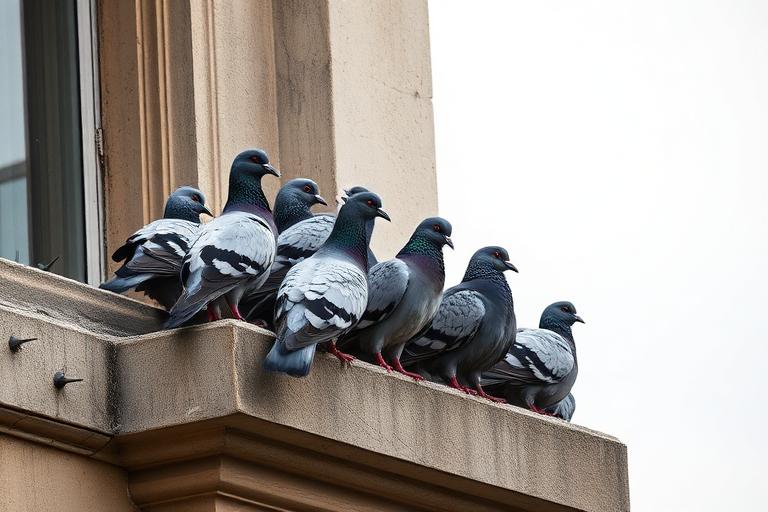
- Pigeons are gray with iridescent necks; starlings are dark with speckles; house sparrows are small and brown.
- Where you'll find it
- Ledges, signs, solar panels, dryer vents, eaves, rafters and warehouse beams.
Signs of nuisance birds in your home
- Droppings on ledges or walkways
- Nesting material in vents
- Cooing or chirping in soffits
- Bird mites indoors after nesting
Is it really nuisance birds? Side-by-side comparisons
Pigeons (Rock Doves) are stockier, have iridescent neck feathers, and typically show two dark wing bars. Mourning Doves are more slender with a pointed tail.
House Sparrows (non-native) males have a distinctive black bib and gray crown. Native sparrows lack this bold patterning and are generally shyer.
European Starlings are smaller, dark-bodied, with iridescent plumage and white speckles, especially in winter. Grackles are larger, glossier, and have longer tails.
Gulls are larger, typically white with gray backs and wings, and strong, hooked bills. Pigeons are smaller, mostly gray, and have a distinctive head bob while walking.
Regional differences across the U.S.
In the arid Southwest (Arizona, Nevada), white-winged doves and grackles are prevalent nuisance species, roosting in saguaros and on commercial buildings. California experiences significant issues with European starlings in agricultural areas, particularly vineyards. Along the Atlantic seaboard (Florida to New England), gulls and cormorants can be major concerns near coastal structures, while pigeons and house sparrows are ubiquitous in urban centers across all regions. Nesting season for many species, such as pigeons and sparrows, typically peaks from spring through late summer nationally, but can extend year-round in warmer climates like Southern California and Florida, increasing continuous pressure on structures. Construction types with numerous ledges or open eaves are particularly susceptible regardless of region.
Life cycle and timing that changes treatment
Nuisance birds like pigeons typically lay 1-3 eggs per clutch, with incubation lasting around 18 days. Young fledge in 4-6 weeks. They can produce multiple clutches per year, often 5-6 in warmer climates, leading to rapid population growth. Starlings and sparrows have similar rapid reproductive cycles. Overwintering occurs as adults, often roosting in large communal groups, increasing localized pressure in urban areas.
How to inspect for nuisance birds, step by step
- 1
Look for droppings accumulation on ledges, windowsills, and under eaves, especially on the leeward side of structures, indicating active roosting or nesting sites.
- 2
Examine rooftop equipment (HVAC units, solar panels) and vents (dryer, attic) for nesting materials like twigs, grasses, and feathers, often requiring a ladder for close inspection.
- 3
Use a flashlight at a low angle to inspect rafters, warehouse beams, and other elevated interior structures for whitewash, nests, and signs of bird activity.
- 4
Check for physical damage to insulation, wiring, or roofing materials caused by pecking or nesting, particularly around entry points into attic or wall voids.
Treatment decision tree
| If you find this | Do this next |
|---|---|
| You observe 1-2 birds occasionally landing on your property, with minimal droppings. | This indicates casual perching. Install reflective deterrents or small visual scare devices like Mylar tape in the affected area to discourage further landing. |
| You notice small amounts of droppings accumulating on a specific ledge or surface daily. | This suggests a regular roosting spot. Clean the area thoroughly and install tactile deterrents like bird spikes or netting to prevent perching. |
| You find a small, active nest with eggs or chicks in an accessible, non-structural location (e.g., under a patio awning). | If the birds are non-protected species, allow the young to fledge if possible, then remove the nest and exclude the birds with physical barriers like mesh or netting. |
| You observe multiple birds consistently roosting or nesting within enclosed spaces like dryer vents, attics, or warehouse rafters. | This indicates an established population. Install vent covers or netting to exclude entry after confirming no birds are trapped inside. Consider professional help for large populations. |
| You have significant guano accumulation, structural damage, or large flocks of birds impacting health and safety. | This is a severe infestation. Contact a licensed pest control professional or wildlife management expert for humane removal, comprehensive cleaning, and long-term exclusion strategies. |
Where DIY runs out of road
- • Over-the-counter repellents or scare devices often provide only temporary relief; birds quickly habituate, requiring frequent changes or additional, more robust methods.
- • Attempting to remove established nests, especially in difficult-to-reach areas like vents or attics, can trap birds, cause damage, and potentially expose you to diseases.
- • Improper use of bird netting can ensnare birds, leading to injury or death, and often requires specific installation techniques for effective, humane exclusion.
When to call a professional
- • Large infestations with significant droppings or structural damage require professional assessment and remediation.
- • Birds nesting within building structures (vents, attics, walls) need humane removal and effective exclusion by experts.
- • Any situation involving protected bird species necessitates consultation with wildlife authorities before intervention.
Safety and legal limits
Always read and follow all pesticide label instructions, as it is a federal violation to use products inconsistently with their labeling. When using any deterrents or exclusion materials, ensure they are installed humanely and do not pose a risk to the birds or other wildlife, such as entanglement. Be aware that many bird species, including most migratory birds, are protected under the Migratory Bird Treaty Act, making it illegal to disturb their nests, eggs, or young without proper permits. House sparrows, European starlings, and pigeons are generally not protected. When cleaning bird droppings, wear appropriate personal protective equipment, including a respirator, gloves, and eye protection, due to potential histoplasmosis and other airborne pathogen risks, especially in enclosed spaces or with large accumulations. Ensure pets and children are kept away from treated areas during and after application.
Nuisance birds questions homeowners ask
Why do I have bird mites in the house?
When a nest is abandoned or removed, mites migrate indoors seeking a host — the nest and the mites both need treatment.
Bird control by city
Local technicians handle nuisance birds in every market below — pick your city for neighborhood coverage, seasonal notes and a free quote.
Related wildlife pests
Sources and further reading
Guidance on this page is compiled from EPA, CDC and land-grant university extension IPM publications, which are linked in the sources section. It is general information, not a diagnosis or a treatment recommendation for your property.
- Rabies and wild animals — U.S. Centers for Disease Control and Prevention
- Migratory Bird Treaty Act protected species list — U.S. Fish and Wildlife Service
- Integrated Pest Management (IPM) principles — U.S. Environmental Protection Agency
- Safe pest control in and around the home — U.S. Environmental Protection Agency