
Biting pests
Mites: identification & mite control
Mites are nearly microscopic and usually trace back to a bird nest, rodent nest or heavy vegetation. We locate and remove the source, then treat harborage areas to stop the biting.
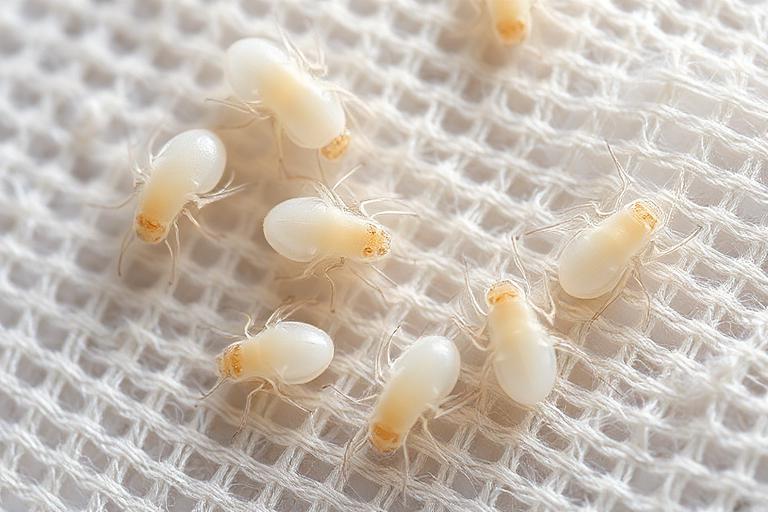
How to identify mites
- What it looks like
- Pinhead-sized eight-legged specks; clover mites are bright red, bird and rodent mites are pale to gray.
- Size
- Less than 1/32 inch
- Where you'll find it
- Around bird nests, rodent voids, sunny exterior walls, mattresses and dust.
- Commonly confused with
- Chiggers are mite larvae; springtails and dust are often mistaken for mites.
Signs of mites in your home
- Tiny red specks that smear when crushed (clover mites)
- Unexplained itching after removing a nest
- Specks crawling on window sills
Is it really mites? Side-by-side comparisons
Chiggers are the larval stage of mites, identifiable by having six legs instead of eight. They are typically found outdoors in grassy areas, not indoors like adult mites.
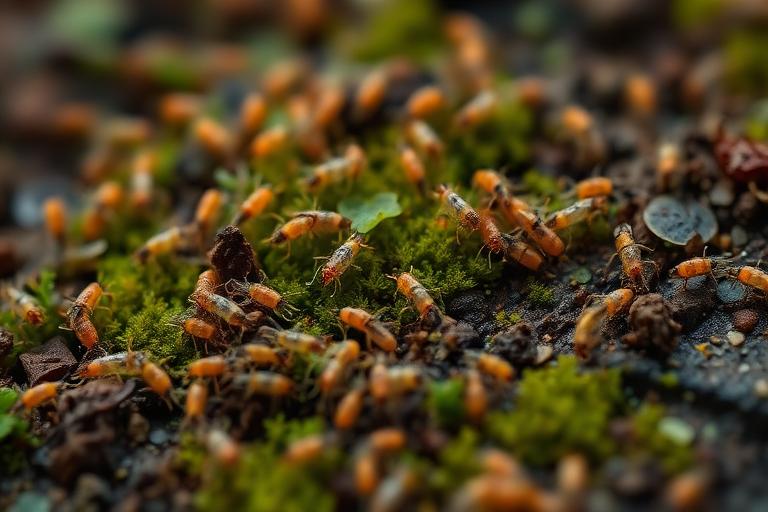
Springtails are insects with six legs and antennae, exhibiting a distinctive jumping behavior when disturbed. Mites are arachnids with eight legs and no antennae, and they crawl.
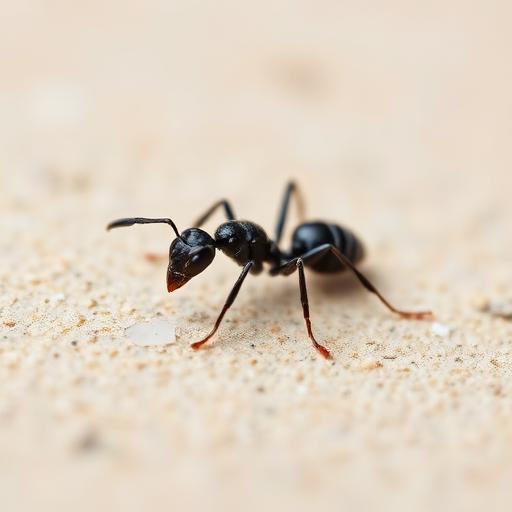
Dust particles are irregular in shape and do not move on their own. Mites, though small, are uniformly shaped and will exhibit slow, deliberate movement if observed closely.
Spider mites are plant pests, usually found on foliage, often producing fine webbing. Most pest mites affecting humans or homes do not spin webs and are found on surfaces or hosts.
Regional differences across the U.S.
Clover mites (Bryobia praetiosa) are prevalent in northern states like Minnesota and Wisconsin, often appearing in spring and fall on sun-exposed walls. Bird mites (Dermanyssus gallinae, Ornithonyssus sylviarum) are common nationwide where birds nest on structures; in Florida, tropical fowl mites (Ornithonyssus bursa) are also an issue. Rodent mites (Ornithonyssus bacoti) are found throughout the US, particularly in urban areas with high rodent populations like New York City or Los Angeles. Dust mites (Dermatophagoides spp.) are ubiquitous, thriving in humid environments common in the southeastern US.
Life cycle and timing that changes treatment
Mites have a rapid life cycle, typically completing egg-to-adult development in 7-14 days depending on species and temperature. Many species can produce multiple generations per year, often 5-10 or more. Bird and rodent mites proliferate when hosts are present. Dust mites continuously reproduce indoors. Clover mites overwinter as eggs in protected crevices, hatching with warming temperatures.
How to inspect for mites, step by step
- 1
Use a flashlight at a low angle across window sills, especially on sun-exposed sides of the house, to reveal clover mites as tiny red moving specks.
- 2
Inspect around and inside bird nests and rodent entry points (e.g., attics, eaves, wall voids) for active bird or rodent mites, particularly after host abandonment.
- 3
Examine mattress seams, bedding, and upholstered furniture with a magnifying glass for dust mites or their cast skins, especially in high-humidity rooms.
- 4
Set out white sticky traps or double-sided tape near suspected infestation sites (e.g., baseboards, pet resting areas) to capture and identify moving mites over 24-48 hours.
Treatment decision tree
| If you find this | Do this next |
|---|---|
| You observe pinhead-sized red specks crawling on exterior walls or window sills in spring/fall, especially on the sunny side | This strongly indicates clover mites. Focus on sealing exterior cracks and using a strong stream of water to dislodge them from walls. |
| Family members report itchy bites shortly after birds or rodents have been removed from an attic or wall void | This is a key indicator of bird or rodent mites seeking a new host. Initiate thorough cleaning and consider a professional pest control service. |
| You or family members experience persistent unexplained itching or skin irritation, particularly when in bed or on upholstered furniture, with no visible pests | This suggests a possible dust mite or cryptic mite infestation. Focus on allergen reduction strategies like hot water washing and dehumidification. |
| Multiple individuals in the household are experiencing similar unexplained bites or skin reactions, and you have exhausted basic cleaning and environmental controls | A more extensive mite infestation is possible. Document observations and prepare for a professional inspection, as specific mite identification is crucial. |
| You identify mites directly on pets, or find mites after removing a rodent nest or bird nest from an indoor void or attic space | Immediate, targeted treatment is necessary for the structure and potentially the pet. Consult a veterinarian for pet treatment and a pest professional for the structure. |
Where DIY runs out of road
- • Most over-the-counter 'bug bombs' or foggers are ineffective against mites, as they do not penetrate adequately into cracks, crevices, or fabrics where mites harbor.
- • Misidentification of mite species often leads to ineffective DIY treatments; for example, using a general insecticide for dust mites provides no relief.
- • Attempting to treat bird or rodent mites without first removing the host and thoroughly cleaning the nest site will result in re-infestation and continued biting pressure.
When to call a professional
- • When bites or skin irritation persist despite diligent cleaning and environmental modifications, suggesting a hidden or resilient mite population.
- • If you've recently removed bird or rodent nests and mites are migrating into living spaces, as professional treatment ensures thorough eradication.
- • For definitive identification of the mite species, especially when multiple individuals are affected, guiding appropriate and targeted treatment strategies.
Safety and legal limits
Always read and strictly follow pesticide product labels, as this is federal law. Misuse can harm humans, pets, and non-target organisms. Products containing pyrethroids or neonicotinoids require careful application, especially in areas accessible to children and pets, due to potential respiratory irritation or neurological effects. Wear appropriate Personal Protective Equipment (PPE) like gloves and masks. Some products are restricted-use and only for licensed applicators. Ensure adequate ventilation during and after indoor applications. Never apply pesticides to protected species' nests or directly to pets unless specifically labeled for that use and approved by a veterinarian.
Mites questions homeowners ask
What are the tiny red bugs on my window sill?
Clover mites — harmless outdoor mites that stain red when crushed and invade sunny walls in spring.
Mite control by city
Local technicians handle mites in every market below — pick your city for neighborhood coverage, seasonal notes and a free quote.
Related biting pests pests
Sources and further reading
Guidance on this page is compiled from EPA, CDC and land-grant university extension IPM publications, which are linked in the sources section. It is general information, not a diagnosis or a treatment recommendation for your property.
- Ticks: prevention and tickborne disease — U.S. Centers for Disease Control and Prevention
- Fleas and flea-borne disease — U.S. Centers for Disease Control and Prevention
- Integrated Pest Management (IPM) principles — U.S. Environmental Protection Agency
- Safe pest control in and around the home — U.S. Environmental Protection Agency