
Biting pests
Horse flies & deer flies: identification & horse fly control
Horse and deer flies breed in wet soil and are strong fliers, so control focuses on traps, habitat drainage and treating shaded resting areas near the yard.
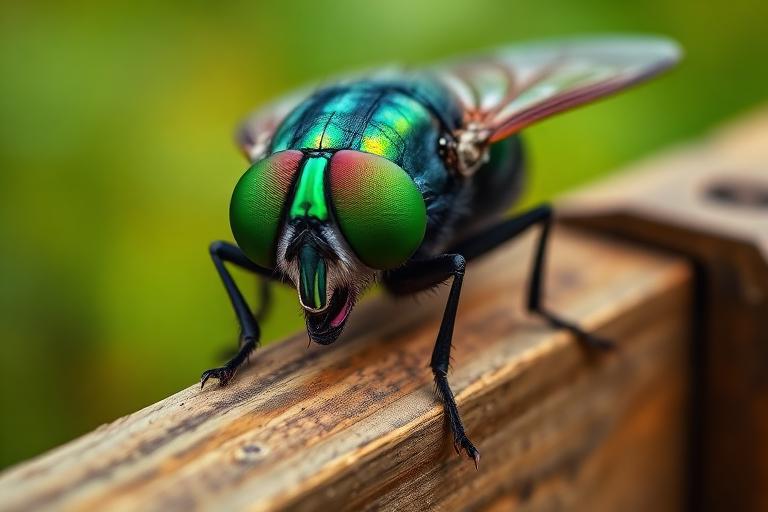
How to identify horse flies & deer flies
- What it looks like
- Large stout flies with huge iridescent eyes; deer flies have patterned wings.
- Size
- 1/2 to 1.25 inches
- Where you'll find it
- Near ponds, streams, marshes, pastures and shaded yard edges.
Signs of horse flies & deer flies in your home
- Painful bites on the head and shoulders
- Flies circling persistently outdoors
- Bites near water or livestock
Is it really horse flies & deer flies? Side-by-side comparisons
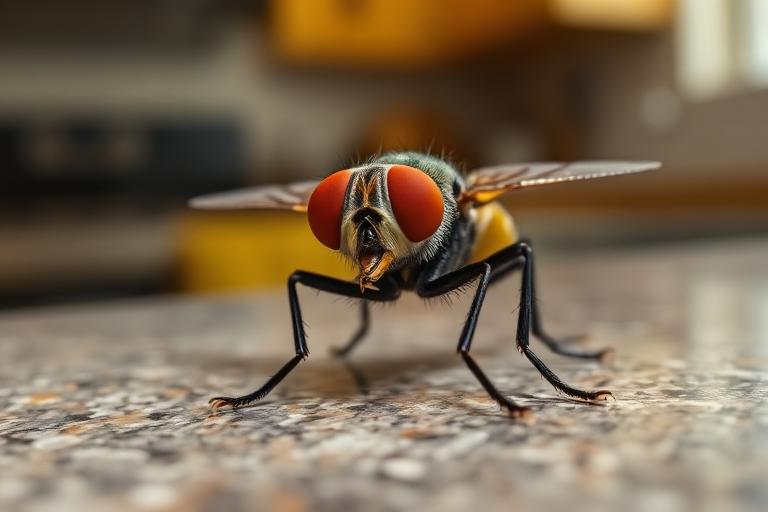
Stable flies (Stomoxys calcitrans) are smaller (1/4 inch) and have a prominent bayonet-like proboscis protruding forward, unlike the horse fly's stout, downward-pointing mouthparts.
House flies (Musca domestica) are smaller (1/4 inch), lack the iridescent eyes of horse flies, and possess sponging mouthparts, making them unable to bite.
Adult bot flies (Oestridae family) are fuzzy and bee-like with non-functional mouthparts; they do not bite, unlike horse and deer flies.
Hoverflies (Syrphidae family) mimic bees or wasps but have short, inconspicuous antennae and do not bite. Horse and deer flies have prominent, often segmented antennae.
Regional differences across the U.S.
In the Northeast, such as Maine and New York, the black horse fly (Tabanus atratus) is common from June to August, thriving in marshy areas and wooded edges. California and the Pacific Northwest see species like the western horse fly (Tabanus punctifer) from late spring through summer, especially around agricultural fields and wetlands. Florida and the Gulf Coast states, including Louisiana, experience prolonged seasons for various Tabanus and Chrysops species, sometimes starting as early as April and extending into October due to the warm, humid climate and abundant water sources. Construction near wetlands or pastures increases risk in all regions.
Life cycle and timing that changes treatment
Horse and deer flies undergo complete metamorphosis. Females lay egg masses near water. Larvae develop in moist soil or water, feeding on organic matter or small invertebrates, typically overwintering in this stage. Pupation occurs in spring, with adults emerging. Most species have one generation per year, making adult emergence periods critical for control.
How to inspect for horse flies & deer flies, step by step
- 1
Visually inspect sunlit edges of wooded areas and transition zones between pastures/lawns and wetlands, particularly during peak adult activity (late morning to afternoon).
- 2
Set out black, shiny objects (e.g., black exercise balls) coated with a sticky trap material (e.g., Tangle-Trap) near water sources to monitor adult populations.
- 3
Examine livestock and pets for bites and agitated behavior, especially around legs, belly, and head, indicating active feeding pressure.
- 4
Carefully inspect the undersides of leaves and stems of emergent vegetation near ponds or slow-moving streams for gelatinous egg masses, typically in stacked layers.
Treatment decision tree
| If you find this | Do this next |
|---|---|
| Occasional horse or deer flies observed during outdoor activities near known breeding sites. | Wear light-colored clothing, long sleeves, and pants. Use a personal repellent containing DEET (20-30%) or picaridin (20%) on exposed skin. |
| Consistent presence of multiple biting flies makes outdoor enjoyment difficult during peak season. | Install horse fly traps (e.g., H-traps, Manitoba traps) around property perimeter, especially between wooded areas and activity zones, to reduce adult populations. |
| High numbers of flies are actively biting livestock or pets, causing stress or potential injury. | Apply approved pour-on or spray insecticides containing pyrethrins or synthetic pyrethroids (e.g., permethrin) directly to animals, following label instructions carefully. |
| Extremely high fly populations persist despite trapping and personal repellents, severely impacting outdoor activities. | Consider targeted barrier spray applications of synthetic pyrethroids (e.g., bifenthrin, lambda-cyhalothrin) on vegetation in non-blooming areas bordering active zones, avoiding wetlands. |
| Repeated, large-scale infestations across multiple seasons, potentially impacting livestock health or property value. | Consult a professional pest control operator for integrated pest management including habitat modification and potential targeted larvicidal treatments in identified breeding sites, if appropriate and permitted. |
Where DIY runs out of road
- • Over-the-counter space sprays offer only temporary relief and do not address the source of horse or deer fly infestations, leading to rapid re-infestation.
- • Generic 'bug zappers' are ineffective against biting flies like horse and deer flies and can disrupt beneficial insect populations, making DIY attempts counterproductive.
- • Unauthorized or incorrect application of pesticides near aquatic environments can harm non-target organisms, pollute water, and violate environmental regulations, often worsening problems.
When to call a professional
- • Persistent high populations despite homeowner efforts, especially if breeding sites are on or near property.
- • Need for targeted treatment of breeding sites that requires specialized equipment or permits.
- • Concerns about potential impact on livestock or pets from large, sustained fly pressure.
Safety and legal limits
Always read and follow product labels explicitly. Using restricted-use pesticides requires a licensed applicator. When applying any insecticide, ensure proper ventilation and wear personal protective equipment (PPE) as directed, including gloves and eye protection. Avoid drift onto non-target areas, especially blooming plants to protect pollinators, and aquatic environments. Keep children and pets away from treated areas until dry. Misapplication can harm beneficial insects, aquatic life, and potentially humans or pets. Ensure any habitat modification or larvicide application near water complies with local, state, and federal environmental regulations, as many wetlands are protected.
Horse flies & deer flies questions homeowners ask
Why do horse fly bites hurt so much?
Females slice the skin with blade-like mouthparts instead of piercing it, which is why the bite bleeds and stings.
Horse fly control by city
Local technicians handle horse flies & deer flies in every market below — pick your city for neighborhood coverage, seasonal notes and a free quote.
Related biting pests pests
Sources and further reading
Guidance on this page is compiled from EPA, CDC and land-grant university extension IPM publications, which are linked in the sources section. It is general information, not a diagnosis or a treatment recommendation for your property.
- Ticks: prevention and tickborne disease — U.S. Centers for Disease Control and Prevention
- Fleas and flea-borne disease — U.S. Centers for Disease Control and Prevention
- Integrated Pest Management (IPM) principles — U.S. Environmental Protection Agency
- Safe pest control in and around the home — U.S. Environmental Protection Agency