
Biting pests
Kissing bugs: identification & kissing bug control
Also known as: conenose bugs, chinches
Kissing bugs live near rodent and wildlife nests and enter through gaps at night. Control combines exclusion, exterior lighting changes, harborage cleanup and rodent removal.
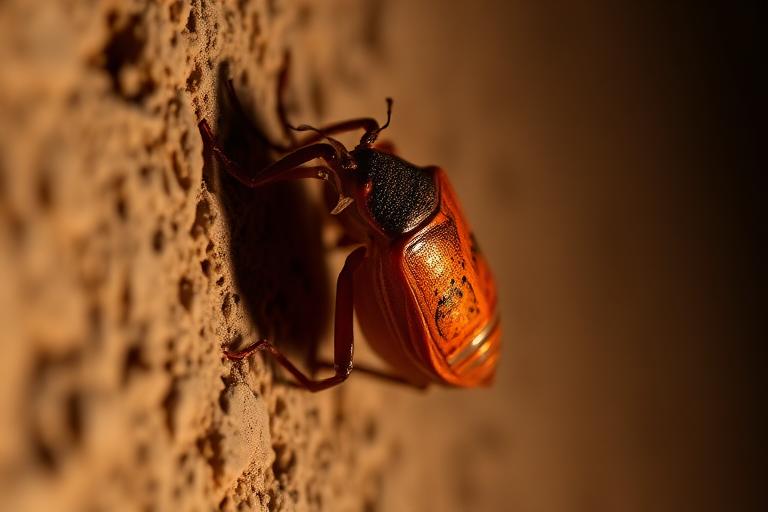
How to identify kissing bugs
- What it looks like
- Dark brown-black bugs with a cone-shaped head and red-orange stripes along the flattened abdomen edge.
- Size
- 3/4 to 1.25 inches
- Where you'll find it
- Near woodrat nests, dog kennels, wood piles, chicken coops and porch lights.
- Commonly confused with
- Western conifer seed bugs and leaf-footed bugs are harmless lookalikes.
Signs of kissing bugs in your home
- Painless bites around the face discovered in the morning
- Dark bugs near porch lights
- Fecal specks near sleeping areas
Is it really kissing bugs? Side-by-side comparisons
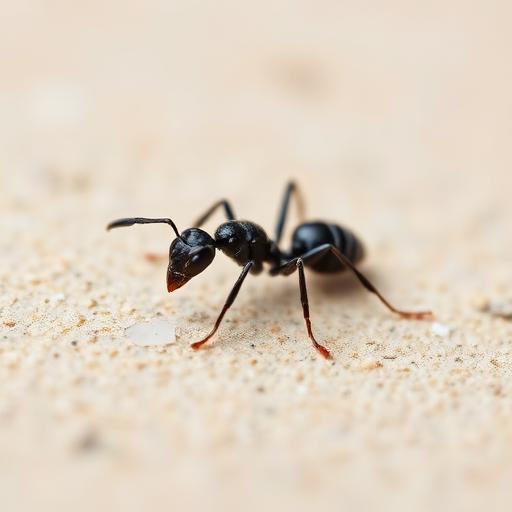
Kissing bugs have a distinct cone-shaped head and a thin, elongated proboscis that tucks under the head; conifer seed bugs have a broad head and leaf-like expansions on their hind legs.
Kissing bugs have a smooth, dark body and do not possess the flattened, leaf-like tibiae on their hind legs characteristic of leaf-footed bugs; they also lack a strong odor when disturbed.
While both are large and dark, wheel bugs have a distinctive cogwheel-like crest on their thorax and a thick, curved proboscis, unlike the kissing bug's slender, straight proboscis.
Many assassin bugs are beneficial predators. Kissing bugs (Triatominae) specifically have a much thinner, straighter proboscis compared to the typically stouter, more curved proboscis of most other assassin bugs.
Regional differences across the U.S.
Kissing bugs, members of the Triatominae subfamily, exhibit regional variations across the US. Triatoma sanguisuga is prevalent in the Southeast (e.g., Florida, Georgia, Texas), often associated with opossums and raccoons. Triatoma gerstaeckeri dominates the Southwest (e.g., Texas, New Mexico, Arizona), frequently found near woodrat nests. Triatoma protracta is common in California and other western states. Risk factors include adobe construction in the Southwest providing harborage, and warmer climates extending their active season. Northern states see less established populations, with sightings often linked to travel or isolated occurrences. Seasonal activity generally peaks in warmer months, with higher risk of indoor invasion from late spring to fall.
Life cycle and timing that changes treatment
Kissing bugs undergo incomplete metamorphosis: egg, nymph (5 instars), and adult. The entire cycle from egg to adult can take one to two years, depending on species and environmental conditions, particularly access to blood meals. They typically produce one generation per year. All nymphal stages and adults require blood meals to develop and reproduce. Overwintering usually occurs as nymphs or adults in sheltered locations, often near host animals, meaning year-round vigilance is important in endemic areas.
How to inspect for kissing bugs, step by step
- 1
Inspect pet sleeping areas, particularly dog kennels and chicken coops, for shed skins (exuviae) or live bugs hiding in cracks or under bedding material.
- 2
Examine woodpiles and stacks of lumber, using a flashlight at a low angle to spot bugs tucked into crevices or beneath bark, especially those close to structures.
- 3
Check around exterior light fixtures, especially porch lights, at night or early morning for bugs attracted to the light, as well as cracks in stucco or siding nearby.
- 4
Investigate areas near suspected rodent or wildlife nests (e.g., woodrat nests, opossum dens), looking under rocks, debris, or in sheltered burrows for bug presence.
Treatment decision tree
| If you find this | Do this next |
|---|---|
| You find a single dead kissing bug indoors. | Collect it for identification. This may indicate an isolated incident, but merits a thorough inspection of entry points and pet sleeping areas. |
| You find a live kissing bug indoors, especially at night. | Safely capture it without direct contact. Seal it in a container and contact your local public health department or entomology extension office for identification and guidance. |
| You find multiple live kissing bugs indoors or a cluster of shed skins. | This suggests an established infestation. Immediately contact your state public health department and a licensed pest control professional experienced in Triatominae control. |
| A family member or pet develops symptoms (e.g., fever, swelling at bite site) after a suspected bite. | Seek immediate medical or veterinary attention. Collect any suspected bug for identification. Inform healthcare providers about potential Chagas disease risk if in endemic areas. |
| You observe recurrent kissing bug activity outdoors near your home, especially near wildlife nests. | Implement exclusion strategies (seal cracks, screen vents). Contact a pest management professional for outdoor perimeter treatment and harborage reduction to prevent indoor entry. |
Where DIY runs out of road
- • Over-the-counter pyrethroid sprays offer limited residual control and cannot penetrate deep harborage areas where kissing bugs hide, leading to re-infestation.
- • Foggers and 'bug bombs' are ineffective against kissing bugs as they fail to reach hidden populations and can disperse bugs, making comprehensive treatment more challenging.
- • Attempting to handle severe infestations yourself can increase exposure risk to the bugs and potential pathogens, without addressing the underlying source or entry points effectively.
When to call a professional
- • Any confirmed sighting of a live kissing bug indoors, especially in endemic areas.
- • Evidence of recurrent outdoor activity near the home, indicating an ongoing infestation risk.
- • If you or a pet experience symptoms after a suspected bite, requiring coordinated pest management and medical/veterinary consultation.
Safety and legal limits
Always prioritize safety by never handling kissing bugs directly, as they can transmit Trypanosoma cruzi, the parasite causing Chagas disease. Use gloves and forceps to collect specimens. Pesticide applications, particularly those involving restricted-use products or targeting deep harborage, must comply with label law and be performed by a licensed professional. Ensure pets and children are clear of treated areas for the duration specified on product labels to prevent exposure. When using insecticides, adequate ventilation and appropriate personal protective equipment (PPE) are crucial to minimize inhalation risks. Do not apply pesticides directly to wildlife nests or in a manner that could harm non-target species.
Kissing bugs questions homeowners ask
How do I identify a kissing bug?
Look for the narrow cone-shaped head and the orange or red banded stripe around the edge of a flat oval body.
Kissing bug control by city
Local technicians handle kissing bugs in every market below — pick your city for neighborhood coverage, seasonal notes and a free quote.
Related biting pests pests
Sources and further reading
Guidance on this page is compiled from EPA, CDC and land-grant university extension IPM publications, which are linked in the sources section. It is general information, not a diagnosis or a treatment recommendation for your property.
- Ticks: prevention and tickborne disease — U.S. Centers for Disease Control and Prevention
- Fleas and flea-borne disease — U.S. Centers for Disease Control and Prevention
- Integrated Pest Management (IPM) principles — U.S. Environmental Protection Agency
- Safe pest control in and around the home — U.S. Environmental Protection Agency