
Stinging insects
Wasps & hornets: identification & wasp and hornet removal
Stinging insect nests near doors, eaves and play areas are a safety risk. Technicians remove the nest in protective gear, treat the void so the colony cannot rebuild, and point out the attractants that drew them in.
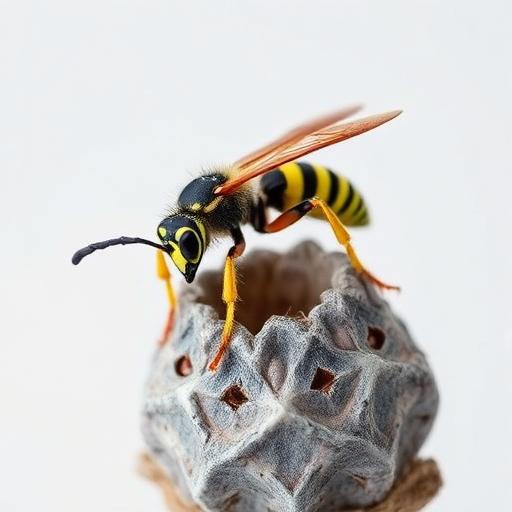
How to identify wasps & hornets
- What it looks like
- Smooth (not fuzzy) bodies with a narrow waist and yellow, black or reddish markings.
- Size
- 1/2 to 1.5 inches
- Where you'll find it
- Eaves, soffits, attics, sheds, shrubs, and ground burrows.
- Commonly confused with
- Honey bees are fuzzy and rounder; mud daubers build tube nests and rarely sting.
Signs of wasps & hornets in your home
- Paper umbrella or football-shaped nests
- Repeated flight paths to one spot
- Aggressive insects around trash or grills
Is it really wasps & hornets? Side-by-side comparisons
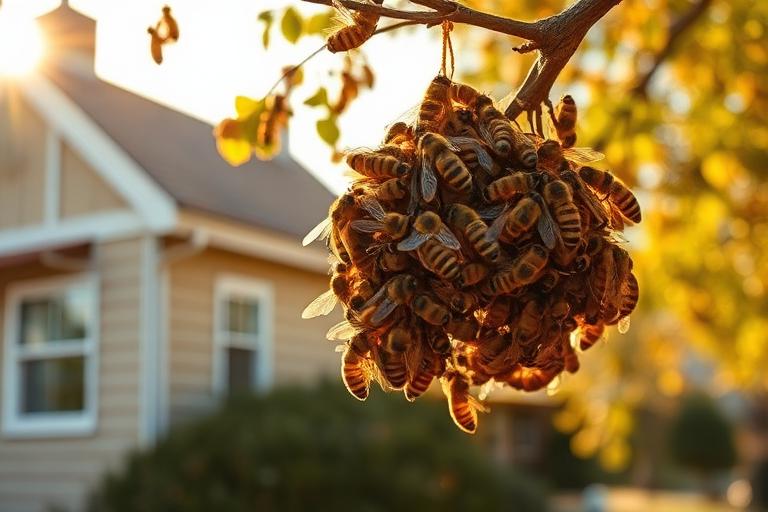
Wasps and hornets have smooth, less hairy bodies and a distinct, narrow 'waist' (petiole), unlike the fuzzy, stout bodies of honey bees.
While also wasps, mud daubers construct characteristic cylindrical mud tubes for nests and are generally solitary and less aggressive than social wasps or hornets.
Sweat bees are typically much smaller (1/4 to 1/2 inch), often metallic green, and rarely sting unless directly provoked or swatted, unlike larger, more defensive wasps.
Carpenter bees are large, stout, and fuzzy like bumblebees, but have a shiny, black, hairless abdomen, and bore circular holes into wood, not building open nests.
Regional differences across the U.S.
The European paper wasp (Polistes dominula) is widespread across the US, often nesting in eaves and attics. The bald-faced hornet (Dolichovespula maculata), common in the Midwest and Northeast, builds large aerial nests in trees and shrubs. Yellowjackets (Vespula spp. and Paravespula spp.), including the Eastern yellowjacket (Vespula maculifrons) prevalent east of the Rockies and the Western yellowjacket (Vespula pensylvanica) common along the Pacific Coast, frequently nest underground or in wall voids. Warm southern climates can see longer active seasons, with some species maintaining colonies year-round in frost-free areas, increasing the likelihood of larger, more established nests in structures.
Life cycle and timing that changes treatment
Most wasp and hornet colonies are annual, initiated by an overwintering queen in spring. Eggs hatch into larvae, pupate, and emerge as sterile female workers within 3-4 weeks. Multiple generations of workers are produced throughout summer, with males and new queens emerging in late summer/early fall. Only newly fertilized queens overwinter, typically in protected locations like leaf litter or wall voids, with the rest of the colony dying off with the first hard frost.
How to inspect for wasps & hornets, step by step
- 1
Carefully observe exterior structures like eaves, soffits, and porch ceilings for active foraging or nest-building, especially during warmer daylight hours.
- 2
Inspect shrubs, dense bushes, and ground-level openings for yellowjacket activity; approach cautiously and look for continuous traffic patterns around suspected nest entrances.
- 3
In attics or sheds, use a flashlight to check along rooflines, rafter junctions, and inside stored items for paper wasp nests or signs of entry points.
- 4
During cooler mornings or evenings, when activity is lower, slowly scan around potential entry points like utility line penetrations or gaps in siding for concealed nests.
Treatment decision tree
| If you find this | Do this next |
|---|---|
| You observe a single wasp or hornet foraging outdoors away from structures. | This is normal activity. No immediate action is required unless it consistently approaches food or beverage areas. |
| You see 1-2 wasps or hornets entering and exiting a specific hole in the ground or a wall. | This indicates a potential nest. Mark the location and avoid disturbing it to prevent defensive stings. Monitor for increased activity. |
| You discover a small, open-celled paper nest (size of a golf ball) with a few wasps attached to an eave or window frame. | If accessible and you are not allergic, a targeted pyrethrin-based aerosol spray labeled for wasps can be used, following all label directions. |
| You find a large, football-sized aerial nest (bald-faced hornet) or a substantial ground/void nest with continuous, heavy traffic. | This signifies a mature, highly defensive colony. Do not attempt DIY removal; professional intervention is strongly recommended due to sting risk. |
| Multiple wasps or hornets are actively flying inside your home, especially near a specific wall or ceiling area. | This suggests an indoor nest or a breach from an exterior nest into the living space. Avoid sealing entry points without professional assessment, as they may chew new exits. |
Where DIY runs out of road
- • Over-the-counter wasp/hornet sprays often lack the residual action or penetration needed to eliminate large, concealed nests, leading to incomplete control and aggravated insects.
- • Attempting to seal an entry point of a nest within a wall void without eliminating the colony first can force wasps to chew through interior drywall, creating a more severe indoor infestation.
- • Physical destruction or direct spraying of large or aerial nests without proper protective equipment can provoke mass defensive attacks, risking numerous painful stings and allergic reactions.
When to call a professional
- • If you or a family member have known allergies to stings.
- • For large, established nests (e.g., larger than a softball) or those in difficult-to-access locations.
- • When a nest is located inside a wall void, attic, or other concealed structural area requiring specialized treatment.
Safety and legal limits
Always read and strictly follow all pesticide product labels. Many over-the-counter wasp sprays contain pyrethroids, which are toxic to aquatic life and bees; apply only to target nests and avoid runoff. Never apply pesticides near open flames or ignition sources. For concealed nests, professional application of dusts or foams with active ingredients like deltamethrin or fipronil can be effective. When dealing with stinging insects, wear appropriate personal protective equipment including thick clothing, gloves, and a bee veil. Ensure pets and children are kept away from treatment areas until sprays have dried or dusts have settled. Some regional regulations may apply to certain species or treatment methods; consult local authorities if unsure.
Wasps & hornets questions homeowners ask
How do I tell a wasp nest from a hornet nest?
Paper wasps build open umbrella combs under eaves; bald-faced hornets build enclosed gray football nests in trees or on walls.
Is it safe to knock down a nest myself?
No. Disturbed colonies sting in numbers, and yellow jackets can sting repeatedly.
Wasp and hornet removal by city
Local technicians handle wasps & hornets in every market below — pick your city for neighborhood coverage, seasonal notes and a free quote.
Related stinging insects pests
Sources and further reading
Guidance on this page is compiled from EPA, CDC and land-grant university extension IPM publications, which are linked in the sources section. It is general information, not a diagnosis or a treatment recommendation for your property.
- Honey bee health and pollinator protection — U.S. Department of Agriculture
- Pest Notes: home and landscape pests — University of California Statewide IPM Program
- Integrated Pest Management (IPM) principles — U.S. Environmental Protection Agency
- Safe pest control in and around the home — U.S. Environmental Protection Agency