
Stinging insects
Carpenter bees: identification & carpenter bee control
Also known as: wood bees, boring bees
Carpenter bees bore into unpainted wood to nest and return to the same galleries each year, and woodpeckers make the damage worse. We treat the galleries, plug the holes and recommend finishes that discourage return.
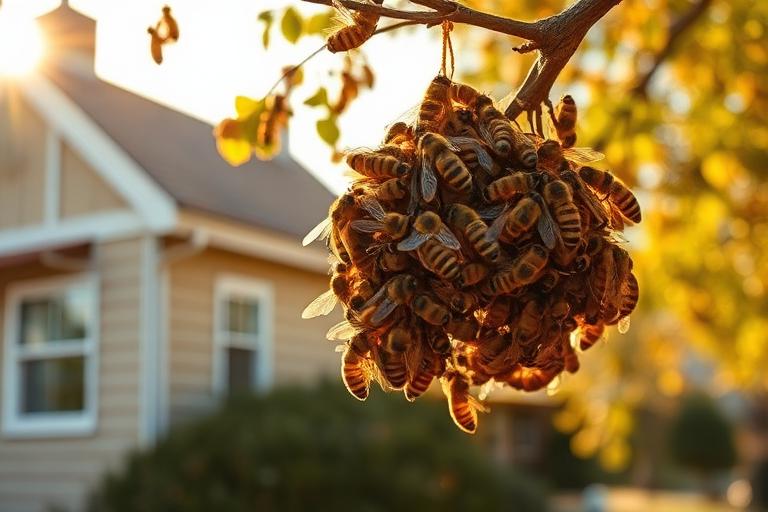
How to identify carpenter bees
- What it looks like
- Large bumblebee-sized bees with a shiny black hairless abdomen; males hover and cannot sting.
- Size
- 1/2 to 1 inch
- Where you'll find it
- Deck railings, fascia, eaves, pergolas, fence tops and unpainted softwood.
- Commonly confused with
- Bumblebees have a fuzzy abdomen and nest in the ground.
Signs of carpenter bees in your home
- Perfectly round 1/2 inch holes
- Sawdust below the holes
- Yellow staining on the wood
- Bees hovering aggressively near eaves
Is it really carpenter bees? Side-by-side comparisons
Carpenter bees have a shiny, hairless black abdomen. Bumblebees (e.g., Bombus impatiens) have a fuzzy abdomen with yellow markings.
Carpenter bees are large, 1/2 to 1 inch long. Sweat bees (e.g., Halictus ligatus) are much smaller, typically 1/4 to 1/2 inch long, and often metallic green.
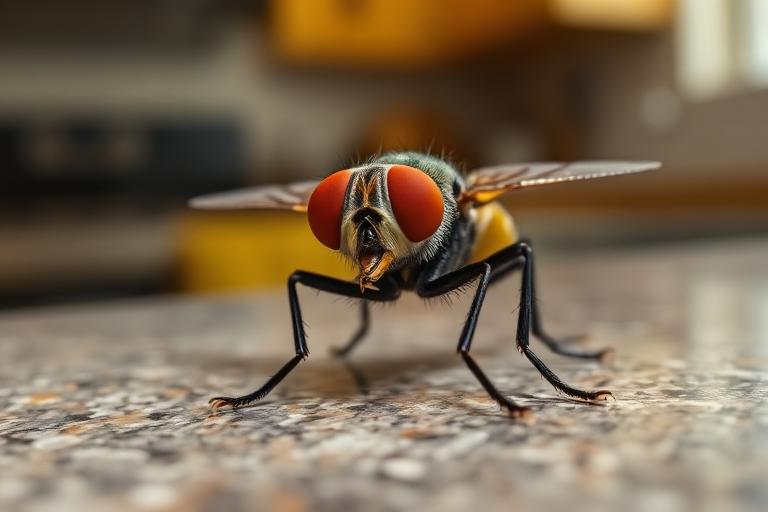
Carpenter bees possess two pairs of wings and elbowed antennae. Hoverflies mimic bees but have only one pair of wings and short, stubby antennae.
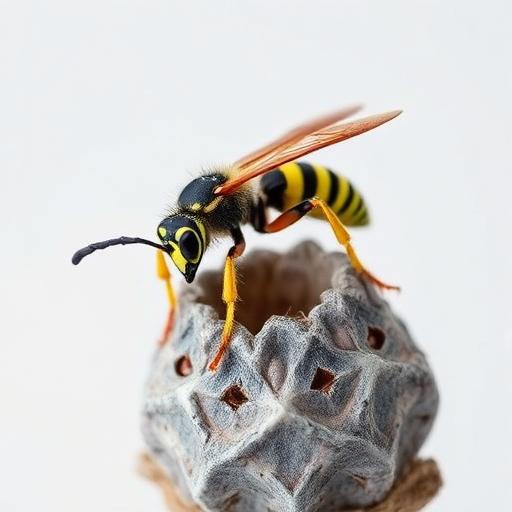
Carpenter bees are robust and hairy, with distinct pollen baskets. Wasps are slender, less hairy, and have a constricted 'waist'.
Regional differences across the U.S.
The large carpenter bee, Xylocopa virginica, is prevalent throughout the Eastern United States, from Florida up to New England and west to Texas and the Great Plains. In the Southeast, especially in states like Georgia and Alabama, carpenter bee activity can begin as early as late February due to warmer temperatures, with multiple generations per year possible. In the Southwest, Xylocopa californica and Xylocopa varipuncta are common, particularly in California and Arizona, often targeting redwood and cedar structures. Pacific Northwest states like Oregon experience Xylocopa tabaniformis orpifex, with peak activity in late spring and summer. Humid climates generally increase wood decay risk, making untreated softwoods more attractive. Arid regions may see less decay but still present suitable nesting sites in exposed lumber on pergolas and eaves.
Life cycle and timing that changes treatment
Carpenter bees typically complete one generation per year across much of the US, though warmer southern regions may see two. Adults emerge from overwintering sites in spring (April-May) to mate and excavate new galleries or expand old ones. Eggs are laid in cells within these galleries, hatching into larvae that feed on pollen/nectar provisions. Larval and pupal development takes approximately 7 weeks, with new adults emerging in late summer (August-September) to feed and then overwinter in the galleries. Control efforts are most effective in spring when bees are active and new galleries are being initiated, and in late summer/fall when new adults are present.
How to inspect for carpenter bees, step by step
- 1
Carefully inspect unpainted softwood surfaces like fascia boards, soffits, and deck railings for perfectly round, 3/8- to 1/2-inch diameter holes, often with sawdust (frass) below.
- 2
Use a flashlight at a low angle across wooden eaves and pergolas in late spring to highlight active gallery entrances or fresh wood shavings indicative of new nesting activity.
- 3
Examine the underside of deck joists and fence posts for small piles of coarse sawdust (frass), which is expelled by excavating bees and can accumulate below entry holes.
- 4
Listen closely to wooden structures during warm daylight hours; a distinct buzzing or scraping sound emanating from within the wood can indicate active carpenter bee galleries.
Treatment decision tree
| If you find this | Do this next |
|---|---|
| You observe a few individual bees flying around eaves or deck railings in spring, with no visible holes. | This indicates early season scouting. Monitor for new holes. Consider applying a borate wood treatment to vulnerable unpainted wood surfaces. |
| You find 1-3 active, perfectly round 3/8-inch holes in exposed, unpainted wood, with fresh sawdust below. | Treat individual holes with an insecticidal dust (e.g., deltamethrin dust) using a hand duster. Plug holes with wood putty after 24-48 hours. |
| Multiple active galleries (4-10) are present across several wooden structures, with consistent bee activity. | Apply a residual liquid insecticide spray (e.g., pyrethroid-based such as bifenthrin or permethrin) to the affected wood surfaces in late spring when bees are active. Re-treat in late summer if new activity is observed. |
| Extensive damage, including large numbers of holes, stained wood from bee waste, and structural weakening, is evident. | This signifies a long-standing infestation. Professional intervention is recommended for comprehensive treatment and structural assessment. Wood repair or replacement may be necessary. |
| Bees are nesting in critical structural components like support beams or a large volume of wood, compromising integrity. | Cease DIY efforts immediately. This situation requires a licensed pest control professional who can apply targeted treatments and advise on structural repairs and long-term prevention strategies. |
Where DIY runs out of road
- • Over-the-counter repellent sprays often only deter bees temporarily; they do not eliminate existing nests or prevent re-nesting in subsequent seasons.
- • Sealing holes without treating them first can trap bees inside, causing them to chew new exit holes or move deeper into the wood, worsening damage.
- • Foggers and 'bug bombs' are largely ineffective for carpenter bees nesting deep within wood galleries and do not provide residual protection for future infestations.
When to call a professional
- • Extensive infestations with numerous galleries and significant wood damage that DIY methods cannot address.
- • Infestations in difficult-to-reach areas like high eaves or structural components requiring specialized equipment.
- • Recurring annual infestations despite consistent DIY efforts, indicating a persistent attraction to the property.
Safety and legal limits
Always read and precisely follow all pesticide label instructions, as the label is a legal document. Misuse can harm humans, pets, and beneficial insects. When using dusts or sprays, wear appropriate personal protective equipment (PPE), including gloves, eye protection, and a respirator if recommended by the label. Ensure children and pets are kept away from treated areas until dry. Avoid treating flowering plants directly, as insecticides can harm pollinators. Do not use restricted-use products unless you are a licensed applicator. Apply insecticides when bees are less active, typically in the early morning or late evening, to reduce direct contact with foraging individuals. Unpainted wood is highly attractive; consider painting or sealing exposed wood to deter future activity. Avoid directly treating active bee flight paths.
Carpenter bees questions homeowners ask
How do I tell a carpenter bee from a bumblebee?
Carpenter bees have a shiny, hairless black abdomen; bumblebees are fuzzy all over.
Carpenter bee control by city
Local technicians handle carpenter bees in every market below — pick your city for neighborhood coverage, seasonal notes and a free quote.
Related stinging insects pests
Sources and further reading
Guidance on this page is compiled from EPA, CDC and land-grant university extension IPM publications, which are linked in the sources section. It is general information, not a diagnosis or a treatment recommendation for your property.
- Honey bee health and pollinator protection — U.S. Department of Agriculture
- Pest Notes: home and landscape pests — University of California Statewide IPM Program
- Integrated Pest Management (IPM) principles — U.S. Environmental Protection Agency
- Safe pest control in and around the home — U.S. Environmental Protection Agency