
Stinging insects
Honey bees: identification & honey bee removal
Honey bees are beneficial and, when possible, we coordinate live removal or relocation. Removing the comb and honey is critical — abandoned honey ferments, stains walls and attracts roaches, ants and rodents.
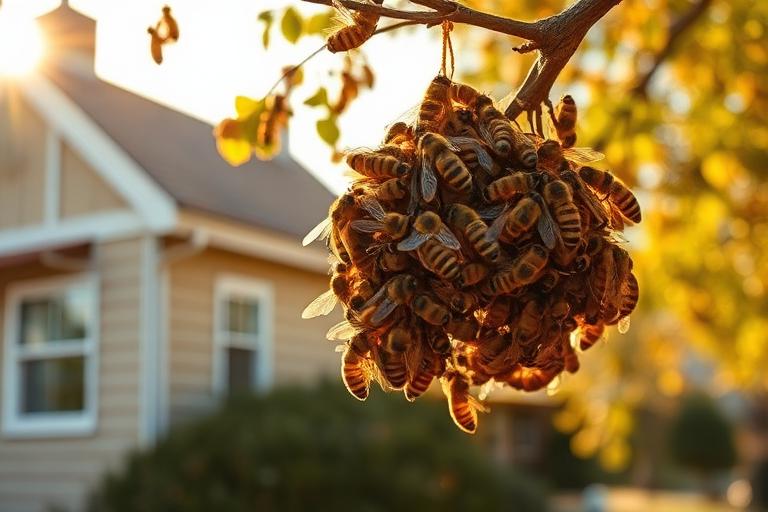
How to identify honey bees
- What it looks like
- Golden-brown fuzzy bees with dark banding, seen in large numbers around one opening.
- Size
- 1/2 inch
- Where you'll find it
- Wall voids, soffits, chimneys, sheds, tree hollows and utility boxes.
- Commonly confused with
- Yellow jackets are smooth and shiny and are attracted to meat and soda.
Signs of honey bees in your home
- Steady bee traffic to a single gap
- Buzzing inside a wall
- Honey or wax staining bleeding through drywall
Is it really honey bees? Side-by-side comparisons
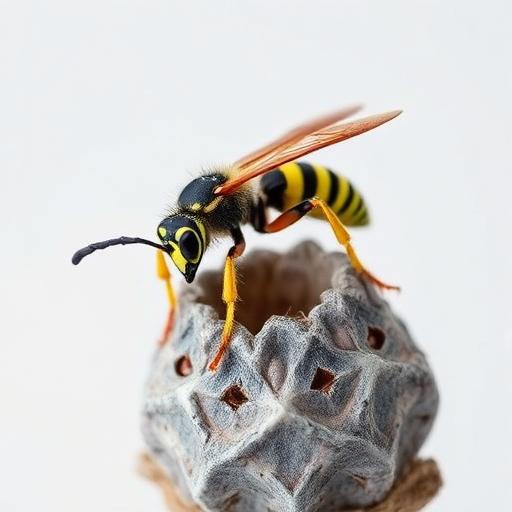
Honey bees are fuzzy and golden-brown with dark banding; yellow jackets are smooth, shiny, and bright yellow/black, with a distinctive constricted waist.
Honey bees are smaller and less robustly hairy; bumble bees are larger, rounder, and densely furry, often with a louder buzz and slower flight.
Honey bees are stockier and fuzzy; paper wasps are slender, smooth, and typically have long legs dangling during flight.
Honey bees are golden-brown and approximately 1/2 inch long; sweat bees are much smaller (1/8-1/4 inch), often metallic green or black, and less hairy.
Regional differences across the U.S.
The European honey bee (Apis mellifera) is ubiquitous across the US. However, Africanized honey bees (Apis mellifera scutellata) are prevalent in Southwestern states like Arizona, New Mexico, Southern California, and portions of Texas. These hybrids exhibit more aggressive defensive behaviors and larger colony sizes. In cooler northern climates, such as New England or the Upper Midwest, overwintering success for colonies is lower without human intervention, leading to fewer established feral colonies. Warmer, humid climates, like Florida or the Gulf Coast, support year-round activity and larger colony growth, increasing swarming and establishment in structures during spring and early summer. Construction types in the Southwest, often with stucco and weep holes, can offer accessible entry points into wall voids.
Life cycle and timing that changes treatment
Honey bee colonies are perennial, with the queen continuously laying eggs. The life cycle from egg to adult worker takes approximately 21 days, drones 24 days, and queens 16 days. Colonies overwinter as adults, clustering to keep the queen warm. Swarming, where a new queen and half the colony depart to establish a new nest, typically occurs in spring and early summer in most regions, representing the primary period for new infestations.
How to inspect for honey bees, step by step
- 1
Observe entry/exit points: Watch potential entry points (e.g., soffit gaps, wall cracks, chimney openings) for 15-30 minutes during peak daytime activity to confirm bee traffic.
- 2
Thermal imaging: Use a thermal camera to detect the heat signature of a living colony within wall voids or other enclosed structural spaces, even through drywall.
- 3
Listen for buzzing: Place an ear against walls or ceilings suspected of harboring a colony, especially in quiet hours, to detect distinct buzzing sounds.
- 4
Probing with borescope: Carefully drill a small pilot hole (1/8 inch) and insert a flexible borescope to visually confirm the presence of comb or bees inside voids.
Treatment decision tree
| If you find this | Do this next |
|---|---|
| You observe a small cluster of bees on an outdoor surface, not entering a structure. | This is likely a temporary swarm resting. They often move within 24-48 hours. Monitor without intervention unless they enter a structure. |
| You see 1-2 foraging honey bees indoors, but no nest or entry point is apparent. | This may be stray bees. Humanely capture and release them outdoors. Check windows and doors for small gaps. |
| You observe consistent bee traffic (dozens per hour) entering a structural void (e.g., wall, chimney) or utility box. | A colony is establishing or established. Do not seal the entry. Contact a professional pest control operator for live removal or extermination. |
| You notice honey staining on interior or exterior walls, or a strong honey odor. | This indicates a well-established colony with significant comb. Professional removal of bees and comb is essential to prevent future pest issues. |
| Bees are actively swarming or exhibiting defensive behavior near children or pets, or if Africanized bees are suspected. | Maintain a safe distance. Immediately contact emergency services or a specialized bee removal service due to potential sting hazards. |
Where DIY runs out of road
- • Over-the-counter insecticides kill surface bees but rarely penetrate deep enough to eliminate the entire colony, leading to re-infestation.
- • Sealing entry points without removing the colony often traps bees inside, causing them to chew new exit points into living spaces or die and attract other pests.
- • DIY attempts can provoke defensive stinging behavior, especially with Africanized honey bees, posing significant risk without proper protective equipment.
When to call a professional
- • Colony established within a structure (e.g., wall void, chimney, attic).
- • Large, active swarm or colony exhibiting aggressive defensive behavior.
- • Suspected presence of Africanized honey bees due to their increased aggression.
Safety and legal limits
Honey bees are beneficial pollinators, and their protection is encouraged. Many states, including California and Florida, have regulations promoting live removal over extermination where feasible. Always read and follow pesticide labels precisely; misuse is illegal. Restricted-use pesticides, typically required for effective colony elimination, can only be purchased and applied by licensed professionals. Ensure pets and children are kept away from treatment areas. When dealing with honey bees, especially large colonies, there is a risk of numerous stings, which can be life-threatening for individuals with allergies or in cases of excessive stings. Always prioritize personal safety and consider professional assistance.
Honey bees questions homeowners ask
Should honey bees in my wall be exterminated?
Live removal is preferred where feasible; regardless, the comb must be removed or the honey will attract secondary pests.
Honey bee removal by city
Local technicians handle honey bees in every market below — pick your city for neighborhood coverage, seasonal notes and a free quote.
Related stinging insects pests
Sources and further reading
Guidance on this page is compiled from EPA, CDC and land-grant university extension IPM publications, which are linked in the sources section. It is general information, not a diagnosis or a treatment recommendation for your property.
- Honey bee health and pollinator protection — U.S. Department of Agriculture
- Pest Notes: home and landscape pests — University of California Statewide IPM Program
- Integrated Pest Management (IPM) principles — U.S. Environmental Protection Agency
- Safe pest control in and around the home — U.S. Environmental Protection Agency