
Stinging insects
Mud daubers: identification & mud dauber removal
Also known as: dirt daubers
Mud daubers are solitary and rarely sting, but their nests stain surfaces and attract carpet beetles. We remove the nests, clean the area and treat the surface to discourage rebuilding.
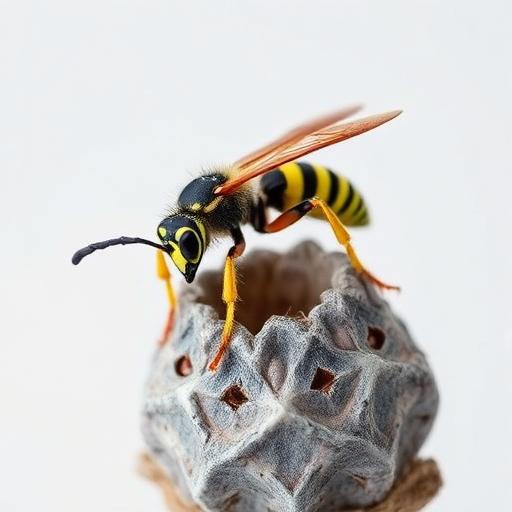
How to identify mud daubers
- What it looks like
- Long, slender black or metallic blue wasps with a thread-like waist.
- Size
- 1 inch
- Where you'll find it
- Sheltered walls, garages, sheds, porch ceilings, attics and under decks.
- Commonly confused with
- Paper wasps build paper comb, not mud tubes.
Signs of mud daubers in your home
- Finger-like tubes or mud blobs on walls
- Paralyzed spiders inside opened nests
- Solitary wasps carrying mud
Is it really mud daubers? Side-by-side comparisons
Paper wasps build open-faced, umbrella-shaped paper combs, often attached to eaves; mud daubers construct enclosed, cylindrical or organ-pipe shaped nests made of soil.
Potter wasps build small, spherical 'pot-like' mud nests with a narrow opening, typically attached to twigs; mud daubers create larger, more elongated or tubular structures.
This is a common colloquial term for mud daubers; there is no separate pest species known as 'dirt dobbers' to distinguish from.
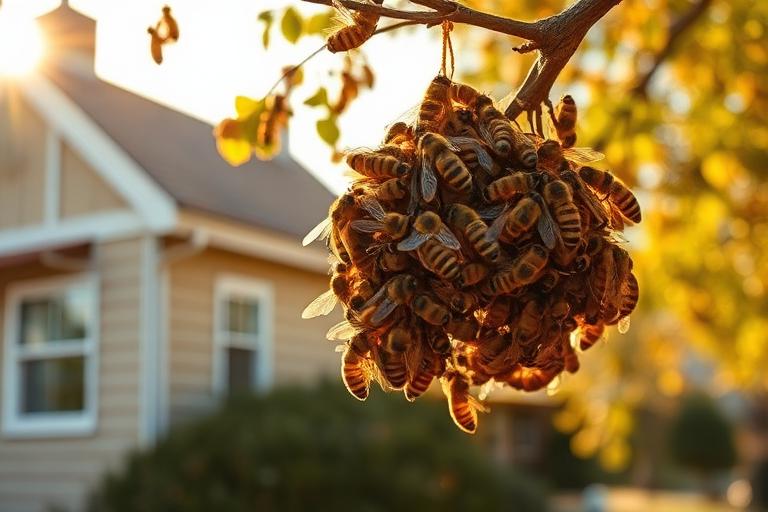
While some solitary bees use mud for nest construction, they typically line existing cavities or create single cells, not the multi-celled, elongated structures characteristic of mud daubers.
Regional differences across the U.S.
Four common mud dauber species are prevalent in the United States. The black and yellow mud dauber (Sceliphron caementarium) is widespread across the entire US. The organ pipe mud dauber (Trypoxylon politum) is common in the eastern and central US, constructing distinctive flute-like mud nests. Blue mud daubers (Chalybion californicum) are also found nationwide but are particularly common in the Southwest, often taking over old nests of other mud dauber species. The 'steel blue' mud dauber (Chalybion zimmermanni) is more restricted to the southeastern states. In warmer climates like Florida and the Gulf Coast, mud dauber activity can extend longer into the fall. Arid regions, such as Arizona, may see increased nest building near human structures providing water sources. Homes with stucco or unfinished wood siding are particularly susceptible to nest attachment.
Life cycle and timing that changes treatment
Mud daubers undergo complete metamorphosis. Eggs are laid on paralyzed prey within mud cells, hatching into larvae that feed on the provisions. Pupation occurs within the cell, and adults emerge in late spring to early summer. Most species have one generation per year, with overwintering occurring as pupae within the protective mud nests. The timing for control often targets early nest construction before significant larval development.
How to inspect for mud daubers, step by step
- 1
Inspect sheltered, high areas like the undersides of porch ceilings and eaves using a strong flashlight at an oblique angle to highlight fresh mud constructions.
- 2
Examine shed interiors, garage rafters, and attic spaces for attached mud tubes, paying close attention to corners and junctions of structural elements.
- 3
Check under decks and in crawl spaces, particularly near foundation walls and joists, for evidence of mud cells or active adult wasps entering/exiting.
- 4
Look around outdoor lighting fixtures, especially those left on at night, as they can attract prey insects and subsequently mud daubers for nesting opportunities.
Treatment decision tree
| If you find this | Do this next |
|---|---|
| You observe a single mud dauber flying around but no nest activity. | This is likely a foraging individual. No immediate action is required. Monitor the area for nest construction over the next few days. |
| You find a few newly constructed, small mud tubes without visible wasp activity. | These are inactive nests. They can be safely removed by scraping them off the surface. Wear gloves as a precaution. |
| You identify several active mud nests with wasps regularly flying in and out. | Treat the active nests directly with an aerosol wasp and hornet killer, preferably at dusk or dawn when wasps are less active. Follow label directions carefully. |
| Active nests are located in hard-to-reach areas, such as high eaves or inside wall voids. | Do not attempt to reach or spray. Contact a pest control professional; they have specialized equipment for such inaccessible locations. |
| A family member has a known severe allergy to stinging insects and active nests are present. | Evacuate the allergic individual from the immediate area. Immediately contact a pest control professional for urgent and safe removal. |
Where DIY runs out of road
- • Over-the-counter wasp sprays may not penetrate deeply enough into older, harder mud nests, leaving larvae or pupae unharmed to emerge later.
- • Attempting to physically remove active nests during the day can provoke stinging, as adult wasps are present and more aggressive when disturbed.
- • Incomplete removal of nests, especially if prey remains inside, can attract secondary pests such as carpet beetles to feed on the dried insect remains.
When to call a professional
- • Nests are numerous or extensively built, indicating a recurring issue or large population.
- • Nests are located in inaccessible areas like attics, wall voids, or very high eaves.
- • Individuals with known severe insect sting allergies reside in the home.
Safety and legal limits
Always read and strictly follow the label directions for any insecticide product. Failure to do so is a violation of federal law. Non-repellent pyrethroid-based aerosols or dusts are common. Ensure adequate ventilation if applying indoors. Keep children and pets away from treated areas until dry. Avoid direct spray contact with skin, eyes, or respiratory tract; wear appropriate personal protective equipment, including gloves and eye protection. Mud daubers are generally docile and sting only when directly provoked or threatened, but caution is still advised around active nests. Do not attempt to treat if you have a known severe allergy to insect stings without professional assistance or immediate access to emergency medical care.
Mud daubers questions homeowners ask
Are mud daubers dangerous?
Very rarely — they are solitary and non-aggressive, and they actually reduce spider populations.
Mud dauber removal by city
Local technicians handle mud daubers in every market below — pick your city for neighborhood coverage, seasonal notes and a free quote.
Related stinging insects pests
Sources and further reading
Guidance on this page is compiled from EPA, CDC and land-grant university extension IPM publications, which are linked in the sources section. It is general information, not a diagnosis or a treatment recommendation for your property.
- Honey bee health and pollinator protection — U.S. Department of Agriculture
- Pest Notes: home and landscape pests — University of California Statewide IPM Program
- Integrated Pest Management (IPM) principles — U.S. Environmental Protection Agency
- Safe pest control in and around the home — U.S. Environmental Protection Agency