
Stinging insects
Cicada killers: identification & cicada killer control
Cicada killers are huge but nearly harmless solitary wasps that dig burrows in bare, sandy soil. We treat the burrows where activity is unacceptable and advise on turf density to prevent return.
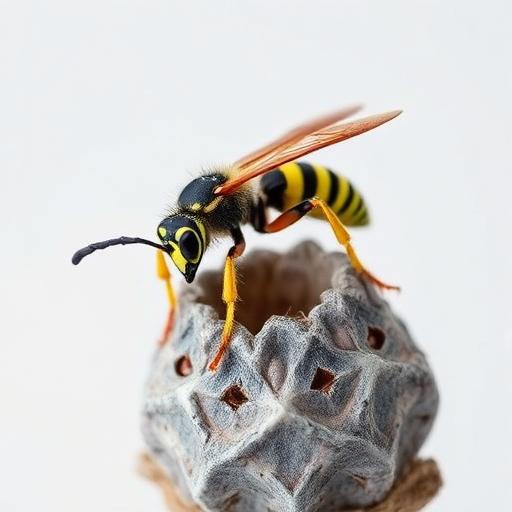
How to identify cicada killers
- What it looks like
- Very large black wasps with yellow abdominal bands and rusty wings.
- Size
- 1.5 to 2 inches
- Where you'll find it
- Bare sandy soil, sidewalk edges, sand traps, flower beds and under patios.
- Commonly confused with
- European hornets are smaller and nest communally.
Signs of cicada killers in your home
- Pencil-width holes with soil fans in the lawn
- Huge wasps hovering low over turf
- Paralyzed cicadas dragged to burrows
Is it really cicada killers? Side-by-side comparisons
Cicada killers are significantly larger (1.5-2 inches) with a glossy black body and distinct yellow bands, while European hornets (Vespa crabro) are smaller (up to 1.5 inches), hairier, and have reddish-brown and yellow markings.
Cicada killers are much larger and robust, with rusty-orange wings and a smooth body. Yellowjackets (e.g., Vespula maculifrons) are smaller, sleeker, and have distinct yellow and black bands with clear wings.
Great golden digger wasps (Sphex ichneumoneus) are smaller with a more slender waist and often have a reddish-orange abdomen tip, contrasting with the cicada killer's entirely black and yellow banded abdomen.
Cicada killers have yellow markings and rusty wings, while bald-faced hornets (Dolichovespula maculata) are predominantly black with distinctive white markings on the face and thorax, and construct aerial paper nests.
Regional differences across the U.S.
The western cicada killer, Sphecius grandis, is prevalent west of the Rocky Mountains, notably in California, Arizona, and New Mexico, emerging later in the summer, typically July-August. The eastern cicada killer, Sphecius speciosus, dominates east of the Rockies, ranging from New York to Florida and west to the Great Plains, with peak activity in June-July. Construction factors like poorly maintained sandy volleyball courts, golf course sand traps, or landscaped areas with bare, well-drained soil increase attractiveness. Arid climates in the Southwest can lead to deeper burrows to reach cooler, moister soil, while more humid eastern regions may see shallower nests.
Life cycle and timing that changes treatment
Cicada killers undergo complete metamorphosis. Eggs are laid in subterranean cells, hatching within a few days. Larvae feed on paralyzed cicadas provided by the female, developing through several instars over two weeks. They then overwinter as a prepupa in a silken cocoon, pupating in spring. Adults emerge from late June to August, living only a few weeks to mate and provision nests. There is one generation per year.
How to inspect for cicada killers, step by step
- 1
Examine bare, sandy patches of soil in full sun, especially along south-facing building foundations, sidewalk edges, and unmulched flower beds, for excavated dirt piles and burrow entrances (approx. 0.5-inch diameter).
- 2
Inspect under patio slabs, around utility boxes, and beneath landscape timbers using a flashlight at a low angle to detect hidden burrow entrances or disturbed soil indicating nesting activity.
- 3
Observe adult cicada killer activity during peak daylight hours (10 AM - 4 PM) in late summer, noting flight patterns, cicada-carrying behavior, and locations where they enter/exit burrows.
- 4
Carefully check golf course sand traps and children's sandboxes in recreational areas for the characteristic U-shaped dirt mounds and active burrow entrances, which indicate potential nesting sites.
Treatment decision tree
| If you find this | Do this next |
|---|---|
| You observe a few individual cicada killers foraging in your yard but no discernible nests. | This is likely transient activity. Monitor the area for a few days for signs of nesting. No immediate intervention is usually required unless numbers increase or nesting begins. |
| You see several cicada killers flying low over a patch of bare soil, and small piles of dirt are visible. | Nesting activity has begun. Avoid disturbing the area. Consider placing landscape fabric and mulch over bare ground to deter further nesting or apply a granular insecticide labeled for ground-nesting wasps to the active burrows. |
| Multiple active burrows are present in a high-traffic area (e.g., near a doorway, sandbox, or pet area). | Risk of stings increases. Apply a liquid or dust insecticide containing active ingredients like carbaryl, permethrin, or bifenthrin directly into each active burrow opening during evening hours when wasps are less active. Follow label directions precisely. |
| Numerous cicada killer burrows (more than 10-15) are established over a large area of your property. | This indicates a significant infestation. Treating individual burrows will be labor-intensive and potentially ineffective. A broadcast application of a granular insecticide over the entire infested area may be necessary. Re-evaluate landscape to deter future nesting. |
| Cicada killers are nesting extensively in a public area, or you are highly allergic to stings. | Do not attempt DIY control. Contact a licensed pest management professional immediately. They possess specialized equipment and products for safe, effective control of large populations in sensitive environments. |
Where DIY runs out of road
- • Over-the-counter wasp sprays are ineffective for cicada killers because their nests are subterranean, requiring a product that can penetrate deeply into the burrow to reach the larvae and queen.
- • Filling in burrows without insecticide treatment is largely futile; the wasps will often dig new burrows or simply re-excavate the filled ones, leading to wasted effort and continued activity.
- • DIY attempts with inadequate personal protective equipment can result in painful stings. Cicada killers are generally docile but will sting if provoked or trapped, especially if their burrows are directly disturbed.
When to call a professional
- • Large, widespread infestations affecting significant portions of a lawn or recreational area that DIY methods cannot effectively manage.
- • Nesting activity in highly sensitive areas like schools, hospitals, or daycares where public safety is paramount.
- • If any household member has a severe allergic reaction to stings, professional intervention minimizes exposure risk.
Safety and legal limits
Always read and strictly follow the pesticide product label, as it is a legal document. Misuse can harm humans, pets, and the environment. Wear appropriate personal protective equipment (PPE) such as gloves, long sleeves, and eye protection when handling insecticides. Avoid applying products when children or pets are present, and keep them away from treated areas until dry. Granular insecticides often require watering in; ensure proper drainage to prevent runoff into waterways. Never use restricted-use products unless you are a certified applicator. While cicada killers are not federally protected, always confirm local regulations regarding insect control, especially near natural areas. Protect yourself from stings by working at dusk when wasps are less active.
Cicada killers questions homeowners ask
Are cicada killers dangerous?
Males cannot sting and females rarely do — they are alarming but not aggressive.
Cicada killer control by city
Local technicians handle cicada killers in every market below — pick your city for neighborhood coverage, seasonal notes and a free quote.
Related stinging insects pests
Sources and further reading
Guidance on this page is compiled from EPA, CDC and land-grant university extension IPM publications, which are linked in the sources section. It is general information, not a diagnosis or a treatment recommendation for your property.
- Honey bee health and pollinator protection — U.S. Department of Agriculture
- Pest Notes: home and landscape pests — University of California Statewide IPM Program
- Integrated Pest Management (IPM) principles — U.S. Environmental Protection Agency
- Safe pest control in and around the home — U.S. Environmental Protection Agency