
Spiders & arachnids
Wolf spiders: identification & wolf spider control
Wolf spiders do not build webs — they hunt on the ground and enter through door gaps in fall. Control focuses on perimeter treatment, door sweeps and reducing the insects they hunt.
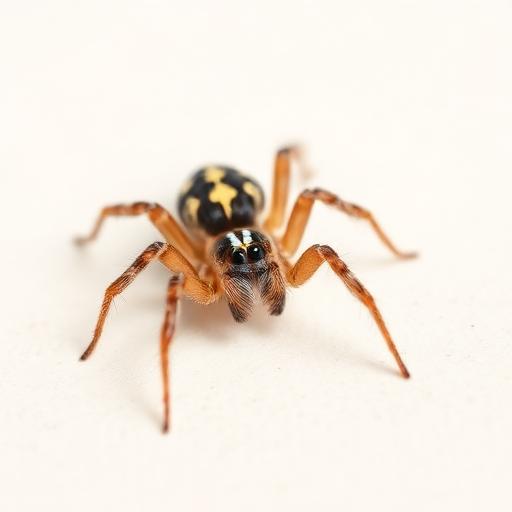
How to identify wolf spiders
- What it looks like
- Large brown or gray hairy spiders with striped markings and two large forward-facing eyes.
- Size
- 1/2 to 1.5 inches including legs
- Where you'll find it
- Ground level: garages, basements, mulch, leaf litter, under stones and along foundations.
- Commonly confused with
- Often mistaken for brown recluses, but wolf spiders are larger, hairy and have banded legs.
Signs of wolf spiders in your home
- Large fast spiders running across floors
- No webs
- Females carrying an egg sac on the abdomen
Is it really wolf spiders? Side-by-side comparisons
Wolf spiders are robust and hairy with prominent stripe patterns on their bodies and legs; brown recluses are smooth-bodied with a violin-shaped mark on their cephalothorax.
Wolf spiders are active hunters, not building webs for prey capture, and have two large forward-facing eyes; funnel weavers build sheet-like webs with a funnel retreat and have smaller, more uniform eyes.
Wolf spiders carry their egg sacs attached to their spinnerets; nursery web spiders carry egg sacs under their cephalothorax and later suspend them in a silk nursery tent.
Wolf spiders have a stout build and hunt actively on the ground; grass spiders are more slender and build distinctive funnel-shaped webs in grass.
Regional differences across the U.S.
Wolf spiders are common throughout the United States, but specific species vary by region. The Carolina wolf spider (Hogna carolinensis), the largest North American wolf spider, is prevalent in the Southeast and Midwest. In the Pacific Northwest, species like the field wolf spider (Pardosa amentata) are common. The Texas wolf spider (Lycosa annexa) is found in the Southwest. While generally active from spring to fall, colder northern states like Minnesota or Maine see a shorter active season, with spiders seeking overwintering sites earlier. Warmer, humid climates in states like Florida or Louisiana can support year-round activity. Homes with abundant ground cover, leaf litter, or woodpiles, especially those with unsealed foundations or cracks in basements, face higher infestation risks across all regions. Drought conditions in states like California or Arizona may drive wolf spiders indoors seeking moisture.
Life cycle and timing that changes treatment
Wolf spiders undergo an incomplete metamorphosis, progressing from egg to adult. Females carry their egg sacs externally on their spinnerets, which typically hatch in a few weeks. Spiderlings then often ride on the mother's back for several days to weeks. The time from egg to adult can range from a few months to over a year, depending on species and environmental conditions. Most species have one generation per year, with adults often overwintering in protected locations, becoming more active and seeking mates in spring and summer. Control efforts are most effective when targeting adults before egg-laying or in early fall as they seek overwintering sites.
How to inspect for wolf spiders, step by step
- 1
Use a bright flashlight held at a low angle to spot spider eye shine (tapetum lucidum) along baseboards, under furniture, and in cluttered areas of basements and garages.
- 2
Examine exterior foundations, checking under rocks, landscape timbers, leaf litter, and mulch beds for active spiders or silk retreats near entry points like utility penetrations.
- 3
Place sticky traps or glue monitors along interior walls, especially in corners, near doors, and in areas of suspected activity, to capture and identify specimens over time.
- 4
Inspect window wells, door sweeps, and garage door seals for gaps or openings exceeding 1/4 inch that provide easy access points from outdoor harborage areas.
Treatment decision tree
| If you find this | Do this next |
|---|---|
| You find a single wolf spider indoors, especially in a basement or garage. | This is likely an incidental invader. Capture and release outdoors, or vacuum it. No further action usually needed. |
| You find several wolf spiders (3-5) indoors over a week, primarily in ground-level rooms. | Indicates outdoor harborage near the foundation and possible entry points. Seal cracks and reduce exterior clutter. Monitor with glue traps. |
| You regularly encounter wolf spiders (more than 5) indoors, especially in multiple rooms or upper levels. | Suggests a more significant exterior population or persistent entry issues. Implement perimeter treatments and thorough exclusion. Consider professional inspection. |
| You find numerous wolf spiders with egg sacs or spiderlings indoors. | Indicates breeding activity has occurred indoors. This requires immediate and thorough interior treatment and aggressive exterior source reduction to prevent further generations. |
| You are unable to control wolf spiders despite diligent DIY efforts (sealing, cleaning, OTC products). | The infestation likely exceeds DIY capabilities. A licensed pest control professional can identify hidden harborage and apply targeted, residual treatments. |
Where DIY runs out of road
- • Over-the-counter (OTC) repellent sprays often displace wolf spiders rather than eliminating them, potentially driving them into other parts of the home instead of outside.
- • OTC products typically lack the residual efficacy or specific active ingredients (e.g., pyrethroids, neonicotinoids) necessary for sustained control of larger spider populations.
- • Attempting to treat extensive outdoor harborage areas like dense landscaping or rock walls with consumer products is often ineffective and can lead to excessive, misapplied pesticide use.
When to call a professional
- • Persistent indoor sightings despite diligent sealing and sanitation efforts.
- • Discovery of multiple wolf spider egg sacs or significant spiderling activity indoors.
- • When a large population of wolf spiders is consistently found around the building's exterior foundation.
Safety and legal limits
Always read and strictly follow all pesticide product labels. Using products inconsistent with their labeling is a violation of federal law (FIFRA). Never apply restricted-use pesticides without appropriate licensing. Ensure proper ventilation during indoor applications and keep children and pets away from treated areas until dry, as directed by the label. Store all pesticides in their original containers, out of reach of children and pets. When applying outdoors, be mindful of drift and runoff to protect non-target organisms and aquatic environments. Wear appropriate personal protective equipment (PPE) as specified on the label, such as gloves, eye protection, and respirators, to prevent exposure during mixing and application. Consider potential impacts on beneficial insects like pollinators.
Wolf spiders questions homeowners ask
Are wolf spiders poisonous?
They can bite if handled, but the venom is not medically significant for most people.
Wolf spider control by city
Local technicians handle wolf spiders in every market below — pick your city for neighborhood coverage, seasonal notes and a free quote.
Related spiders & arachnids pests
Sources and further reading
Guidance on this page is compiled from EPA, CDC and land-grant university extension IPM publications, which are linked in the sources section. It is general information, not a diagnosis or a treatment recommendation for your property.
- Pest Notes: home and landscape pests — University of California Statewide IPM Program
- Pest control and pesticide fact sheets — National Pesticide Information Center (Oregon State University / EPA)
- Integrated Pest Management (IPM) principles — U.S. Environmental Protection Agency
- Safe pest control in and around the home — U.S. Environmental Protection Agency