
Spiders & arachnids
Black widow spiders: identification & black widow control
Black widows build tangled webs low to the ground in sheltered spots. We remove webs and egg sacs, treat harborage areas like meter boxes and block walls, and reduce clutter that shelters them.
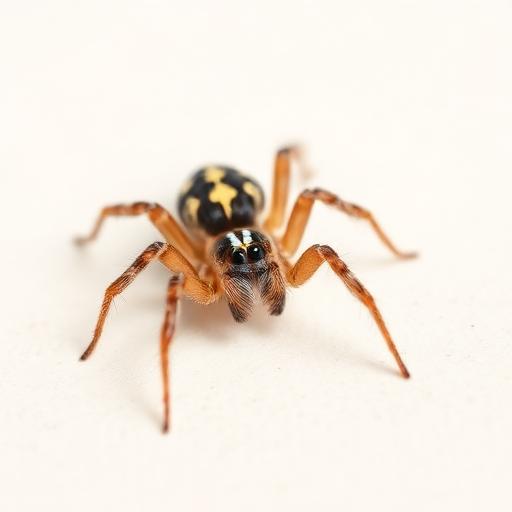
How to identify black widow spiders
- What it looks like
- Glossy black with a red hourglass on the underside of a bulbous abdomen; males are smaller and lighter.
- Size
- 1/2 inch body
- Where you'll find it
- Garages, sheds, meter boxes, woodpiles, block walls, patio furniture and crawl spaces.
- Commonly confused with
- False widows are brown with mottled markings and lack the red hourglass.
Signs of black widow spiders in your home
- Messy irregular webs near ground level
- Round papery egg sacs
- Spiders hanging upside down in webs
Is it really black widow spiders? Side-by-side comparisons
False widows are typically brown or gray, lack the distinct, glossy red hourglass, and often have mottled or irregular markings on their abdomen.
Brown widows are lighter brown, have an orange hourglass marking, and their egg sacs are spiky, unlike the smooth sacs of black widows.
Orb weavers build large, intricate, vertical circular webs in open spaces, whereas black widows construct irregular, tangled, messy webs often close to the ground.
While adult females have the prominent red hourglass, males are smaller and often have red or yellow markings with stripes or spots, not a distinct hourglass.
Regional differences across the U.S.
The western black widow (Latrodectus hesperus) is prevalent throughout the Western US, from Texas to British Columbia. In contrast, the southern black widow (Latrodectustudans) dominates the Southeastern states, including Florida and the Carolinas. The northern black widow (Latrodectus variolus) inhabits the Northeastern US and southeastern Canada, often preferring wooded areas. All species thrive in warm, dry environments. In cooler northern regions, black widows are more active from spring through fall, overwintering as adults or egg sacs. In the warmer Southern and Southwestern states, activity is year-round, with peak reproductive periods coinciding with sustained high temperatures. Construction types like block walls, common in the Southwest, provide abundant harborage.
Life cycle and timing that changes treatment
Black widow spiders undergo egg, juvenile, and adult stages. Females lay multiple egg sacs, each containing 20-900 eggs, primarily from late spring to late summer. Eggs hatch in approximately 20-30 days. Juveniles mature in 2-4 months, depending on conditions and food availability. There is typically one generation per year, though in warm climates, multiple generations can occur. Overwintering usually occurs as adult females or in egg sacs within sheltered locations, emerging with warmer temperatures to begin reproduction.
How to inspect for black widow spiders, step by step
- 1
Scan garages and sheds, especially in cluttered corners or behind stored items, using a bright flashlight at a low angle to spot irregular webs and spiders.
- 2
Examine meter boxes, utility access panels, and valve boxes for webs and spiders, as these enclosed spaces offer ideal, undisturbed harborage.
- 3
Inspect woodpiles, stacks of building materials, and block wall voids by carefully moving items and peering into crevices with a flashlight.
- 4
Check under patio furniture, barbecue grills, and children's play equipment, focusing on undersides and protected corners where webs can be built undisturbed.
Treatment decision tree
| If you find this | Do this next |
|---|---|
| You observe occasional individual black widows outdoors in isolated, undisturbed locations like a woodpile or a rarely used shed. | This indicates a low-level presence. Carefully remove the spider using a broom or vacuum, ensuring not to contact it. Wear thick gloves. |
| You find 1-3 black widows per month in multiple outdoor harborage sites like utility boxes, under patio furniture, or in the garage. | This suggests a localized population. Consider applying a residual pyrethroid-based perimeter spray containing bifenthrin or cyfluthrin around foundations and potential entry points. |
| You consistently find several black widows per week in various outdoor locations, including near entryways to your home. | This indicates a more significant infestation risk. Implement targeted crack-and-crevice treatments with a non-repellent, fipronil-based dust or liquid in voids and sheltered areas. |
| You discover black widows or their egg sacs indoors, particularly in living spaces or areas frequented by children or pets. | This is a serious concern due to bite risk. Immediately vacuum or remove visible spiders, but understand this signifies a potential breach and necessitates professional evaluation. |
| You experience multiple black widow sightings indoors, or find numerous egg sacs, suggesting a breeding population has established inside your structure. | This constitutes a severe infestation. Professional pest control intervention is strongly recommended due to the high risk and difficulty of eradicating established indoor populations. |
Where DIY runs out of road
- • Over-the-counter repellent sprays often merely move spiders to other areas, failing to eliminate the source population or prevent reinfestation.
- • Generic 'bug bombs' or foggers are ineffective against black widows because they do not penetrate the protected harborage sites where these spiders reside.
- • Attempting to manually clear numerous webs or individual spiders without proper protective gear can increase the risk of bites, especially in dense infestations.
When to call a professional
- • Discovery of black widows or egg sacs indoors, indicating an established infestation within the living space.
- • Repeated sightings of multiple black widows outdoors despite consistent homeowner-applied control efforts.
- • If young children, elderly individuals, or immunocompromised persons reside in the home, increasing bite risk.
Safety and legal limits
Always read and strictly follow all product label instructions for any pesticide. Failure to do so is a violation of federal law and can result in ineffective control, environmental contamination, or harm to humans and non-target animals. When using any insecticide, wear appropriate personal protective equipment (PPE) as specified on the label, such as gloves, long sleeves, and eye protection. Ensure proper ventilation. Keep all pesticides out of reach of children and pets. Do not apply products in a manner that allows drift onto food preparation surfaces, water sources, or sensitive plants. If a restricted-use product is necessary, it can only be applied by a licensed pest control professional. Black widow spiders are not a protected species, and their control is not regulated under specific wildlife protection laws.
Black widow spiders questions homeowners ask
How dangerous is a black widow bite?
It can cause severe muscle cramps and pain and warrants medical attention, though fatalities are extremely rare.
Black widow control by city
Local technicians handle black widow spiders in every market below — pick your city for neighborhood coverage, seasonal notes and a free quote.
Related spiders & arachnids pests
Sources and further reading
Guidance on this page is compiled from EPA, CDC and land-grant university extension IPM publications, which are linked in the sources section. It is general information, not a diagnosis or a treatment recommendation for your property.
- Pest Notes: home and landscape pests — University of California Statewide IPM Program
- Pest control and pesticide fact sheets — National Pesticide Information Center (Oregon State University / EPA)
- Integrated Pest Management (IPM) principles — U.S. Environmental Protection Agency
- Safe pest control in and around the home — U.S. Environmental Protection Agency