
Spiders & arachnids
Hobo spiders: identification & hobo spider control
Hobo spiders build funnel webs in ground-level cracks and basements. We remove webs, treat entry cracks and reduce the moisture and clutter that support them.
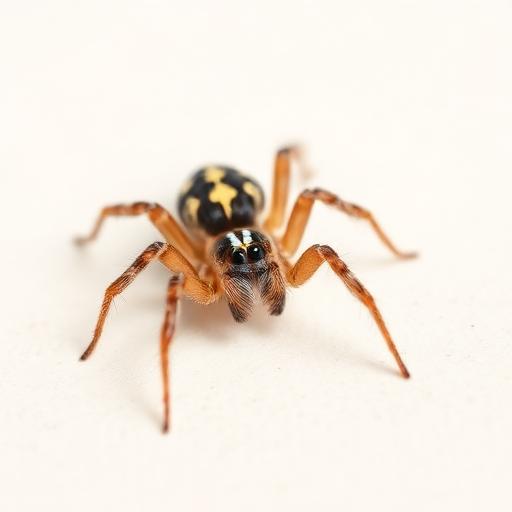
How to identify hobo spiders
- What it looks like
- Brown spider with a herringbone or chevron pattern on the abdomen and no dark leg bands.
- Size
- 1/3 to 2/3 inch body
- Where you'll find it
- Basements, window wells, foundation cracks, retaining walls and crawl spaces.
- Commonly confused with
- Giant house spiders are larger with banded legs.
Signs of hobo spiders in your home
- Flat funnel-shaped webs near the ground
- Fast-running brown spiders in fall
- Webbing in window wells
Is it really hobo spiders? Side-by-side comparisons
Hobo spiders lack the distinct dark bands on their legs that are characteristic of giant house spiders. Giant house spiders are also generally larger.
Hobo spiders have shorter, less prominent spinnerets compared to the distinctly long, two-segmented spinnerets visible on most funnel weaver species.
Hobo spiders lack the violin-shaped marking on their cephalothorax and do not have six eyes arranged in three pairs, distinguishing them from brown recluse spiders.
Hobo spiders build funnel-shaped webs, whereas wolf spiders are ground dwellers and actively hunt without building webs for prey capture.
Regional differences across the U.S.
Hobo spiders (Eratigena agrestis) are primarily established in the Pacific Northwest, specifically in Washington, Oregon, Idaho, and parts of British Columbia. Their distribution extends eastward into Montana, Wyoming, and Utah, but their populations are less dense. Seasonal activity peaks from late summer through fall (August to October) as males actively search for mates, increasing indoor encounters. Humid climates and basements or crawl spaces with higher moisture levels in these regions provide ideal conditions for population growth and overwintering, compared to drier interior regions where they may be less prevalent in homes. Construction types, particularly those with unfinished basements or older foundations with cracks, contribute to increased risk of indoor ingress in these states.
Life cycle and timing that changes treatment
Hobo spiders typically have a one-year life cycle. Eggs are laid in sacs in late summer to early fall and overwinter, hatching in spring. Spiderlings mature through successive molts, reaching adulthood by late summer. Adult males then begin actively searching for mates, which is when they are most often encountered by humans. Females can live for multiple years, producing several egg sacs. Effective control timing is crucial during late summer and fall when males are mobile.
How to inspect for hobo spiders, step by step
- 1
Utilize a flashlight held at a low angle along baseboards and in corners of unfinished basements to spot funnel webs or active spiders.
- 2
Inspect window wells and around foundation cracks on the exterior, especially in shaded, damp areas, for evidence of web construction.
- 3
Place glue monitors in secluded, undisturbed locations like behind furniture, in closets, and along basement walls to capture and identify specimens.
- 4
Examine crawl spaces and storage areas, paying close attention to boxes and undisturbed clutter where webs and spiders may reside.
Treatment decision tree
| If you find this | Do this next |
|---|---|
| You find an occasional hobo spider in your basement or garage during late summer/fall. | This indicates male dispersal. Remove the individual spider with a vacuum or by crushing. Seal minor entry points. |
| You observe several hobo spider webs and occasional spiders in undisturbed areas indoors. | This suggests a localized population. Increase vacuuming and consider sealing identified entry points and harborage areas. |
| You consistently find multiple hobo spiders per week indoors, particularly in living spaces. | This indicates a more significant infestation or multiple entry points. Implement targeted residual insecticide application to cracks and crevices. |
| You are repeatedly bitten, or high numbers of hobo spiders are present in multiple rooms. | This signifies a serious infestation. Professional intervention with specialized equipment and treatments is warranted. |
| A family member is experiencing adverse reactions potentially linked to spider bites, and hobo spiders are confirmed. | Seek immediate medical attention. Simultaneously, contact a pest control professional for urgent and comprehensive treatment of the premises. |
Where DIY runs out of road
- • Over-the-counter perimeter sprays often only provide repellent effects, driving spiders into other areas of the home rather than eliminating them effectively.
- • Foggers and 'bug bombs' are ineffective against hobo spiders because they do not penetrate cracks and crevices where spiders hide and lay eggs, often just dispersing them.
- • Relying solely on glue traps will only capture a fraction of the population and will not address the source of the infestation or eliminate breeding sites.
When to call a professional
- • If persistent hobo spider sightings occur despite diligent sealing and cleaning efforts, a professional assessment is needed.
- • When encountering a high volume of hobo spiders, particularly in living areas, professional intervention is critical for effective control.
- • For peace of mind or if individuals in the household are particularly sensitive to spiders or their bites, professional pest management offers comprehensive solutions.
Safety and legal limits
Always read and follow the label directions precisely for any pesticide product used. Misuse is illegal and can be harmful to humans, pets, and the environment. Consider using personal protective equipment like gloves and masks, especially when applying dusts or aerosols in confined spaces. Ensure proper ventilation. Keep all pesticides out of reach of children and pets. Do not apply pesticides near food preparation areas or on surfaces that will directly contact food. Some insecticides can be toxic to aquatic life, so avoid runoff into drains or waterways. For hobo spiders, non-repellent treatments are generally preferred to avoid scattering the population.
Hobo spiders questions homeowners ask
Are hobo spiders dangerous?
Current research does not support the old claim that hobo spider bites cause necrosis.
Hobo spider control by city
Local technicians handle hobo spiders in every market below — pick your city for neighborhood coverage, seasonal notes and a free quote.
Related spiders & arachnids pests
Sources and further reading
Guidance on this page is compiled from EPA, CDC and land-grant university extension IPM publications, which are linked in the sources section. It is general information, not a diagnosis or a treatment recommendation for your property.
- Pest Notes: home and landscape pests — University of California Statewide IPM Program
- Pest control and pesticide fact sheets — National Pesticide Information Center (Oregon State University / EPA)
- Integrated Pest Management (IPM) principles — U.S. Environmental Protection Agency
- Safe pest control in and around the home — U.S. Environmental Protection Agency