
Fabric & pantry pests
Weevils: identification & weevil control
Grain weevils infest stored food while root weevils invade homes in mass from landscaping. We identify which type you have, remove infested product or treat the exterior harborage accordingly.
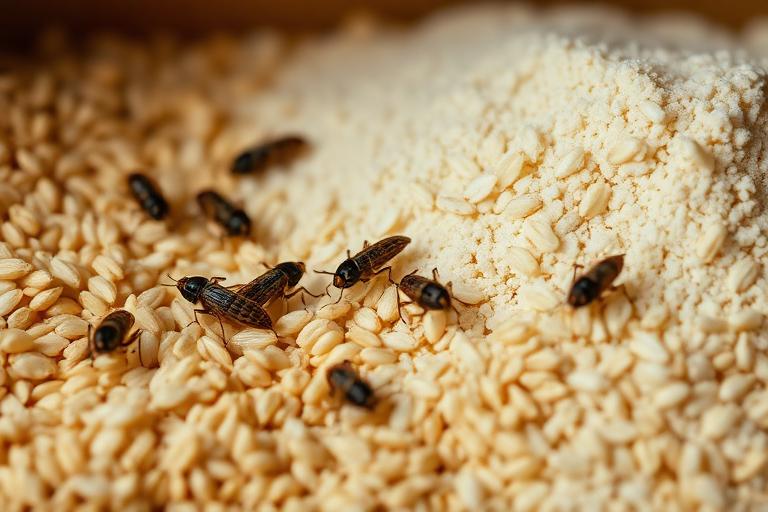
How to identify weevils
- What it looks like
- Small dark beetles with a distinct downward-curving snout; root weevils are gray-black and flightless.
- Size
- 1/8 to 1/2 inch
- Where you'll find it
- Rice, flour, birdseed, pasta, plus mulch and ground cover for root weevils.
- Commonly confused with
- Flour beetles lack the snout.
Signs of weevils in your home
- Beetles in rice or flour
- Small holes in grain kernels
- Mass invasions along baseboards in summer
Is it really weevils? Side-by-side comparisons
Flour beetles have a flattened body and lack the prominent, elongated snout characteristic of all weevil species.
Sawtoothed grain beetles are very slender and have distinct, saw-like projections along the sides of their thorax, absent in weevils.
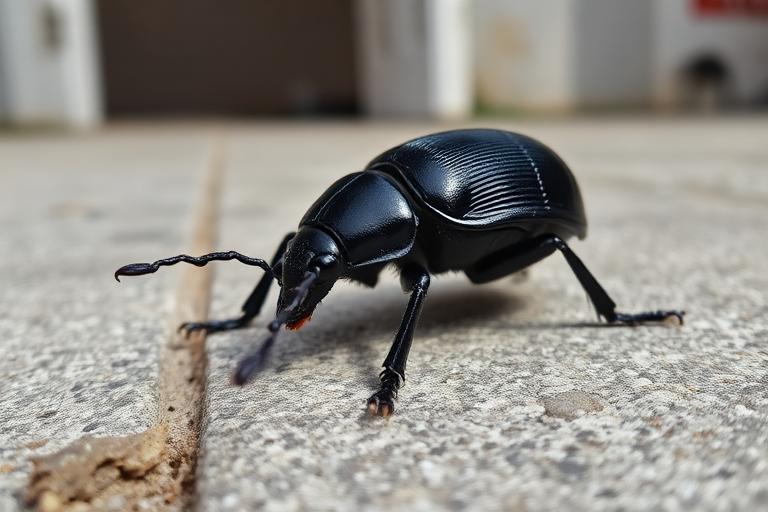
Drugstore beetles are uniformly brown, more convex, and lack a snout, instead having an antennae that ends in a 3-segmented club.
Cigarette beetles are reddish-brown, oval, and have a 'humped' appearance with antennae that are serrated, unlike weevils' geniculate (elbowed) antennae.
Regional differences across the U.S.
Several weevil species are pantry pests across all US regions where dried goods are stored, with rice weevils (Sitophilus oryzae) and granary weevils (Sitophilus granarius) being common. Root weevils, such as the black vine weevil (Otiorhynchus sulcatus) and strawberry root weevil (Otiorhynchus ovatus), are prevalent in nursery stock and landscapes, particularly in the Pacific Northwest, Great Lakes states, and Northeast. These outdoor species are active from spring through fall, and cool, moist conditions in these regions favor their larval development in soil. In warmer climates like the Southeast, pantry weevils can maintain continuous breeding indoors year-round, while in northern states, their indoor activity may slow in winter but not cease. Construction types that facilitate easy entry of outdoor weevils (e.g., poor sealing around foundations, cracks in siding) increase risk for root weevils, whereas porous food storage containers or bulk food purchases are primary risk factors for pantry species everywhere.
Life cycle and timing that changes treatment
Pantry weevils (Sitophilus spp.) undergo complete metamorphosis. Females lay eggs inside grain kernels. Larvae develop within the kernel, pupate, and emerge as adults. The egg-to-adult period is typically 30-45 days under optimal conditions (e.g., 85°F), leading to 4-6 generations per year in warm environments. Adults can live for several months. Root weevils (Otiorhynchus spp.) lay eggs in soil; larvae feed on roots. They typically have one generation per year, overwintering as larvae or adults, with pupation in spring.
How to inspect for weevils, step by step
- 1
Examine all dried food products, including pasta, rice, birdseed, and pet food, for live weevils or damaged kernels. Use a flashlight to illuminate inside packages.
- 2
Inspect undisturbed areas of pantry shelves, especially cracks and crevices, for adult weevils or frass. Pull out shelves and check underneath with a flashlight.
- 3
For root weevils, check plant foliage for characteristic crescent-shaped notches, indicating adult feeding. Inspect the soil around affected plants for larvae or pupae.
- 4
Use pheromone or sticky traps specifically designed for pantry pests in different areas of the kitchen and pantry to monitor activity and pinpoint infestation sources.
Treatment decision tree
| If you find this | Do this next |
|---|---|
| You find a single adult weevil in a sealed, unopened package. | This often indicates a pre-existing infestation from the supplier. Freeze the package for 72 hours, then discard it to prevent spread. |
| You observe 1-2 weevils active on pantry shelves or counters, no obvious source. | Thoroughly inspect all susceptible food items and storage areas. Discard infested items and clean the area with a vacuum and soapy water. |
| You find multiple weevils in several open food containers. | Remove all items from the pantry. Discard all suspect foods. Vacuum and wipe down all surfaces. Consider storing new grains in airtight containers. |
| Numerous weevils are consistently seen throughout the kitchen and pantry, despite cleanup. | This suggests a widespread or hidden infestation source. Consider using food-grade diatomaceous earth in cracks and crevices after thorough cleaning. |
| You have repeated pantry weevil infestations, or extensive root weevil damage in landscaping. | A professional pest control operator can identify the specific species and implement targeted, longer-term control strategies, including potential insecticide applications. |
Where DIY runs out of road
- • Over-the-counter repellent sprays often disperse weevils to other areas of the pantry or home, making the infestation harder to locate and control.
- • DIY foggers or 'bug bombs' are generally ineffective against pantry weevils as they do not penetrate food packaging where larvae are developing.
- • Neglecting to remove ALL infested food sources and thoroughly clean all residues will render any DIY pesticide application useless, leading to reinfestation.
When to call a professional
- • Persistent or widespread pantry weevil infestations despite diligent sanitation and source removal.
- • Identification of uncommon weevil species requiring specialized treatment protocols.
- • Extensive damage to landscape plants by root weevils where cultural controls are insufficient.
Safety and legal limits
Always read and strictly follow the pesticide product label; it is a legal document. Misuse can harm humans, pets, and the environment. Never apply pesticides directly to food or food-preparation surfaces. When using insecticides, ensure proper ventilation, and keep children and pets away from treated areas until dry. Avoid using products not specifically labeled for indoor food-storage areas. Some products, especially those with active ingredients like pyrethroids, can be harmful to aquatic life, so prevent runoff into storm drains. For root weevils, be mindful of beneficial insects and pollinators when applying outdoor treatments, and select products with low residual activity or targeted application methods if possible.
Weevils questions homeowners ask
Are weevils in rice safe?
They are not dangerous but the product is contaminated — discard it and check nearby packages.
Weevil control by city
Local technicians handle weevils in every market below — pick your city for neighborhood coverage, seasonal notes and a free quote.
Related fabric & pantry pests pests
Sources and further reading
Guidance on this page is compiled from EPA, CDC and land-grant university extension IPM publications, which are linked in the sources section. It is general information, not a diagnosis or a treatment recommendation for your property.
- Pest Notes: home and landscape pests — University of California Statewide IPM Program
- Pest control and pesticide fact sheets — National Pesticide Information Center (Oregon State University / EPA)
- Integrated Pest Management (IPM) principles — U.S. Environmental Protection Agency
- Safe pest control in and around the home — U.S. Environmental Protection Agency