
Cockroaches
Oriental cockroaches: identification & oriental cockroach control
Oriental cockroaches thrive in cool, damp spaces like basements, crawl spaces and window wells. Control combines moisture correction, exterior perimeter treatment and baiting where they harbor.
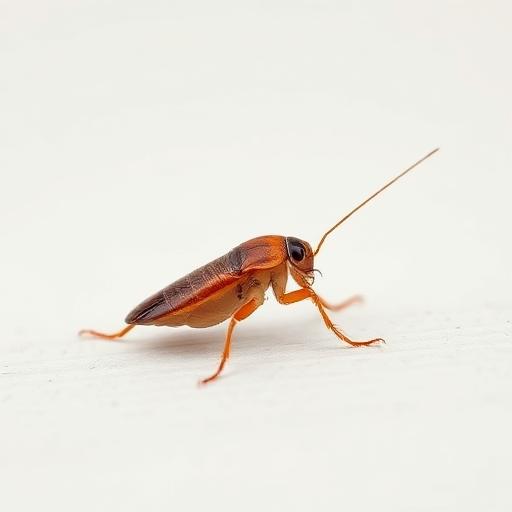
How to identify oriental cockroaches
- What it looks like
- Glossy dark brown to black; females are broad and wingless-looking, males have short wings.
- Size
- 1 to 1.25 inches
- Where you'll find it
- Basements, crawl spaces, drains, window wells, leaf litter and under mulch.
- Commonly confused with
- Ground beetles are hard-shelled with short antennae.
Signs of oriental cockroaches in your home
- Slow-moving black roaches on floors
- Strong musty odor
- Activity near sump pumps and floor drains
Is it really oriental cockroaches? Side-by-side comparisons
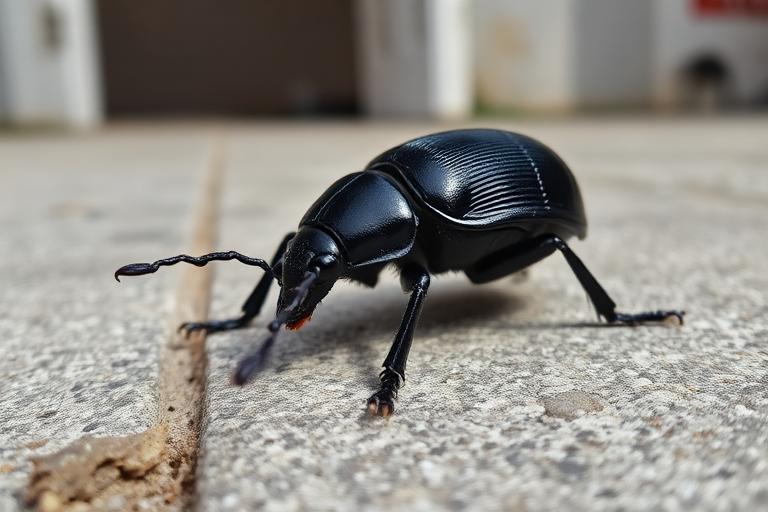
Oriental cockroaches have longer, thread-like antennae and a distinctly flattened, oval body; ground beetles are often stouter with shorter antennae and harder elytra.
Oriental cockroaches are dark brown to black and lack the yellowish figure-eight pattern on the pronotum characteristic of American cockroaches.
Smokybrown cockroaches are uniformly mahogany to black, but males and females both have wings covering the entire abdomen, unlike Oriental cockroaches.
Florida woods cockroaches are larger, black, and flightless in both sexes, with a broader body shape than the Oriental cockroach, and are restricted to Florida and surrounding states.
Regional differences across the U.S.
Oriental cockroaches (Blatta orientalis) are prevalent throughout the US, particularly in cooler, more temperate regions compared to the German cockroach's (Blattella germanica) preference for warmer indoor environments. They are especially common in the Mid-Atlantic, Pacific Northwest, and parts of the Midwest, thriving in damp, cool conditions. States like Washington, Oregon, Ohio, Pennsylvania, and New York frequently report high populations. Seasonal activity peaks in late spring through early fall as outdoor temperatures rise, prompting migration into structures. Homes with poorly sealed foundations, leaky basements, or unmanaged leaf litter against the perimeter are at higher risk, as are properties with crawl spaces where moisture accumulates.
Life cycle and timing that changes treatment
Oriental cockroach development from egg to adult takes approximately 160-300 days, highly dependent on temperature and humidity. Females produce oothecae (egg cases) containing about 16 eggs, depositing them in sheltered areas. There is typically one generation per year in temperate climates. Nymphs hatch from late spring through summer, maturing by fall. They do not overwinter as eggs but as nymphs or adults in protected, unheated areas.
How to inspect for oriental cockroaches, step by step
- 1
Using a flashlight at a low angle, inspect basements, crawl spaces, and utility rooms for active cockroaches, especially along wall-floor junctions and near floor drains.
- 2
Place glue monitors in damp, dark areas such as under sinks, near leaky pipes, in sumps, and in window wells to identify hidden populations and harborage points.
- 3
Check exterior perimeters, especially under leaf litter, mulch, and landscaping timbers, looking for cockroaches congregating around foundation vents and door thresholds.
- 4
Employ a moisture meter to detect elevated humidity in sub-floor areas or behind baseboards, as high moisture levels indicate conducive conditions for Oriental cockroaches.
Treatment decision tree
| If you find this | Do this next |
|---|---|
| You find 1-2 Oriental cockroaches indoors in winter. | This indicates an indoor breeding population or a significant outdoor harborage nearby. Seal exterior cracks and check plumbing for leaks. Consider perimeter baiting with hydramethylnon or indoxacarb. |
| You find 3-5 Oriental cockroaches indoors during warmer months. | This suggests active outdoor populations migrating inside. Inspect foundation cracks and exterior entry points. Apply a non-repellent liquid insecticide, such as fipronil, to the exterior perimeter. |
| You consistently find Oriental cockroaches in damp, cool basement areas or crawl spaces. | This indicates an established indoor population leveraging moisture sources. Implement source reduction, improve ventilation, and use insect growth regulators (IGRs) like pyriproxyfen along with baits. |
| You observe 10+ Oriental cockroaches indoors or outdoors in a concentrated area. | This signifies a high-density infestation. Identify and eliminate primary moisture sources and harborage. Consider a combination treatment of crack-and-crevice baits, residual sprays, and exclusion. |
| You find egg cases (oothecae) or juvenile nymphs regularly indoors. | This confirms active reproduction within the structure. A thorough inspection is needed to locate breeding sites. Implement a comprehensive treatment including IGRs, baits, and targeted residual insecticide applications. |
Where DIY runs out of road
- • Over-the-counter repellent sprays often disperse Oriental cockroaches, driving them into new harborage areas and making control more difficult.
- • Fumigation bombs or 'foggers' are generally ineffective against Oriental cockroaches, failing to penetrate cracks and crevices where they hide, and often leading to resistance.
- • Relying solely on bait traps without addressing moisture sources or sealing entry points will not resolve a persistent Oriental cockroach infestation, as new individuals will continue to invade.
When to call a professional
- • Persistent sightings despite diligent sanitation and DIY efforts.
- • Discovery of large numbers of cockroaches or their egg cases.
- • Presence in multiple rooms or in sensitive areas like kitchens or bathrooms.
Safety and legal limits
Always read and strictly follow the pesticide product label; it is the law. Using pesticides in a manner inconsistent with its labeling is illegal and can be dangerous. Be especially cautious with restricted-use products, which require a certified applicator. Ensure adequate ventilation when applying products indoors to minimize respiratory exposure. Keep children and pets away from treated areas until dry, and store all pesticides in their original containers in a locked cabinet out of reach. For bait applications, place baits in inaccessible areas to prevent accidental ingestion. When handling any pesticide, wear appropriate personal protective equipment, such as gloves and eye protection, as specified by the label.
Oriental cockroaches questions homeowners ask
What is the shiny black bug in my basement?
Commonly an Oriental cockroach, especially if it is slow-moving and near moisture.
How do I keep Oriental roaches out?
Dry the crawl space, fix leaks, seal door sweeps and clear leaf litter and mulch from the foundation.
Oriental cockroach control by city
Local technicians handle oriental cockroaches in every market below — pick your city for neighborhood coverage, seasonal notes and a free quote.
Related cockroaches pests
Sources and further reading
Guidance on this page is compiled from EPA, CDC and land-grant university extension IPM publications, which are linked in the sources section. It is general information, not a diagnosis or a treatment recommendation for your property.
- Cockroaches, pests and indoor asthma triggers — U.S. Centers for Disease Control and Prevention
- Pest Notes: home and landscape pests — University of California Statewide IPM Program
- Integrated Pest Management (IPM) principles — U.S. Environmental Protection Agency
- Safe pest control in and around the home — U.S. Environmental Protection Agency