
Cockroaches
American cockroaches: identification & american cockroach control
Also known as: palmetto bugs, water bugs, sewer roaches
American cockroaches breed in sewers, drains and crawl spaces then move indoors through plumbing and door gaps. We treat harborage areas, service drain lines and seal the entries that let them wander in.
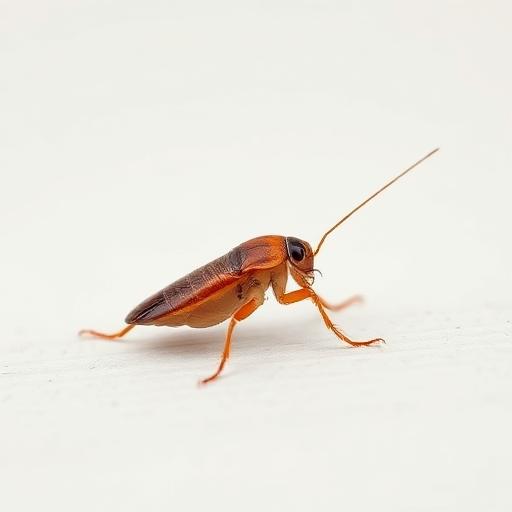
How to identify american cockroaches
- What it looks like
- Large reddish-brown roaches with a yellow figure-8 pattern behind the head; they can fly short distances.
- Size
- 1.5 to 2 inches
- Where you'll find it
- Sewers, floor drains, crawl spaces, basements, mulch and tree holes.
- Commonly confused with
- Oriental cockroaches are darker, shinier and cannot fly.
Signs of american cockroaches in your home
- Large roaches in bathrooms at night
- Droppings the size of mouse droppings with ridged sides
- Musty smell in basements
Is it really american cockroaches? Side-by-side comparisons
American cockroaches are reddish-brown with a distinct yellow figure-8 behind the head and can fly; Oriental cockroaches are uniformly dark brown/black, shiny, and cannot fly.
Smokybrown cockroaches are uniformly dark mahogany without the distinct yellow pattern on the pronotum that is characteristic of American cockroaches.
Florida woods cockroaches are large, dark, and flightless with a rough, pitted shell, lacking the smooth, reddish-brown body and flight capability of American cockroaches.
Australian cockroaches are slightly smaller than American, possessing prominent yellow streaks on the outer edge of their forewings, in addition to the pronotal pattern.
Regional differences across the U.S.
American cockroaches (Periplaneta americana) are prevalent throughout the US, particularly in warm, humid southern states like Florida, Georgia, and Texas, where they thrive year-round due to consistent temperatures and abundant moisture. In cooler northern states, such as New York or Illinois, populations are more concentrated in heated structures, sewers, and basements during winter, emerging more actively outdoors in summer. Coastal regions, including those in California and the Gulf Coast, often experience higher outdoor populations due to humidity and proximity to water infrastructure. Construction type significantly impacts risk; older buildings with complex plumbing and utility tunnels offer more harborage and entry points. Seasonal timing of indoor incursions typically peaks in late summer and early fall as outdoor conditions become less favorable or populations grow large.
Life cycle and timing that changes treatment
American cockroaches undergo incomplete metamorphosis: egg, nymph, and adult. Females lay oothecae (egg cases) containing 14-16 eggs. Nymphs hatch in 50-55 days and mature in 6-12 months, depending on temperature and food availability. Adults live for about one year. There is typically one generation per year in cooler climates, but continuous breeding can occur in warm, humid indoor or southern outdoor environments. Overwintering occurs as nymphs and adults in protected harborage, allowing rapid population growth in spring.
How to inspect for american cockroaches, step by step
- 1
Utilize a flashlight and a mirror to inspect dark, moist areas like under sinks, behind appliances, and in utility closets, paying close attention to plumbing penetrations and floor drains.
- 2
Place sticky traps or glue monitors along baseboards and in corners of basements, crawl spaces, and laundry rooms to determine harborage locations and activity levels.
- 3
Inspect exterior perimeter, focusing on weep holes, utility line entry points, foundation cracks, and around mulch beds, using a flashlight for visual confirmation of activity.
- 4
Examine floor drains and sewer access points in commercial and residential settings for signs of activity, as these are common entry and harborage sites for American cockroaches.
Treatment decision tree
| If you find this | Do this next |
|---|---|
| You see occasional American cockroaches, fewer than 5 per month, primarily in basements or lower levels. | This suggests perimeter infiltration. Seal exterior entry points and use insect growth regulators (IGRs) in floor drains to disrupt breeding cycles. |
| You observe 5-10 American cockroaches monthly, particularly in kitchens or bathrooms at night. | This indicates an established indoor population. Implement targeted baiting with fipronil or indoxacarb gel baits in harborage areas, along with sealing cracks. |
| You consistently find 10+ American cockroaches per week, including nymphs, throughout the structure. | This signifies a significant infestation. Combine baiting with residual insecticide applications (e.g., non-repellent formulations containing chlorfenapyr) in voids and active harborage points. |
| You observe American cockroaches during the day, especially in open areas, or detect a strong 'roachy' odor. | Daytime activity and strong odors indicate a severe infestation. Professional intervention is recommended for comprehensive treatment including crack-and-crevice treatments and void dusting. |
| You find dead or dying American cockroaches after applying over-the-counter sprays, but numbers remain high or return quickly. | This suggests pesticide resistance or inadequate treatment. Cease DIY efforts and consult a licensed pest management professional to evaluate and implement an integrated pest management strategy. |
Where DIY runs out of road
- • Over-the-counter repellent sprays often disperse American cockroaches to other areas of the house, making the infestation harder to locate and control, rather than eliminating it.
- • Foggers and 'bug bombs' are largely ineffective against American cockroaches as they fail to penetrate harborage sites where the roaches and their egg cases are hidden.
- • Improper bait placement or using too much bait can deter cockroaches from consuming it, while not addressing moisture or sanitation issues allows the population to persist.
When to call a professional
- • Persistent cockroach activity after several weeks of diligent DIY efforts.
- • Observation of American cockroaches during daylight hours, indicating a large population.
- • The presence of a musty odor or numerous egg casings, signaling a well-established infestation.
Safety and legal limits
Always read and strictly follow the pesticide product label; it is a legal document. Misuse can harm humans, pets, and the environment. Never apply restricted-use products unless you are a licensed applicator. When using any pesticide, ensure proper ventilation, wear appropriate personal protective equipment (PPE) such as gloves and masks, and keep children and pets away from treated areas until dry. Avoid applying insecticides to food preparation surfaces or where they could contaminate food or water. Integrated pest management (IPM) practices, emphasizing sanitation and exclusion, should always be the first line of defense to minimize reliance on chemical treatments.
American cockroaches questions homeowners ask
Are palmetto bugs and cockroaches the same thing?
Yes — palmetto bug is a regional nickname for the American cockroach.
Why do big roaches come up my drain?
Dry P-traps and sewer line gaps let them travel from municipal lines into the home.
American cockroach control by city
Local technicians handle american cockroaches in every market below — pick your city for neighborhood coverage, seasonal notes and a free quote.
Related cockroaches pests
Sources and further reading
Guidance on this page is compiled from EPA, CDC and land-grant university extension IPM publications, which are linked in the sources section. It is general information, not a diagnosis or a treatment recommendation for your property.
- Cockroaches, pests and indoor asthma triggers — U.S. Centers for Disease Control and Prevention
- Pest Notes: home and landscape pests — University of California Statewide IPM Program
- Integrated Pest Management (IPM) principles — U.S. Environmental Protection Agency
- Safe pest control in and around the home — U.S. Environmental Protection Agency