
Cockroaches
Brown-banded cockroaches: identification & brown-banded cockroach control
Unlike German roaches, brown-banded cockroaches spread throughout a home — inside picture frames, electronics, closets and furniture. Treatment targets those dry, warm harborages rather than just the kitchen.
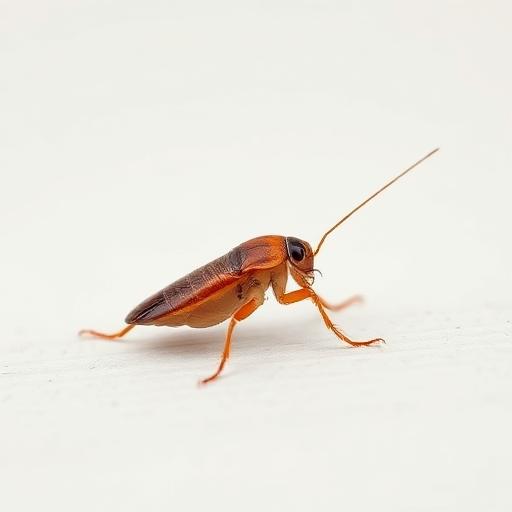
How to identify brown-banded cockroaches
- What it looks like
- Small brown roaches with two lighter bands across the wings and abdomen.
- Size
- 1/2 inch
- Where you'll find it
- Warm upper areas: ceilings, closets, electronics, behind picture frames and inside furniture.
- Commonly confused with
- German cockroaches have stripes behind the head instead of bands across the wings.
Signs of brown-banded cockroaches in your home
- Egg cases glued to furniture undersides
- Roaches in bedrooms and living rooms
- Activity in appliances and TVs
Is it really brown-banded cockroaches? Side-by-side comparisons
Brown-banded cockroaches have two distinct light-colored bands across their wings and abdomen, while German cockroaches have two dark stripes longitudinally behind their head on the pronotum.
Brown-banded cockroaches primarily infest indoors, seeking warmth and dryness, whereas Asian cockroaches are outdoor dwellers, highly attracted to lights and flying readily indoors at night.
Brown-banded cockroaches are much smaller, around 1/2 inch, with lighter banding. Smokybrown cockroaches are uniformly dark reddish-brown and considerably larger, up to 1 1/2 inches.
Brown-banded cockroaches are entirely indoor pests. Wood cockroaches are typically found outdoors under bark or in woodpiles, occasionally wandering indoors but not establishing infestations.
Regional differences across the U.S.
Brown-banded cockroaches (Supella longipalpa) are prevalent throughout the warmer southern states, including Florida, Texas, and California, but can be found in heated structures across the entire US. Unlike German cockroaches, they are less dependent on high humidity, thriving in drier indoor environments, which makes them a more common structural pest in arid regions or air-conditioned buildings. Infestations are generally consistent year-round indoors due to stable temperatures, but activity may increase during warmer months as outdoor populations seek indoor refuge. Their ability to infest electronics and furniture makes them a particular nuisance in densely populated urban areas, regardless of outdoor climate.
Life cycle and timing that changes treatment
Brown-banded cockroaches undergo gradual metamorphosis. Egg cases (oothecae) hatch in 50-75 days, producing nymphs that mature in 90-270 days, influenced by temperature and food availability. An adult female produces 10-20 oothecae in her lifetime, each containing 10-18 eggs. They can complete 2-3 generations per year under ideal indoor conditions. There is no overwintering stage; all life stages are active year-round indoors.
How to inspect for brown-banded cockroaches, step by step
- 1
Use a flashlight at a low angle to inspect the tops of kitchen cabinets, the undersides of drawers, and high shelves in pantries, as brown-banded roaches prefer elevated, warm spots.
- 2
Examine electronics, including televisions, stereos, and computers, and inside appliance control panels, as their preference for warmth makes these ideal harborage sites.
- 3
Inspect behind picture frames, wall-mounted decor, and inside furniture, especially upholstered items and dressers, checking for oothecae glued to surfaces.
- 4
Place glue monitors in upper corners of closets, inside medicine cabinets, and near ceilings in bathrooms, to detect their presence where visual inspection is difficult.
Treatment decision tree
| If you find this | Do this next |
|---|---|
| You find a single brown-banded cockroach ootheca (egg case) in an undisturbed location. | This indicates a localized population. Conduct a thorough inspection of the immediate area and consider targeted baits. |
| You observe 1-2 adult brown-banded cockroaches in a small area, like a bathroom or bedroom. | This suggests an early infestation. Implement targeted baiting and harborage reduction, focusing on warmth-emitting items. |
| You see several brown-banded cockroaches (3-5) active during the day, or consistently at night in multiple rooms. | This indicates a growing infestation. Intensify baiting efforts, apply insect growth regulators (IGRs) to disrupt reproduction, and seal harborage points. |
| You find dozens of brown-banded cockroaches of various life stages, including nymphs, in multiple rooms. | This signifies a significant, established infestation. Professional intervention with a comprehensive treatment plan, including sprays and dusting, is necessary. |
| Despite DIY treatments, brown-banded cockroach activity persists or increases after several weeks. | This indicates the limits of DIY control. A professional pest control operator is needed to identify hidden harborages and apply professional-grade treatments. |
Where DIY runs out of road
- • Over-the-counter repellent sprays often scatter brown-banded cockroaches into new areas, spreading the infestation rather than eliminating it from hidden harborages.
- • Foggers and 'bug bombs' are largely ineffective against brown-banded cockroaches because they cannot penetrate the deep cracks, crevices, and electronics where these pests hide.
- • Without understanding their preference for warm, elevated areas, DIY treatments often misplace baits and dusts, leading to prolonged infestations and wasted product.
When to call a professional
- • When infestation is widespread, affecting multiple rooms or difficult-to-access areas like electronics or inside walls.
- • If allergic reactions or asthma symptoms related to cockroach allergens are experienced by occupants.
- • When DIY methods using baits and IGRs fail to reduce populations after several weeks of consistent effort.
Safety and legal limits
Always read and strictly follow the pesticide product label; it is a legal document. Misuse can harm humans, pets, and the environment. Never use outdoor-rated products indoors. Keep all pesticides, including baits and dusts, out of reach of children and pets. Use appropriate personal protective equipment (PPE) such as gloves and masks when handling pesticides. Ensure adequate ventilation during and after application. Avoid applying liquid pesticides to electronics or sensitive areas. If a restricted-use product is necessary, it must only be applied by a certified applicator. Be mindful of potential contamination of food preparation surfaces and dishes, and clean thoroughly after any application.
Brown-banded cockroaches questions homeowners ask
Why are roaches in my bedroom and not the kitchen?
Brown-banded cockroaches prefer dry, warm areas away from water, which spreads them through the whole home.
Brown-banded cockroach control by city
Local technicians handle brown-banded cockroaches in every market below — pick your city for neighborhood coverage, seasonal notes and a free quote.
Related cockroaches pests
Sources and further reading
Guidance on this page is compiled from EPA, CDC and land-grant university extension IPM publications, which are linked in the sources section. It is general information, not a diagnosis or a treatment recommendation for your property.
- Cockroaches, pests and indoor asthma triggers — U.S. Centers for Disease Control and Prevention
- Pest Notes: home and landscape pests — University of California Statewide IPM Program
- Integrated Pest Management (IPM) principles — U.S. Environmental Protection Agency
- Safe pest control in and around the home — U.S. Environmental Protection Agency