
Cockroaches
German cockroaches: identification & german cockroach control
German cockroaches are the fastest-breeding indoor roach and the hardest to eliminate with sprays. We use gel bait rotation, growth regulators, and crack-and-crevice work in kitchens and bathrooms with follow-up visits to break the egg cycle.
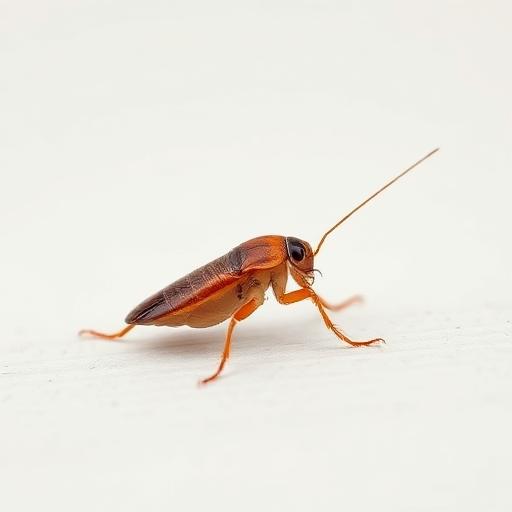
How to identify german cockroaches
- What it looks like
- Light tan to brown with two dark parallel stripes behind the head.
- Size
- 1/2 to 5/8 inch
- Where you'll find it
- Kitchen cabinets, under sinks, appliance motors, dishwashers and bathroom vanities.
- Commonly confused with
- Brown-banded roaches have banded wings and spread beyond the kitchen.
Signs of german cockroaches in your home
- Pepper-flake droppings in drawers
- Egg cases carried by females
- Musty odor
- Nighttime activity when lights flip on
Is it really german cockroaches? Side-by-side comparisons
German cockroaches have two dark parallel stripes behind the head; brown-banded roaches have two light bands across their wings.
German cockroaches are almost exclusively indoors; Asian cockroaches are strong flyers, attracted to lights, and prefer outdoor habitats.
German cockroaches have pronotal stripes extending fully to the rear; field cockroaches have stripes that are shorter and stop midway.
German cockroach nymphs are smaller, darker, and lack the distinct pronotal markings of American cockroach nymphs.
Regional differences across the U.S.
German cockroaches are ubiquitous across all 50 US states. They are not limited by climate, thriving in both hot, humid southern states like Florida and cold northern states such as Minnesota, as long as indoor harborage and resources are available. Regional differences primarily involve population density and the prevalence of insecticide resistance. In urban centers, particularly in the Northeast and Midwest (e.g., New York City, Chicago), high-rise apartments and multi-unit dwellings often experience continuous pressure due to shared walls and common plumbing chases. In the Southeast, such as Georgia and Texas, higher outdoor temperatures can lead to faster reproductive cycles, potentially increasing indoor populations if sanitation is poor. Construction factors like shared utility lines and lack of proper sealing in older buildings exacerbate infestations across all regions.
Life cycle and timing that changes treatment
German cockroaches undergo incomplete metamorphosis: egg, nymph, and adult. The egg case (ootheca) contains 30-40 eggs, hatching in about 28 days. Nymphs mature into adults in 40-125 days, depending on conditions, typically 60-70 days. Adults live for about 6 months, with females producing 4-8 oothecae in their lifetime. This rapid development allows for 3-6 generations per year, leading to swift population growth.
How to inspect for german cockroaches, step by step
- 1
Using a powerful flashlight at a low angle, inspect cracks and crevices within kitchen cabinets, paying close attention to corners and shelf supports.
- 2
Carefully pull out appliances like dishwashers and refrigerators; use a flashlight to examine the motor compartments, undersides, and wall voids behind them for activity or fecal spots.
- 3
Place sticky glue monitors (cockroach traps) inside kitchen and bathroom cabinets, under sinks, and near warm appliance motors to assess population size and harborage points.
- 4
Examine bathroom vanities, especially around plumbing penetrations, using a flashlight to look for live roaches, oothecae, or fecal smears along pipe edges and cabinet corners.
Treatment decision tree
| If you find this | Do this next |
|---|---|
| You see an occasional (1-2) German cockroach, usually at night. | This indicates a small, localized infestation. Improve sanitation, seal entry points, and use bait gels in secluded areas. |
| You see several German cockroaches daily, including during daylight hours. | A moderate infestation is present. Implement baiting alongside insect growth regulators (IGRs) and enhanced sanitation protocols. |
| You consistently see numerous German cockroaches in multiple rooms. | This signifies a significant infestation. A combination of baiting, IGRs, and targeted insecticide dusts or non-repellent sprays is needed. |
| You observe German cockroaches in non-food areas like bedrooms or living rooms. | The population is very high and spreading. This indicates severe harborage pressure requiring comprehensive, integrated pest management strategies. |
| You find multiple oothecae (egg cases) or experience chronic, uncontrolled infestations. | This suggests extreme population density and potential insecticide resistance. Professional intervention is strongly recommended for effective control. |
Where DIY runs out of road
- • Over-the-counter repellent sprays only scatter cockroaches, driving them into new harborage areas and making control more difficult.
- • Foggers and 'bug bombs' are largely ineffective against German cockroaches, failing to penetrate cracks where they hide and often leading to resistance issues.
- • Solely relying on store-bought baits without addressing sanitation and harborage will not eliminate established infestations, and can lead to bait aversion.
When to call a professional
- • When despite diligent DIY efforts, cockroach activity persists or increases after 2-4 weeks.
- • If you observe German cockroaches spreading to multiple rooms or non-food preparation areas.
- • When a health concern exists for immunocompromised individuals, infants, or those with severe allergies.
Safety and legal limits
Always read and strictly follow all pesticide label instructions. The label is a legal document, and using a product in a manner inconsistent with its labeling is a violation of federal law. Ensure good ventilation during application of any sprays or dusts. Keep children and pets away from treated areas until products are dry or settled. Baits should be placed in areas inaccessible to children and pets. Use appropriate personal protective equipment (PPE) like gloves and eye protection as specified on the label. Never use restricted-use pesticides without proper licensing. Misapplication can lead to ineffective control, environmental contamination, and health risks.
German cockroaches questions homeowners ask
What are the small brown roaches in my kitchen?
Almost always German cockroaches — check for the two dark stripes behind the head.
How fast do German cockroaches multiply?
One female can produce 300 or more offspring a year, which is why infestations explode within weeks.
German cockroach control by city
Local technicians handle german cockroaches in every market below — pick your city for neighborhood coverage, seasonal notes and a free quote.
Related cockroaches pests
Sources and further reading
Guidance on this page is compiled from EPA, CDC and land-grant university extension IPM publications, which are linked in the sources section. It is general information, not a diagnosis or a treatment recommendation for your property.
- Cockroaches, pests and indoor asthma triggers — U.S. Centers for Disease Control and Prevention
- Pest Notes: home and landscape pests — University of California Statewide IPM Program
- Integrated Pest Management (IPM) principles — U.S. Environmental Protection Agency
- Safe pest control in and around the home — U.S. Environmental Protection Agency