
Flies & gnats
Fungus gnats: identification & fungus gnat control
Fungus gnat larvae feed in constantly wet potting soil. Control means letting soil dry, treating the soil with a larvicide and correcting drainage or leaks feeding damp organic matter.
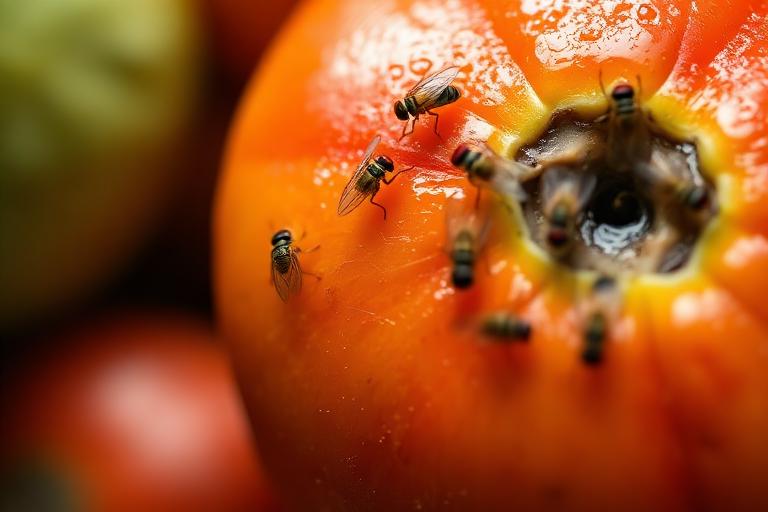
How to identify fungus gnats
- What it looks like
- Delicate dark gray-black flies with long legs and clear wings, weak fliers.
- Size
- 1/8 inch
- Where you'll find it
- Potted plant soil, greenhouses, damp crawl spaces and leaking areas.
- Commonly confused with
- Fruit flies are tan with red eyes and stay near food, not soil.
Signs of fungus gnats in your home
- Gnats flying up from plant soil when watered
- Larvae in the top inch of soil
- Gnats on windows near plants
Is it really fungus gnats? Side-by-side comparisons
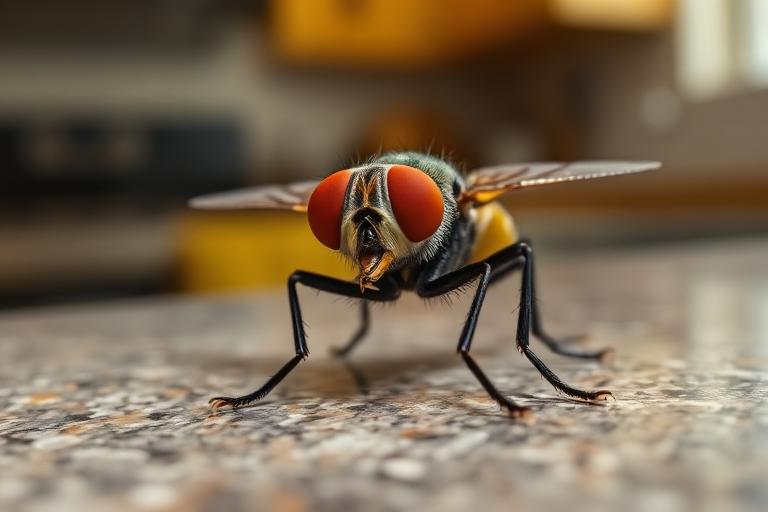
Fungus gnats are slender, dark gray-black, with long legs and clear wings; fruit flies are tan with red eyes and a rounder body shape.
Fungus gnats have delicate, clear wings and are weak fliers; drain flies are fuzzy, moth-like, with dark, hairy wings and a distinct hopping flight.
Fungus gnats have long antennae and delicate bodies; phorid flies have short antennae, a humped back, and a characteristic jerky, scuttling run.
Fungus gnats are uniformly dark-bodied; shore flies are stouter, often metallic or dull black with five distinct light spots on their wings.
Regional differences across the U.S.
While fungus gnats (primarily species like Bradysia impatiens, Bradysia coprophila, and Sciara coprophila) are ubiquitous across the entire US, regional climates influence their prevalence and seasonal activity. In humid southern states such as Florida, Louisiana, and coastal Carolinas, high moisture levels year-round mean fungus gnat populations can persist and breed continuously, often thriving in perpetually damp crawl spaces or overwatered container plants. In arid regions like Arizona and Southern California, infestations are more directly linked to indoor conditions like overwatered houseplants, but cooler, wetter seasons can still trigger outdoor activity. In the Pacific Northwest (Oregon, Washington) and the Northeast (New York, Pennsylvania), peak outdoor activity occurs from late spring through fall, with indoor populations maintained by houseplants over winter. Construction practices in older homes with poor ventilation or leaky plumbing in the Southeast and Pacific Northwest can exacerbate issues by creating consistently damp environments attractive to these gnats, whereas newer, tightly sealed homes in drier climates might only see issues related to indoor gardening practices.
Life cycle and timing that changes treatment
Fungus gnat development from egg to adult takes approximately 17-28 days, depending on temperature. Females lay around 200 eggs in moist soil, which hatch into larvae in 3-6 days. The larval stage, responsible for most plant damage, lasts about 10-14 days. Pupation occurs in the soil for 3-7 days before adults emerge. Multiple overlapping generations occur annually, with no true overwintering stage; continuous breeding occurs indoors or in consistently damp outdoor environments.
How to inspect for fungus gnats, step by step
- 1
Insert yellow sticky traps near potted plant soil surfaces to monitor adult populations and determine peak activity areas over several days.
- 2
Use a flashlight held at a low angle across soil surfaces in potted plants to reveal reflective gnat wings or movement, especially at dawn/dusk.
- 3
Check under sinks, in crawl spaces, and around HVAC drip pans for chronically damp soil, mold growth, or standing water that attracts gnats.
- 4
Gently disturb the top inch of potting soil in all houseplants; emerging adult gnats indicate active larval populations in that specific pot.
Treatment decision tree
| If you find this | Do this next |
|---|---|
| You observe 1-2 adult fungus gnats flying near a houseplant, and the plant appears healthy. | This indicates minor overwatering. Reduce watering frequency for that plant and allow the top inch of soil to dry out completely between waterings. |
| You consistently see 5-10 adult fungus gnats flying around several houseplants, but no plant damage is apparent. | Implement cultural controls: ensure proper watering, improve drainage, and apply Bti (Bacillus thuringiensis israelensis) dunks or granules to affected soil for larval control. |
| You find numerous adult fungus gnats (20+) in multiple rooms, or notice wilting/stunted growth in several plants. | This suggests a significant indoor breeding source. Beyond cultural controls, consider removing the top inch of soil from infested pots and replacing it with fresh, dry potting mix. |
| Adult fungus gnats are consistently found in high numbers (50+) throughout the house, including areas without plants, or associated with moisture issues. | A hidden moisture source like a pipe leak, damp crawl space, or excessively wet insulation is likely. Professional inspection and remediation of the moisture issue are crucial. |
| Despite comprehensive DIY efforts including Bti and moisture control, fungus gnat populations remain high or rapidly rebound within a week. | This indicates an entrenched or widespread breeding site that DIY methods cannot adequately address. Professional pest control evaluation is warranted to identify and treat the source. |
Where DIY runs out of road
- • Over-the-counter insecticide sprays for flying insects provide temporary adult knockdown but do not eliminate the larval breeding source in soil, leading to rapid reinfestation.
- • Repeatedly spraying foliage with insecticidal soaps or oils can stress sensitive plants and doesn't adequately penetrate soil to control gnat larvae, often worsening plant health.
- • Applying homemade remedies like cinnamon or hydrogen peroxide to soil often has inconsistent efficacy against fungus gnat larvae and can alter soil pH or damage plant roots if misapplied.
When to call a professional
- • You suspect a hidden moisture issue (e.g., pipe leak, water intrusion) contributing to persistent gnat problems.
- • Gnats are consistently breeding in non-plant areas like damp crawl spaces or under concrete slabs.
- • Extensive plant collections or sensitive plants require precise treatment without risking plant health.
Safety and legal limits
Always read and strictly follow all pesticide labels; it is a federal law. Misapplication can lead to reduced efficacy and increased risk. Many over-the-counter products are general-use pesticides; however, some more potent formulations may require professional application or certification. When applying any product, ensure adequate ventilation, wear appropriate personal protective equipment (gloves, eye protection), and keep children and pets away from treated areas until dry. For fungus gnats, ensure any Bti (Bacillus thuringiensis israelensis) products are registered for indoor use and follow dilution rates precisely to prevent phytotoxicity to plants. Never apply outdoor-use-only products indoors. Store all pesticides in their original containers, out of reach of children and pets, and away from food and feed.
Fungus gnats questions homeowners ask
Why does my houseplant have flying bugs?
Overwatering keeps the top layer of soil wet enough for fungus gnats to breed — let it dry out between waterings.
Fungus gnat control by city
Local technicians handle fungus gnats in every market below — pick your city for neighborhood coverage, seasonal notes and a free quote.
Related flies & gnats pests
Sources and further reading
Guidance on this page is compiled from EPA, CDC and land-grant university extension IPM publications, which are linked in the sources section. It is general information, not a diagnosis or a treatment recommendation for your property.
- Mosquitoes: control around the home and disease risk — U.S. Centers for Disease Control and Prevention
- Pest Notes: home and landscape pests — University of California Statewide IPM Program
- Integrated Pest Management (IPM) principles — U.S. Environmental Protection Agency
- Safe pest control in and around the home — U.S. Environmental Protection Agency