
Flies & gnats
Drain flies: identification & drain fly control
Also known as: moth flies, sewer gnats, filter flies
Drain flies breed in the organic film inside drain lines and floor drains. We identify the active drains, apply enzymatic cleaners that digest the film and treat harborage around the fixtures.
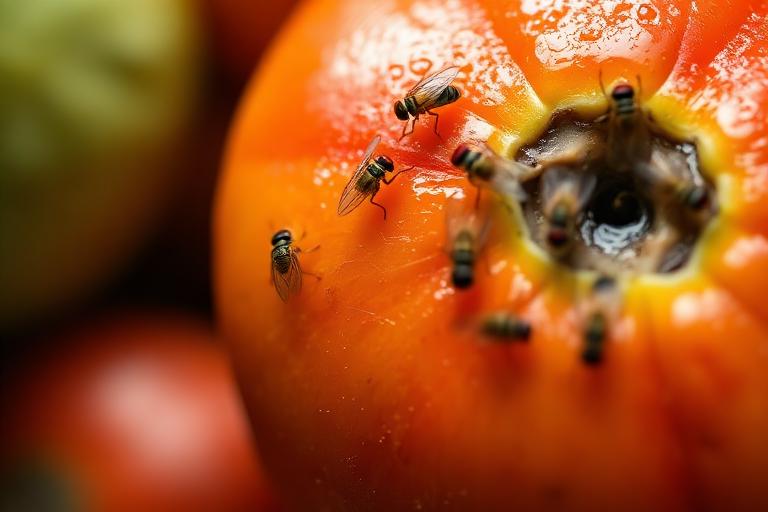
How to identify drain flies
- What it looks like
- Small fuzzy gray-brown flies with rounded, moth-like wings held roof-like over the body.
- Size
- 1/8 inch
- Where you'll find it
- Sink and floor drains, showers, sewer lines, septic and grease traps.
- Commonly confused with
- Fruit flies are smooth-bodied with red eyes.
Signs of drain flies in your home
- Flies resting on bathroom walls
- Activity increasing at night
- Flies appearing after a drain sits unused
Is it really drain flies? Side-by-side comparisons
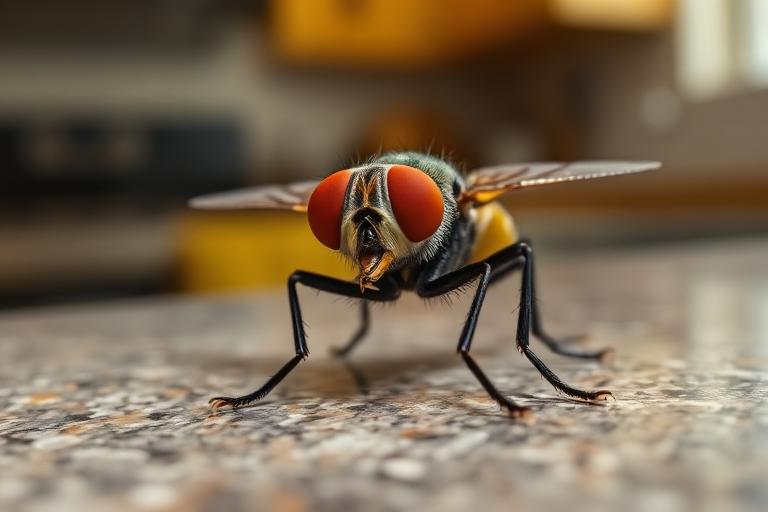
Drain flies have fuzzy bodies and wings held roof-like, while fruit flies are smooth-bodied with prominent red eyes and clear wings.
Phorid flies have a distinctive humped thorax and a scurrying, erratic run; drain flies fly slowly and erratically.
Fungus gnats are slender with long antennae and clear wings; drain flies are stouter, fuzzy, with shorter antennae and moth-like wings.
While all moth flies are Psychodidae, 'drain fly' generally refers to species like Psychoda alternata, identified by their specific wing venation under magnification.
Regional differences across the U.S.
Drain flies (Psychodidae family) are common throughout the US, with Psychoda alternata and Psychoda cinerea being prevalent species. In the humid Southeast, drain fly populations can be high year-round due to consistent moisture. In arid regions like Arizona or New Mexico, drain flies are often linked to evaporative cooler pans or sewage leaks rather than typical bathroom drains. Northern states like Michigan or New York may see reduced outdoor activity in winter, but indoor populations persist if conditions allow. Homes with aging plumbing or infrequent use of certain fixtures, regardless of region, face higher risk. Coastal areas, particularly the Gulf Coast and parts of Florida, often contend with higher humidity fostering continuous breeding.
Life cycle and timing that changes treatment
Drain flies undergo complete metamorphosis: egg, larva, pupa, adult. Eggs hatch in 32-48 hours. Larval development takes 9-15 days, pupation 20-40 hours. The entire egg-to-adult cycle typically completes in 1-3 weeks. Adults live about 20 days. Generations are continuous indoors as long as moist organic matter is present. Overwintering occurs as larvae in protected, moist environments.
How to inspect for drain flies, step by step
- 1
Place clear packing tape over drain openings overnight, sticky side down, to trap emerging adults and confirm breeding sites.
- 2
Carefully remove drain covers and use a flashlight at a low angle to inspect for gelatinous biofilm and larvae on pipe walls.
- 3
Check infrequently used sinks, floor drains in basements, utility rooms, and showers for stagnant water and organic buildup.
- 4
Examine sump pump pits, condensate pans (refrigerators, HVAC units), and septic tank vents for persistent moisture and organic film.
Treatment decision tree
| If you find this | Do this next |
|---|---|
| You observe 1-2 drain flies infrequently, mostly near a single drain. | Indicates a minor, localized breeding site. Thoroughly clean the suspected drain with a stiff brush and enzymatic drain cleaner. |
| You consistently see 5-10 drain flies daily emerging from specific drains despite cleaning. | Suggests significant biofilm buildup or a hidden source. Repeat manual cleaning and consider a biological drain treatment for persistent organic matter. |
| Numerous drain flies (10+) are present, emerging from multiple drains or non-drain areas. | Indicates multiple breeding sites or a larger plumbing issue. Systematically inspect all potential sources, including unused fixtures and structural leaks. |
| Drain flies are present but no obvious breeding source is found after extensive inspection. | Points to a concealed plumbing issue like a broken sewer pipe, an abandoned pipe, or a slab leak. This requires professional plumbing diagnostics. |
| Drain flies are observed in conjunction with sewage odors or standing water in unexpected locations. | Indicates a serious plumbing malfunction or sewer line breach. Immediately contact a licensed plumber to prevent structural damage and health hazards. |
Where DIY runs out of road
- • Over-the-counter chemical drain cleaners (caustic or acidic) often provide only temporary relief, killing surface larvae but failing to eliminate the deep biofilm where eggs are laid.
- • Pouring bleach down drains is ineffective; it does not penetrate the full depth of the biofilm and can be corrosive to plumbing over time.
- • Failing to manually scrub and remove the gelatinous biofilm before applying treatments allows fly populations to rebound quickly, as eggs and larvae are protected within the slime.
When to call a professional
- • Persistent drain fly presence after diligent DIY cleaning efforts.
- • Suspected plumbing issues, such as broken pipes or sewer line leaks.
- • Identification of drain flies in commercial food service establishments due to health regulations.
Safety and legal limits
Always read and follow pesticide product labels completely. Misuse is a violation of federal law and can be ineffective or dangerous. When using drain cleaning products, wear appropriate personal protective equipment (PPE) such as gloves and eye protection. Ensure adequate ventilation to avoid inhaling fumes. Keep all products out of reach of children and pets. Never mix different chemical drain cleaners, as this can create dangerous gases. For biological drain treatments, ensure the product is used as directed to allow beneficial microbes to establish. Chemical aerosol sprays are generally ineffective for drain flies as they do not address the source and can contaminate food preparation surfaces.
Drain flies questions homeowners ask
How do I find which drain has flies?
Tape a clear cup or plastic over each drain overnight — the drain with flies stuck to the tape is the breeding site.
Drain fly control by city
Local technicians handle drain flies in every market below — pick your city for neighborhood coverage, seasonal notes and a free quote.
Related flies & gnats pests
Sources and further reading
Guidance on this page is compiled from EPA, CDC and land-grant university extension IPM publications, which are linked in the sources section. It is general information, not a diagnosis or a treatment recommendation for your property.
- Mosquitoes: control around the home and disease risk — U.S. Centers for Disease Control and Prevention
- Pest Notes: home and landscape pests — University of California Statewide IPM Program
- Integrated Pest Management (IPM) principles — U.S. Environmental Protection Agency
- Safe pest control in and around the home — U.S. Environmental Protection Agency