
Termites & wood pests
Termites: identification & termite control
Termites cause billions in structural damage every year and homeowners insurance rarely covers it. We inspect for mud tubes and damaged wood, then install a continuous liquid barrier or an in-ground baiting system with ongoing monitoring.
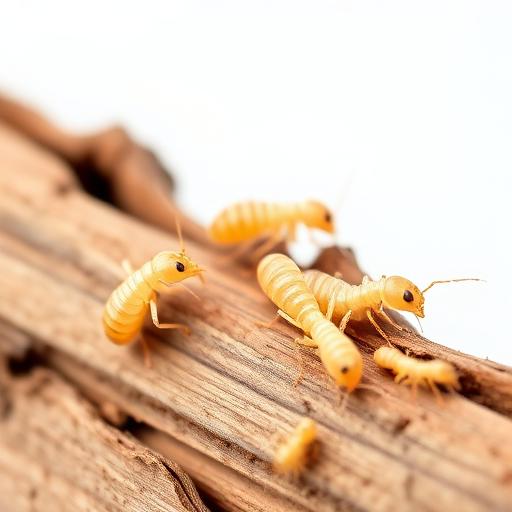
How to identify termites
- What it looks like
- Soft cream-colored workers; swarmers are dark with four equal-length wings and straight antennae.
- Size
- 1/8 to 3/8 inch
- Where you'll find it
- Soil against foundations, crawl spaces, wall studs, door frames and damp structural wood.
- Commonly confused with
- Flying ants — ants have bent antennae, a pinched waist and unequal wing lengths.
Signs of termites in your home
- Pencil-width mud tubes
- Discarded wings on window sills
- Hollow-sounding or blistered wood
- Sagging floors or stuck doors
Is it really termites? Side-by-side comparisons

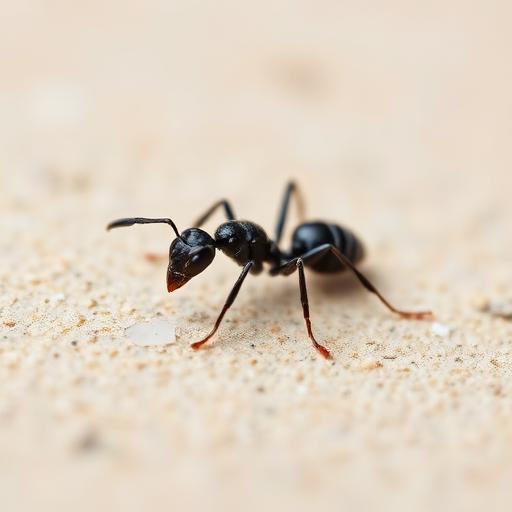
Termite swarmers have straight antennae, a broad waist, and four wings of equal length; ants have elbowed antennae, a constricted waist, and unequal wing lengths.
Termite damage often includes mud tubes on surfaces and galleries packed with frass; wood rot typically presents as soft, crumbly or stringy wood without tunnels or frass.
Carpenter ants excavate smooth, clean galleries and push out wood shavings; termites create rougher galleries often lined with mud and packed with fecal matter (frass).
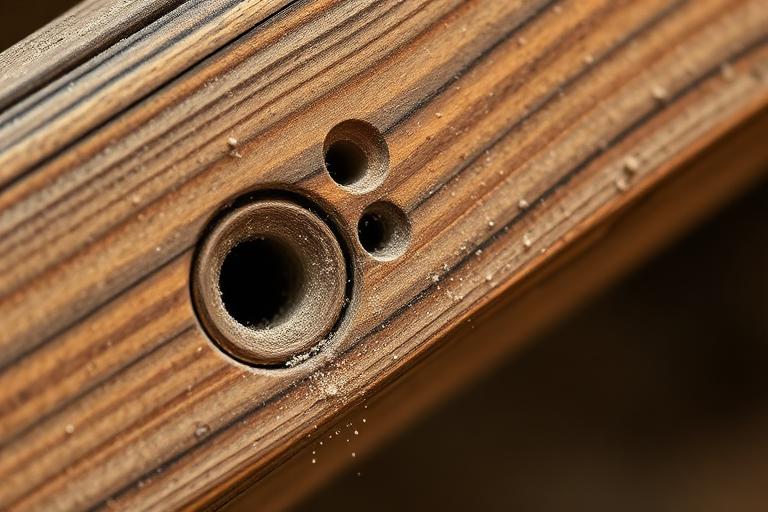
Powderpost beetles produce very fine, flour-like frass and small, circular exit holes; termites leave larger, often mud-lined galleries and visible mud tubes or irregular holes.
Regional differences across the U.S.
Subterranean termites, primarily *Reticulitermes flavipes*, are prevalent across the eastern and southern United States, from New England to Florida and west to the Great Plains. Arid-land subterranean termites, *Reticulitermes hesperus*, dominate in California and the Southwest. Formosan subterranean termites, *Coptotermes formosanus*, an invasive and aggressive species, are concentrated in the Gulf Coast states, particularly Louisiana, Florida, and Hawaii, thriving in warm, humid conditions. Swarming typically occurs in spring for *R. flavipes* but can happen year-round in tropical areas like South Florida. In the Pacific Northwest, dampwood termites like *Zootermopsis angusticollis* are common, preferring high-moisture wood. Construction with direct wood-to-soil contact or inadequate foundation drainage significantly increases risk across all regions.
Life cycle and timing that changes treatment
Termites undergo incomplete metamorphosis, progressing from egg to nymph to adult. A colony includes reproductive alates (swarmers), workers, and soldiers. Eggs hatch into nymphs, which develop into various castes. The egg-to-adult worker development can take several months. Colonies are perennial, with reproductives producing eggs continuously. Mature colonies can produce multiple swarms annually, typically in spring for subterranean species, indicating colony maturity and a need for expansion.
How to inspect for termites, step by step
- 1
Carefully inspect the foundation perimeter, both interior and exterior, for mud tubes using a flashlight at a low angle to highlight subtle soil structures.
- 2
Probe accessible wooden elements in crawl spaces and basements, such as sill plates and joists, with a screwdriver to detect hollowed-out sections or soft spots.
- 3
Use a moisture meter to identify areas of elevated moisture in walls, around plumbing, and near windows, as termites are attracted to damp wood and high humidity.
- 4
Check window sills, door frames, and wooden trim for small pinholes or discolored areas, which can indicate termite tunneling just beneath the surface.
Treatment decision tree
| If you find this | Do this next |
|---|---|
| You see 1-2 swarmers indoors in spring. | This often indicates a mature colony nearby. Collect specimens for identification and conduct a thorough inspection around the foundation and in accessible wood areas. |
| You find a few mud tubes (pencil-width) on an exterior foundation wall. | This is definitive evidence of subterranean termite activity. Avoid disturbing the tubes excessively and prepare for professional assessment to determine the extent of infestation. |
| You tap on a wooden door frame and hear a hollow sound. | This suggests potential internal wood damage. Further investigate the area with a moisture meter and look for other signs like frass or subtle discoloration; professional inspection is advised. |
| You discover extensive mud tubes in a crawl space or damaged structural wood. | This indicates an active and potentially significant infestation requiring immediate professional intervention. Do not attempt DIY treatments that could disperse the colony. |
| You observe swarmers emerging from inside a wall or ceiling void. | This signifies an active, established colony within the structure. Immediately contact a licensed pest control professional, as this situation requires targeted treatment to prevent widespread damage. |
Where DIY runs out of road
- • Over-the-counter liquid termiticides rarely provide comprehensive protection because proper application requires specialized equipment for trenching and drilling, which homeowners lack.
- • DIY bait stations are often ineffective as standalone treatments because successful deployment depends on precise placement, monitoring, and understanding termite foraging behavior.
- • Attempting to treat an active infestation yourself with repellent sprays can disrupt termite foraging and cause them to move to untreated areas, making the problem harder for professionals to locate and eliminate.
When to call a professional
- • Discovery of any active termite mud tubes or damaged wood indoors, especially structural elements.
- • More than a few termite swarmers found indoors, indicating a mature colony within the structure.
- • Suspicion of Formosan subterranean termites, given their aggressive nature and rapid colony growth.
Safety and legal limits
Always read and strictly follow all directions on pesticide labels. Misapplication is illegal and can be dangerous to humans, pets, and the environment. Many effective termiticides, such as those containing fipronil or imidacloprid, are restricted-use products that can only be purchased and applied by licensed pest control professionals. Homeowners should avoid inhaling dusts or vapors during any pest control activity and use appropriate personal protective equipment, including gloves and respirators. Ensure children and pets are kept away from treated areas during and after application. Never apply pesticides near water sources or in a manner that could contaminate non-target areas.
Termites questions homeowners ask
How can I tell termite damage from water damage?
Termite galleries follow the wood grain and contain soil or fecal pellets; water damage is uniformly soft and often discolored.
Are flying termites in my house serious?
Yes. Indoor swarmers mean a mature colony is already established in or under the structure.
Termite control by city
Local technicians handle termites in every market below — pick your city for neighborhood coverage, seasonal notes and a free quote.
Related termites & wood pests pests
Sources and further reading
Guidance on this page is compiled from EPA, CDC and land-grant university extension IPM publications, which are linked in the sources section. It is general information, not a diagnosis or a treatment recommendation for your property.
- Termites: how to identify and control them — U.S. Environmental Protection Agency
- Pest Notes: home and landscape pests — University of California Statewide IPM Program
- Integrated Pest Management (IPM) principles — U.S. Environmental Protection Agency
- Safe pest control in and around the home — U.S. Environmental Protection Agency