
Termites & wood pests
Powderpost beetles: identification & powderpost beetle control
Also known as: wood-boring beetles, lyctid beetles
Powderpost beetles lay eggs in hardwood pores and larvae tunnel for years before emerging. We confirm active infestation, treat with borate penetration and recommend moisture control or replacement of heavily damaged wood.
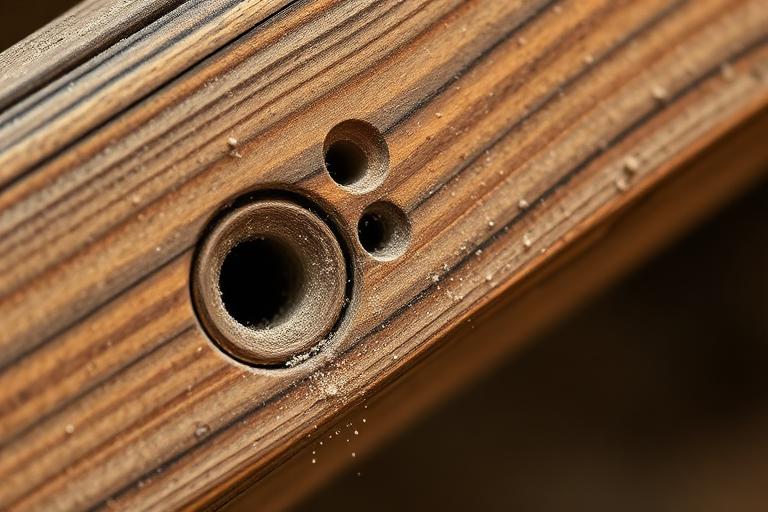
How to identify powderpost beetles
- What it looks like
- Small slender reddish-brown to black beetles that leave round exit holes.
- Size
- 1/8 to 1/4 inch
- Where you'll find it
- Hardwood floors, trim, furniture, crawl space joists and bamboo items.
- Commonly confused with
- Old house borer holes are oval and larger; termites do not leave clean exit holes.
Signs of powderpost beetles in your home
- Round pinholes 1/32 to 1/8 inch wide
- Fine flour-like frass below holes
- New holes appearing over time
Is it really powderpost beetles? Side-by-side comparisons
Powderpost beetle exit holes are perfectly round, typically 1/32 to 1/8 inch in diameter, whereas old house borer holes are larger and distinctly oval.
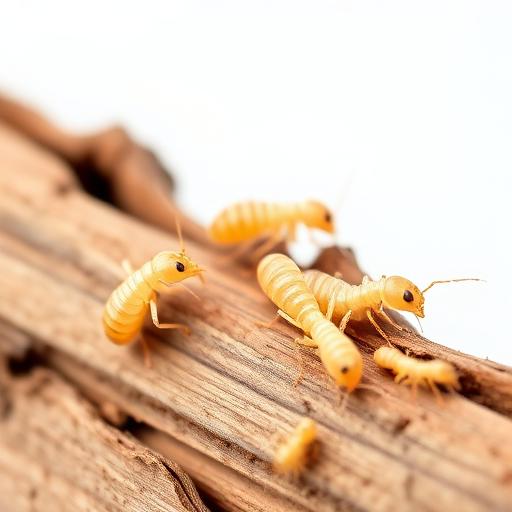
Powderpost beetles leave fine, flour-like frass (wood dust) outside their exit holes; termites pack their tunnels with soil and fecal material, and do not create clean exit holes.
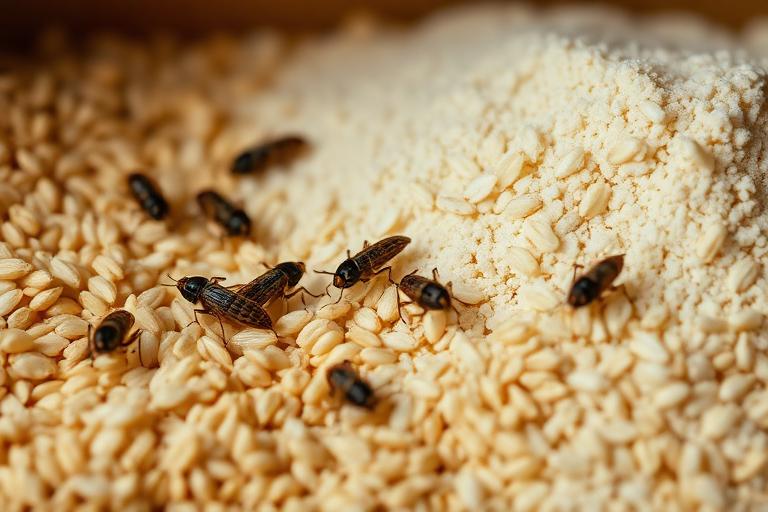
Powderpost beetles leave a very fine, talcum-powder-like frass; woodboring weevils produce a coarser, gritty frass, often with larger wood fragments.
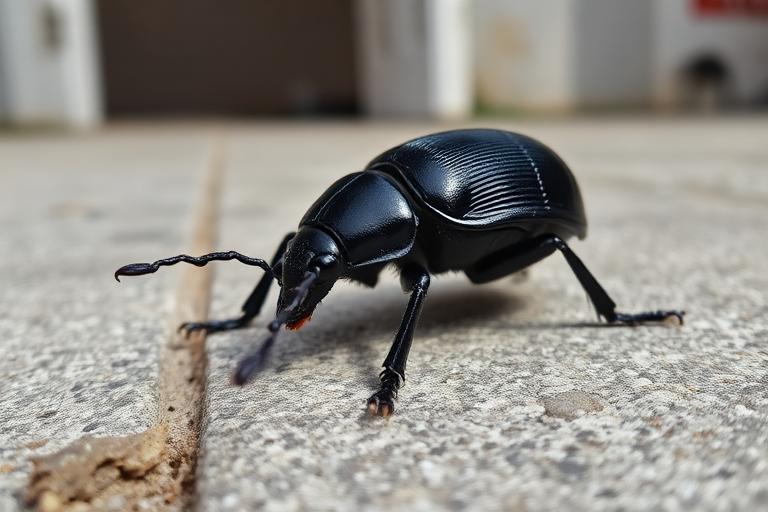
Bark beetles primarily infest the bark and sapwood of dead or dying trees outdoors; powderpost beetles infest seasoned, structural hardwoods and bamboo indoors, producing frass.
Regional differences across the U.S.
Lyctid powderpost beetles (family Bostrichidae) are prevalent throughout the Southern and Eastern US, particularly in states with high humidity like Florida, Louisiana, and the Carolinas, where their preferred hardwoods such as oak and ash are common in construction. Anobiid powderpost beetles (family Ptinidae), including the common furniture beetle, are more widespread across the Northern US and Pacific Northwest, thriving in cooler, damper conditions and infesting both hardwoods and softwoods. In arid Southwestern states like Arizona and New Mexico, risk is lower due to climate factors reducing wood moisture content. Subterranean powderpost beetles, a less common group, are found in localized damp conditions, often mistaken for termites in regions like the Gulf Coast. Regional climate directly influences the moisture content of wood, a critical factor for powderpost beetle survival and development, with higher humidity favoring greater activity.
Life cycle and timing that changes treatment
Powderpost beetles undergo complete metamorphosis: egg, larva, pupa, adult. The larval stage, lasting from several months to multiple years depending on species and conditions, causes the most damage as it bores through wood. Adults emerge through characteristic exit holes, typically in spring or early summer, to mate and lay eggs. Most species produce one generation per year, but some can have extended life cycles. Overwintering generally occurs as larvae within the wood, making year-round monitoring important.
How to inspect for powderpost beetles, step by step
- 1
Use a bright LED flashlight at a low angle across hardwood floors and furniture to detect subtle frass piles or exit holes, especially in dim areas.
- 2
Utilize a moisture meter (pin-type or pinless) on wooden structural members in crawl spaces or basements; readings above 20% indicate conditions favorable for infestation.
- 3
Place glue monitors or dark construction paper beneath suspected infestation sites on joists or subflooring to detect fresh frass or emerging adult beetles over time.
- 4
Inspect the underside and interior of antique furniture, picture frames, and bamboo items for frass, exit holes, and larval galleries, paying attention to unsealed wood surfaces.
Treatment decision tree
| If you find this | Do this next |
|---|---|
| You observe a single, isolated exit hole with no frass or live beetles, and the wood moisture content is low. | This indicates historical activity. Monitor the area with glue traps or dark paper for several months to confirm inactivity. No immediate treatment is needed. |
| You find fine, flour-like frass but no live beetles and only a few scattered exit holes over several months. | This suggests very low-level or intermittent activity. Reduce wood moisture content if possible and monitor with increased frequency (e.g., weekly) using frass-catching paper. |
| You discover fresh frass piles accumulating and new, clean exit holes appearing on multiple hardwood items or structural timbers. | This signifies an active and expanding infestation. Consider applying a borate-based wood treatment to accessible, unfinished wood surfaces. Seek professional advice for finished items. |
| You consistently find numerous new exit holes, significant frass accumulation, and live adult beetles emerging indoors. | This indicates a widespread, active infestation requiring comprehensive intervention. A professional inspection is recommended to assess the extent and identify all infested areas. |
| You observe significant structural damage, such as weakened joists or floors, accompanied by extensive powderpost beetle activity. | This represents a severe structural threat. Immediately contact a licensed pest management professional for assessment, localized treatment, and potential structural repairs by a qualified contractor. |
Where DIY runs out of road
- • Over-the-counter permethrin or bifenthrin sprays are largely ineffective against larvae deep within wood, only impacting adult surface activity. They do not penetrate sufficiently to resolve interior infestations.
- • Fumigation with DIY products is illegal, ineffective, and extremely dangerous for homeowners. Only licensed professionals can perform whole-structure fumigation, which is often required for severe, widespread infestations.
- • Simply patching exit holes without addressing the internal infestation will trap larvae inside, prolonging the issue, and providing no barrier against future re-emergence from elsewhere in the wood.
When to call a professional
- • You find activity in inaccessible areas like sealed wall voids or subfloors requiring specialized equipment and treatment.
- • Multiple pieces of expensive furniture or structural components are actively infested, indicating a significant investment at risk.
- • DIY attempts over several months have failed to control the infestation, and activity persists or worsens.
Safety and legal limits
Always read and follow the pesticide label precisely. "The Label is The Law" is a non-negotiable principle. Misapplication can lead to ineffective control, environmental contamination, and potential harm. Restricted-use products (RUPs) are not available to homeowners; they require specific licensing for purchase and application due to acute toxicity or environmental risks. When applying any pesticide, ensure proper ventilation, wear appropriate personal protective equipment (PPE) like gloves and respirators, and keep children and pets away from treated areas until dry. Improper ventilation during borate applications, for example, can lead to respiratory irritation.
Powderpost beetles questions homeowners ask
Are the holes in my hardwood floor active?
Fresh, light-colored frass and new holes mean an active infestation; old holes are dark and dust-free.
Powderpost beetle control by city
Local technicians handle powderpost beetles in every market below — pick your city for neighborhood coverage, seasonal notes and a free quote.
Related termites & wood pests pests
Sources and further reading
Guidance on this page is compiled from EPA, CDC and land-grant university extension IPM publications, which are linked in the sources section. It is general information, not a diagnosis or a treatment recommendation for your property.
- Termites: how to identify and control them — U.S. Environmental Protection Agency
- Pest Notes: home and landscape pests — University of California Statewide IPM Program
- Integrated Pest Management (IPM) principles — U.S. Environmental Protection Agency
- Safe pest control in and around the home — U.S. Environmental Protection Agency